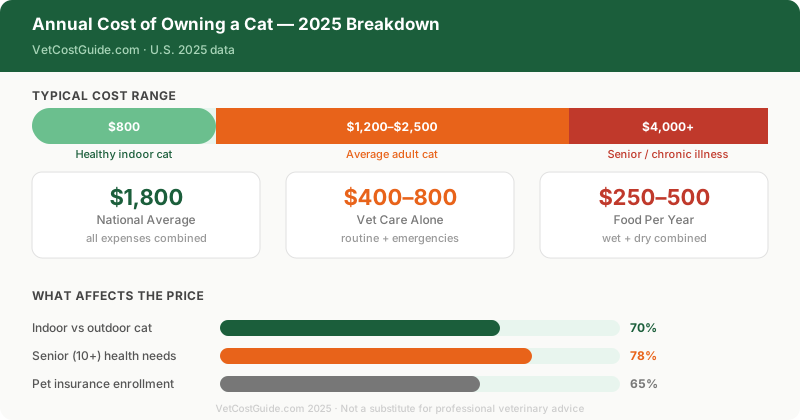
People call cats low-maintenance. And compared to dogs, there’s truth in that — no daily walks, no professional grooming for most shorthairs, lower boarding costs. But “low-maintenance” gets misread as “cheap,” and that causes real budget problems for first-time cat owners. A healthy indoor adult cat actually costs $1,000–$2,000 per year once you account for food, litter, veterinary care, and occasional boarding. Senior cats push that higher. Long-haired breeds push it higher still. Here’s what the numbers actually look like, category by category.
- An indoor adult cat costs $1,000–$2,000/year in 2025 — the most budget-friendly cat ownership scenario.
- Litter is a frequently underestimated fixed cost at $150–$400/year depending on litter type and household size.
- Senior cats (age 10+) cost $1,500–$3,500/year as age-related health conditions accumulate.
- Dental cleaning every 1–3 years at $300–$700 is the largest single-year expense spike for most cat owners.
Annual Cost by Cat Type
| Expense Category | Indoor Cat | Indoor-Outdoor Cat | Senior Cat (10+) |
|---|---|---|---|
| Food (annual) | $300 | $400 | $500 |
| Litter (annual) | $150 | $200 | $200 |
| Vet Care (annual, wellness) | $400 | $500 | $900 |
| Grooming (long hair only, annual) | $0–$200 | $0–$200 | $0–$500 |
| Boarding/Pet Sitter (annual) | $200 | $300 | $300 |
| Toys & Supplies (annual) | $100 | $150 | $150 |
| Insurance (optional, annual) | $200 | $250 | $500 |
| Total (without insurance) | $1,000 | $1,500 | $2,500 |
Senior cat totals include more frequent bloodwork, the occasional dental cleaning, and sometimes prescription food or chronic medication — but assume no active disease. Cats managing CKD, hyperthyroidism, or diabetes add $500–$4,000/year in condition-specific costs on top of baseline care.
Breaking Down the Major Categories
Food. Most cats need 4–6 oz of wet food and/or 1/4–1/2 cup of dry daily. A quality diet — Purina Pro Plan, Hill’s Science Diet, Royal Canin — runs $1–$2 per day, or $360–$730/year. Premium and raw diets cost more. Prescription diets (urinary, renal, dental, diabetic) run $60–$120/month and represent a substantial cost jump when they’re medically necessary.
Litter. This is the category that trips up nearly every new cat owner. Clay clumping litter at the basic end costs $20–$35 for a 20–40 lb bag that lasts 2–4 weeks for a single cat. Annual cost: $150–$250 for standard clumping. Premium alternatives — crystal silica, walnut shell, corn-based biodegradable options — run $30–$60/month, or $360–$720/year. Multi-cat households multiply these costs proportionally. If you have two cats and you’re using premium litter, you could easily be spending $700+/year on litter alone.
Veterinary care. A healthy indoor adult cat’s annual vet bill covers a wellness exam ($45–$75), core vaccines on a 1–3 year rotation (FVRCP every 3 years, rabies annually or every 3 years depending on state law), and flea/parasite prevention ($60–$120/year). The hidden cost: dental cleanings. Under general anesthesia with full-mouth X-rays, cat dental cleanings run $400–$700 — and most cats need one every 2–3 years. Amortized, that adds $130–$350 to the annual average. Annual wellness total for a young-to-middle-aged cat: $400–$600.
Grooming. Domestic shorthairs cost $0 in professional grooming — they handle it entirely on their own. Long-haired breeds (Persians, Maine Coons, Ragdolls) need brushing multiple times weekly to prevent painful mats and professional grooming or lion cuts every 6–12 months. Professional appointments run $60–$150 per session. Budget $200–$500/year for long-haired cats.
Boarding and pet sitting. Cats handle short trips better than dogs do. An automatic feeder and water fountain plus a daily check-in from a pet sitter ($20–$30/visit) covers most weeklong trips. Full cat boarding at a facility runs $20–$45/night. A household that travels 2 weeks per year typically spends $200–$600 annually in cat care, depending on care type and trip frequency.
Supplies and enrichment. Replacing worn toys, buying treats, refreshing scratching posts, and annually replacing the litter box (recommended) averages $100–$200/year for most households. Year one is higher due to initial setup costs.
What Pushes Costs Up or Down
Indoor vs. outdoor lifestyle. Indoor-only cats live longer (12–18 years on average vs. 5–7 for outdoor cats), face lower infectious disease risk, and need less intensive parasite prevention. Outdoor cats face higher veterinary costs from trauma, bite wounds, and disease exposure. Flea and tick prevention is non-negotiable for outdoor cats. The lifetime cost difference of an indoor versus outdoor cat can be enormous — largely because one lives twice as long.
Number of cats in the household. Food and litter costs scale linearly with each additional cat. Some fixed costs don’t — one pet sitter visit covers all cats. But each cat represents independent veterinary exposure, so two cats means double the chance of a major illness claim in any given year.
Breed. Most shelter cats are domestic shorthair mixes with no breed-specific health predispositions and minimal grooming needs. Persian cats are predisposed to hereditary polycystic kidney disease (PKD) and need substantial grooming. Maine Coons have elevated rates of hypertrophic cardiomyopathy (HCM) — screening echocardiograms run $300–$500 and are recommended every few years for at-risk breeds. Factor breed health profiles into your budget before choosing a purebred.
Age. Kittens have high first-year costs from the initial vaccine series and spay/neuter. The sweet spot is roughly ages 2–8 — your cat is fully vaccinated, spayed or neutered, and statistically unlikely to have developed a chronic condition yet. After 10, the probability of hyperthyroidism, CKD, dental disease, and other age-related conditions rises significantly, and so do the associated costs.
Location. Veterinary fees in major coastal cities run 40–80% above rural averages. Pet-sitter rates in urban areas are also substantially higher. The same wellness exam that costs $55 in rural Ohio costs $90–$120 in San Francisco.
- Litter cost creep. Switching to a premium litter (crystal, walnut-shell, automatic litter box subscription) can quietly double your litter budget from $150/year to $400–$700/year. Weigh the benefits (odor control, convenience, reduced tracking) against the cost — a clean litter box scooped daily with standard clumping litter is equally hygienic.
- Underestimating dental costs. Cat dental cleanings require general anesthesia, full-mouth X-rays, and often extractions. The bill range of $400–$1,400 is the single largest year-specific expense spike for most cat owners. Not budgeting for this every 1–3 years is one of the most common financial surprises of cat ownership.
- Assuming cats are “set it and forget it” pets. Cats need daily interaction, environmental enrichment (vertical space, scratching surfaces, play), and routine health monitoring. A cat that appears fine may have been silently losing weight for months — a sign of hyperthyroidism, CKD, or diabetes. Monthly weight checks at home are free and catch problems early.
Is Pet Insurance Worth the Cost?
Cat insurance premiums are meaningfully lower than dog insurance — typically $200–$500/year for comprehensive illness and accident coverage, compared to $300–$800 for dogs. The financial case is strongest for:
- Purebred cats with documented health predispositions (Maine Coons for HCM, Persians for PKD, Ragdolls for HCM)
- Cats enrolled while young, before any conditions develop pre-existing status
- Owners who want a backstop against the expensive scenarios: urinary blockage ($1,500–$3,000), cancer treatment ($3,000–$8,000), or ongoing diabetes management ($1,500–$3,000/year)
For a healthy indoor mixed-breed cat whose owner has a $2,000 emergency fund, the math is less clear-cut. Premiums over a 15-year lifespan total $3,000–$7,500. If the cat stays largely healthy, a self-funded emergency fund strategy may come out ahead. That’s the honest trade-off: distributed premium costs versus concentrated risk.
Practical Ways to Manage Costs
Adopt from a shelter. A $75–$200 adoption fee covering spay/neuter, initial vaccines, microchip, and often a flea treatment saves $400–$700 compared to paying for each service separately at a private vet. No other single decision saves more money in year one.
Buy litter in bulk. The per-pound cost drops 20–30% at the largest bag size from a warehouse club. A 40-lb bag at Costco or Sam’s Club lasting 4–6 weeks beats all mid-size retail options.
Track your cat’s weight monthly. A $20 baby scale and monthly weigh-ins at home catch the slow weight loss that signals early hyperthyroidism, CKD, or dental disease. Catching these conditions in early stages is consistently cheaper than treating them after they’re advanced.
Switch to primarily wet food. While wet food costs more per serving than dry kibble, it dramatically increases daily water intake — the single most effective dietary intervention for preventing urinary disease. A $1,500–$3,000 urinary blockage costs far more than a year’s worth of wet food premium.
Have dental cleanings on a schedule. Proactive dental care — starting cleanings when your vet first recommends them rather than delaying — reduces the total number of extractions needed over the cat’s lifetime and generally lowers the per-cleaning cost compared to catching severe disease late.
Frequently Asked Questions
Is it cheaper to have a cat or a dog? Substantially cheaper. Annual cat ownership averages $1,000–$2,500 versus $1,500–$6,000 for dogs. The main drivers of the difference: no professional grooming for most cats, no daily walking services, lower boarding costs, and smaller body size meaning smaller food portions and lower medication doses.
How much should I budget for a kitten’s first year? First-year kitten costs typically run $1,500–$2,500 for an indoor kitten, covering adoption or purchase ($75–$1,500), spay/neuter ($200–$500), initial vaccine series ($150–$250), first-year supplies ($300–$500), and monthly food and litter. Year two and beyond normalizes to $1,000–$1,800 for a healthy indoor cat.
Does indoor vs. outdoor status really affect cost that much? Yes — significantly. The lifespan difference alone (12–18 years indoors vs. 5–7 years outdoors) means outdoor cats incur fewer years of ownership costs, but face dramatically higher costs per year from trauma, disease exposure, and parasite burden. Lifetime financial costs often work out higher for outdoor cats despite the shorter lifespan, because the veterinary events are frequent and expensive.
What’s the best way to manage pet costs if money is tight? In priority order: (1) core vaccines and annual exam — non-negotiable preventive care; (2) parasite prevention appropriate to lifestyle; (3) a dedicated emergency savings fund of at least $1,000–$2,000 before buying optional products. Low-cost spay/neuter clinics, shelter vaccine programs, and veterinary school teaching hospitals are legitimate ways to access quality care at lower cost.
Frequently Asked Questions
Annual cat food costs typically range from $200–$500 depending on diet quality and whether you choose wet food, dry kibble, or a mix. Premium or prescription diets for health conditions can push costs toward $600–$800 yearly.
Most standard pet insurance plans do not cover routine preventive care like annual exams and vaccinations; you pay 100% out-of-pocket for these visits, which cost $150–$300 annually. Some insurers offer optional wellness add-ons (typically $10–$25/month extra) that reimburse a portion of preventive expenses.
Senior cats (age 7+) typically need twice-yearly vet visits instead of annual ones, and chronic conditions like kidney disease or diabetes become common, adding $500–$1,500+ yearly in medications and testing. Expect veterinary costs to jump noticeably once your cat reaches age 10+, making total yearly ownership costs rise to $2,500–$3,500.