Mango was 12 years old when her routine senior wellness exam came back with elevated creatinine and SDMA. The vet was calm — “Stage 2 CKD, we caught it early” — but her owner’s first question wasn’t about prognosis. It was: “What does this mean for our budget?”
That’s a completely reasonable question. And the honest answer is: it depends on where Mango’s disease goes from here.
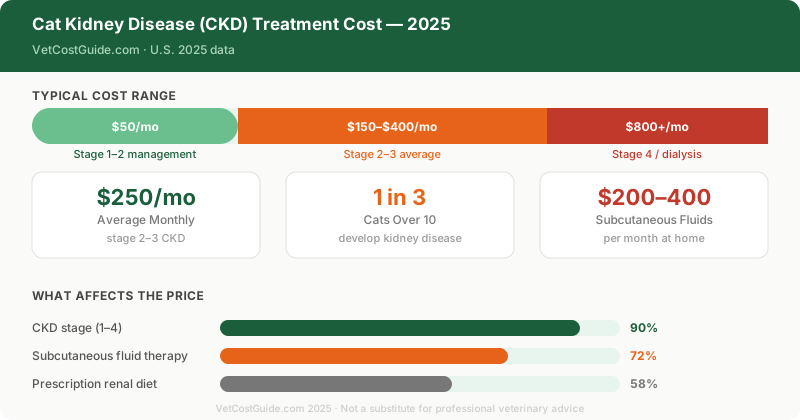
Stage 2 CKD, well-managed? You’re looking at $500–$1,000 per year — mostly prescription food and monitoring bloodwork twice a year. Stage 4, intensive home care? That number climbs to $2,000–$3,000+. The difference between those outcomes isn’t luck — it’s management quality and how early you caught it.
The Cornell Feline Health Center estimates CKD affects roughly 30–40% of cats over age 10. It’s the most common serious diagnosis in senior cats, which is exactly why understanding the cost curve before you’re in crisis matters.
- Stage 1–2 CKD: $500–$1,000/year — primarily prescription diet plus semi-annual monitoring bloodwork
- Stage 3 CKD: $1,000–$2,000/year — adds phosphorus binders, blood pressure medication, more frequent vet visits
- Stage 4 CKD: $2,000–$3,000+/year — at-home subcutaneous fluids, possible EPO injections, intensive monitoring
- At-home subcutaneous fluids cost $50–$100/month in supplies — one of the highest-value interventions available
CKD Cost by IRIS Stage
The International Renal Interest Society (IRIS) staging system classifies CKD in four stages based on creatinine and SDMA levels, with substaging for proteinuria and blood pressure. Each stage carries a different treatment burden — and a different price tag.
| IRIS Stage | Key Interventions | Estimated Annual Cost |
|---|---|---|
| Stage 1 (mild) | Diet + monitoring bloodwork 2x/year | $500–$800 |
| Stage 2 (mild-moderate) | Diet + phosphate monitoring + semi-annual recheck | $600–$1,000 |
| Stage 3 (moderate) | Diet + phosphorus binders + BP meds + quarterly bloodwork | $1,000–$2,000 |
| Stage 4 (severe) | All of above + home SQ fluids + possible EPO injections | $2,000–$3,000+ |
What Each Treatment Line Costs
Prescription renal diet. Hill’s k/d, Royal Canin Renal Support, and Purina NF are the standard options. They’re low in phosphorus and have controlled protein levels. Wet food is strongly preferred over dry — hydration is critical for CKD cats. Expect to pay $60–$120/month depending on how much your cat eats and which brand you use.
Phosphorus binders. When diet alone doesn’t bring phosphorus levels to target — common in Stage 3 and beyond — oral phosphorus binders added to food reduce intestinal absorption. Options include aluminum hydroxide, calcium carbonate, and lanthanum carbonate (Lantharenol). Monthly cost: $30–$80.
Blood pressure medication. Hypertension affects a substantial portion of CKD cats and accelerates kidney damage. Uncontrolled, it can also cause sudden retinal detachment — meaning irreversible blindness is sometimes the first symptom owners notice. Amlodipine or benazepril are standard choices at $25–$50/month.
At-home subcutaneous fluids. This is the biggest quality-of-life intervention for Stage 3–4 cats. You inject saline under the skin every 1–3 days at home — your vet’s team trains you on technique. Supplies (IV bags, lines, needles) run $50–$100/month and are vastly more affordable than in-clinic fluid visits at $80–$200 each.
Monitoring bloodwork. Stage 1–2 cats typically need panels every 6 months ($100–$200 per visit). Stage 3–4 cats may need quarterly or monthly checks. This is non-negotiable — bloodwork tells you whether the disease is stable or progressing.
EPO injections for anemia. In late-stage CKD, failing kidneys produce less erythropoietin, leading to anemia that makes cats exhausted and weak. Darbepoetin alfa (Aranesp) injections every 1–3 weeks cost $100–$200/month in medication plus clinic visit fees if not given at home.
The Cost Variables You Can’t Control
Stage at diagnosis. The single biggest factor. Cats caught at Stage 1–2 on routine bloodwork have a full toolkit of interventions ahead of them. Cats that arrive at the vet in Stage 4 crisis have fewer options and higher immediate costs. This is why the AVMA recommends annual bloodwork for cats starting at age 10 and twice-yearly after 12.
Disease progression speed. Some cats stabilize on diet and fluids for years. Others progress through stages more quickly. There’s genuine individual variation here, and it’s hard to predict from diagnosis alone.
Concurrent conditions. CKD in cats frequently comes with company — hyperthyroidism, hypertension, and urinary tract infections are common companions. Each adds its own medication costs and monitoring burden. A cat managing all three simultaneously can easily spend $250–$400/month on medications alone.
Dehydration is the most dangerous short-term risk for CKD cats. A cat that stops eating or develops vomiting can become critically dehydrated within 24–48 hours — triggering emergency hospitalization at $500–$2,000. Learning to assess hydration at home (skin tent test, gum moisture) and having an early intervention plan can prevent those costs. Ask your vet to show you the signs.
Hospice and End-of-Life Costs
Stage 4 CKD eventually reaches a point where quality of life can no longer be maintained. Recognizing that point — before your cat is suffering — is one of the hardest and most important things you’ll do. In-home euthanasia runs $200–$400 and is worth considering if your cat finds car travel stressful. Clinic euthanasia is typically $100–$250.
Hospice-oriented care — focusing purely on comfort rather than slowing progression — may actually reduce monthly costs in the final weeks while maintaining quality of life. Have that conversation with your vet before you’re in crisis.
Cutting Costs Without Cutting Corners
Master home SQ fluids. This is the single highest-impact cost-reduction for Stage 3–4 cats. Supplies cost $50–$100/month versus $80–$200 per in-clinic visit, and you can give fluids daily if needed.
Buy fluid supplies in bulk. A case of 1-liter saline bags typically runs 20–30% less than individual purchases. Ask your vet if they’ll write a supply prescription or sell in bulk directly.
Prioritize evidence-based interventions. If budget is tight, the hierarchy is: (1) prescription renal diet, (2) phosphorus binders, (3) blood pressure control, (4) SQ fluids. Spread limited dollars here first before adding supplements.
Frequently Asked Questions
It depends heavily on what stage they're diagnosed. Cats caught at Stage 1–2 on routine senior bloodwork can live 3–5+ additional years with good management. Stage 3 cats have a median survival of roughly 1.5–3 years. Stage 4 cats typically survive weeks to months, though quality supportive care — especially at-home subcutaneous fluids — can meaningfully extend comfortable life. Individual variation is high, and some cats defy expectations considerably.
Harder in theory than in practice. Your vet's team will walk you through the technique during a dedicated training appointment — usually 20–30 minutes. Most owners feel nervous the first few times, then find it takes about 5 minutes per session once they're confident. Cats tolerate it remarkably well, probably because they feel better afterward. It's one of the highest-value skills a CKD cat owner can learn.
A prescription low-phosphorus renal diet (Hill's k/d, Royal Canin Renal Support, or Purina NF) is the single most evidence-supported dietary intervention for slowing CKD progression. Phosphorus restriction measurably slows kidney function decline. Wet food is strongly preferred over dry — hydration is critical because CKD cats can no longer concentrate urine efficiently. If your cat refuses prescription food, talk to your vet about palatability options rather than giving up; a cat eating a slightly imperfect diet beats an anorexic cat every time.