Roughly one of the oldest known cat breeds, with a ticked coat that looks like a tiny wild cat — that’s the Abyssinian, and it’s been a Cat Fanciers’ Association favorite for over a century. They’re athletic, curious, and endlessly busy. They also carry a specific genetic blood disorder you can test for, plus a couple of chronic risks worth planning around. Lifetime care runs $8,000 to $14,000.
Abyssinians don’t do “lazy.” They climb, explore, and demand interaction. That energy is part of the charm, but it also means injuries from falls and a metabolism that hides early illness well. Here’s what to budget for.
The inherited disorders
The standout is pyruvate kinase deficiency (PK-Def), an inherited form of anemia that’s well-documented in Abyssinians and is DNA-testable. They also have elevated rates of progressive retinal atrophy (leading to blindness, also testable), renal amyloidosis affecting the kidneys, and dental disease — particularly a painful condition where the body resorbs the teeth.
| Condition | Low | High | Typical |
|---|---|---|---|
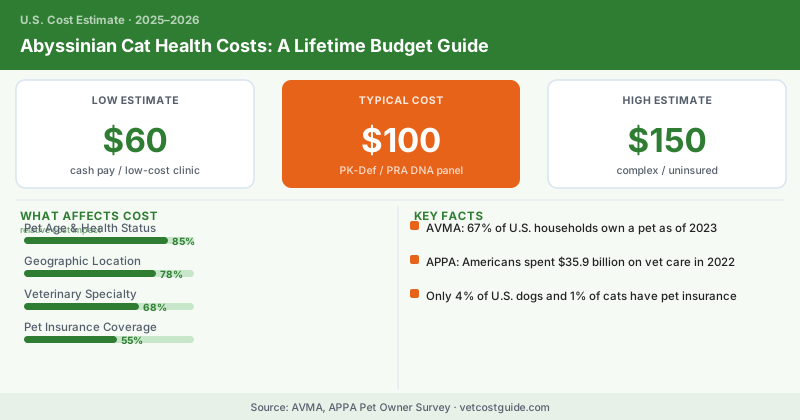
| PK-Def / PRA DNA panel | $60 | $150 | $100 |
| Anemia treatment & monitoring | $800 | $4000 | $2000 |
| Renal amyloidosis/kidney care | $1500 | $6000 | $3500 |
| Dental resorption treatment | $500 | $1800 | $1000 |
| Eye disease management | $300 | $1200 | $600 |
| Routine care (lifetime) | $3500 | $7000 | $5000 |
The kidney risk is the one to watch financially. Renal amyloidosis can lead to chronic kidney disease, putting you on the long management path detailed in our cat kidney disease treatment cost guide — special diets, fluids, and regular bloodwork.
The dental surprise
Abyssinians are notably prone to tooth resorption, where the tooth structure literally breaks down and gets reabsorbed by the body. It’s painful and often hidden — cats hide oral pain expertly. You’ll likely need more frequent dental work than average, so budget for cat teeth cleaning cost and possible extractions on a regular cycle.
- Lifetime vet care for an Abyssinian runs $8,000–$14,000.
- PK-Def anemia and PRA blindness are both DNA-testable — demand clean parent results.
- Kidney disease and painful dental resorption are the chronic, recurring costs.
- Insure young; this breed lives long and accumulates age-related bills.
Getting the money right
Before buying, insist on a breeder who DNA-tests for PK-Def and PRA and shows you negative parent results. That panel costs the breeder around $100 and removes the two scariest inherited risks from the table. There’s simply no good reason to skip it.
After buying, insurance makes sense for a long-lived breed with kidney and dental risk. The longer your cat lives, the more value coverage delivers. Run the numbers in is pet insurance worth it and check pet insurance cost per month.
Abyssinians hide pain extremely well — a cat with painful dental resorption may still eat and act normal. Don’t skip routine dental exams just because your cat “seems fine.” By the time symptoms show, you’re often looking at multiple extractions instead of a simple cleaning.
The yearly plan
Kitten year: cat vaccination cost and a cat spay cost or neuter. Adult years: annual exams (average vet visit cost) with dental checks every visit. Senior years (10+): twice-yearly bloodwork to catch kidney decline early, when it’s cheapest to slow.
The injury risk that comes with the energy
Abyssinians are relentless climbers and jumpers — they treat a bookshelf like a ladder and a curtain rod like a perch. That athleticism means a higher rate of accidental injuries than a sedentary breed: falls, sprains, and the occasional swallowed object that turns into an emergency. Securing high shelves, removing string-like temptations, and providing safe climbing structures isn’t just enrichment; it heads off the emergency-vet bills that active cats rack up.
It also means their illnesses can hide behind their energy. An Aby will often act bright and bouncy well into a developing kidney or dental problem, because slowing down isn’t in their nature. That’s why bloodwork and oral exams matter more than “he seems fine” for this breed — the cat will tell you nothing until the problem is advanced and expensive.
Against the broader annual cost of owning a cat, Abyssinians cost roughly average per year — but their long lifespan and dental needs push the lifetime total up. Test the parents, stay ahead of the teeth, and keep a funding plan ready. This busy little wild-looking cat rewards an owner who plans ahead.
Frequently Asked Questions
Genetic screening for PRA (progressive retinal atrophy) and other hereditary conditions typically costs $200–$400 per test when done at initial adoption or breeding assessment. Some veterinary clinics bundle multiple genetic markers into a single panel for $300–$500, which is more cost-effective if you're testing for multiple conditions common in Abyssinians.
Most pet insurance plans exclude pre-existing conditions, so kidney disease won't be covered if diagnosed before your policy starts. However, if your Abyssinian is enrolled as a kitten with no prior diagnosis, chronic kidney disease treatment (medication, diet, monitoring) is typically covered at 70–90% after your deductible, though you'll pay the first $250–$1,000 out-of-pocket annually depending on your plan.
Veterinarians recommend starting professional dental cleanings between ages 2–4 for Abyssinians, as the breed is prone to early plaque buildup; cleanings typically cost $300–$600 per procedure. Most Abyssinians require cleanings every 1–2 years once started, meaning you should budget $300–$600 annually for preventive dental care throughout their lifetime.