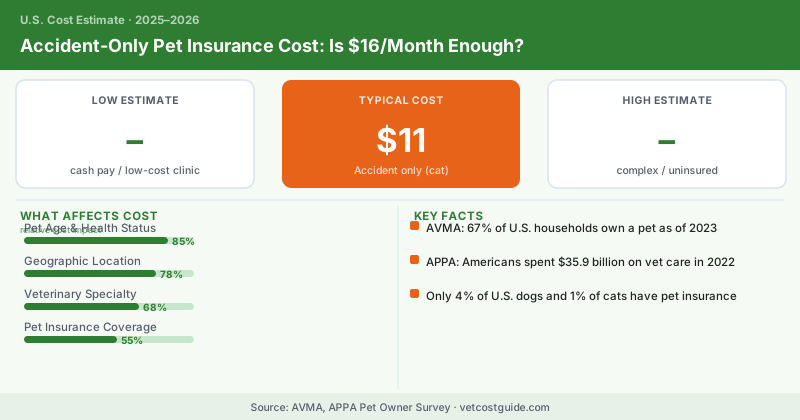
What does the cheapest real pet insurance actually cost? About $16 a month for a dog, $10 for a cat. That’s accident-only coverage—the budget tier that pays for broken bones and swallowed toys but won’t touch cancer, infections, or a single sneeze. The price is tempting. The fine print is where it gets interesting.
Accident-only plans cover exactly what the name says: accidents. A car hit, a torn nail, a foreign object lodged in the gut, poisoning, a fall. If your dog gets sick—cancer, diabetes, an ear infection, kidney disease—you’re on your own. Understanding that line is the whole decision.
- Accident-only plans average $10-$25/month, roughly half the cost of accident-and-illness coverage.
- They cover injuries only: fractures, lacerations, foreign-body ingestion, poisoning, bite wounds.
- They cover nothing for illness—no cancer, infections, allergies, or chronic disease.
- Best fit: young healthy pets, tight budgets, or older pets already excluded from illness coverage.
What You Actually Pay
| Plan Type | Monthly Low | Monthly High | Typical |
|---|---|---|---|
| Accident only (cat) | $8 | $18 | $11 |
| Accident only (dog) | $10 | $25 | $16 |
| Accident + illness (cat) | $15 | $35 | $25 |
| Accident + illness (dog) | $30 | $70 | $48 |
The gap is the story. For a dog, you’re paying about $16 a month for accident-only versus $48 for full coverage—roughly a third of the price. Over a year that’s $192 versus $576, a real $384 difference. The question is whether that saving holds up the first time your pet gets sick instead of hurt. Our monthly cost guide shows how full coverage scales with age.
Who Should Actually Buy Accident-Only
This tier isn’t a scam—it’s a real fit for specific situations:
- Young, healthy pets with low illness risk and owners who want catastrophic injury protection on a budget.
- Active outdoor dogs prone to scrapes, fractures, and foreign-body adventures.
- Older pets that insurers won’t cover for illness anymore, where accident-only is the only door left open.
- Budget-constrained owners who can’t swing full coverage but want something against a $5,000 surgery bill from a car accident.
For most owners with a younger pet, though, the bigger financial risks come from illness. NAPHIA’s 2024 data showed that accident-and-illness policies make up the overwhelming majority of US plans in force—around 98% of dog and cat policies—precisely because illness claims are where the big, unpredictable costs land.
The Illness Blind Spot
The number-one regret with accident-only plans is a cancer or chronic disease diagnosis. A cancer treatment course can run $6,000 to $15,000, and accident-only pays exactly zero of it. If your pet’s breed carries elevated cancer, hip, or organ-disease risk, accident-only leaves your biggest exposure completely uncovered.
Here’s the math problem. Accidents are scary but often one-time events. Illness tends to be chronic, recurring, and expensive year after year. A dog with diabetes might cost $1,200 to $2,400 annually for the rest of its life—and accident-only covers none of it. The APPA’s 2023-2024 survey confirmed US pet owners are spending record sums on veterinary care, and illness-related treatment drives a large share of that.
Accident-Only vs. Just Saving Cash
If you’re choosing accident-only purely to cut cost, compare it honestly against self-insuring. The $192/year you’d spend on accident-only could instead build a small emergency fund—but a fund won’t be big enough to cover a $5,000 accident in year one. Our insurance vs. savings breakdown walks through that tradeoff.
For routine costs, accident-only does nothing—you’ll still pay full price for every vet checkup, vaccine, and dental cleaning out of pocket. And if a true emergency hits before you’ve got cash banked, a CareCredit card may be your only bridge.
One more wrinkle worth knowing: some insurers won’t let you upgrade from accident-only to full coverage later without treating anything diagnosed in between as pre-existing. So if you start on accident-only to save money, then your pet develops a chronic illness, switching up to accident-and-illness may exclude that exact condition. The cheap tier can quietly box you in. If there’s any chance you’ll want full coverage down the road, it’s often cheaper in the long run to start there while your pet is young and has nothing to exclude.
The honest verdict: accident-only is real protection for the right pet at a real discount. But it’s a partial shield, not a full one. If you can stretch to accident-and-illness, the broader coverage usually earns its extra $30 a month the first time your pet gets sick instead of hurt. Buy accident-only with eyes open—knowing exactly what it won’t pay for, and what upgrading later might cost you.
Frequently Asked Questions
Accident-only pet insurance averages $10-$25 per month, with dogs typically around $16/month and cats around $10/month. This makes it roughly half the price of comprehensive coverage that includes illness and hereditary conditions.
Accident-only plans cover injuries from events like car hits, broken bones, torn nails, swallowed foreign objects, and poisoning. They explicitly exclude coverage for illnesses, infections, cancer, and any health condition not caused by a traumatic accident.
Accident-only plans work best for pet owners on tight budgets who can self-insure against illness costs or have younger pets with low disease risk. However, most veterinarians recommend full coverage because unexpected illnesses like infections or cancer can cost $2,000-$10,000+ and accident-only provides zero protection for these common claims.