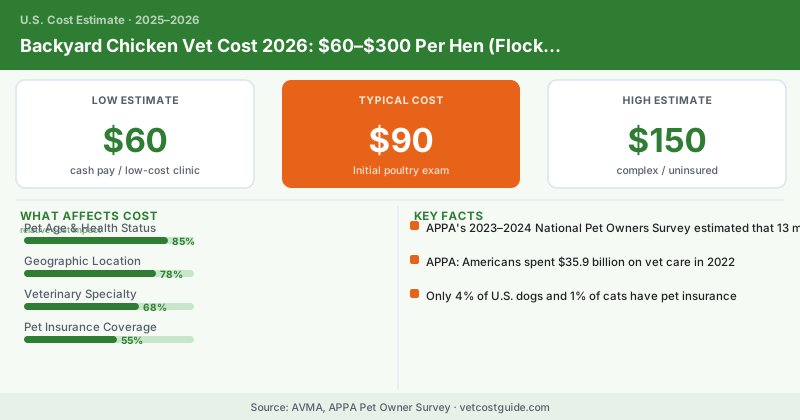
Most backyard chicken owners never take their birds to a vet. That’s not neglect — it’s a rational calculation about per-bird economics that’s baked into how people keep chickens. A hen costs $5–$30. A vet visit costs $60–$150. The math doesn’t pencil out the way it does for a $1,500 dog.
But the calculus is different when a chicken is a named pet. And it’s different when one sick bird might threaten your entire flock.
Here’s when to go, what it costs, and how to think about flock health decisions honestly.
| Service | Low | Typical | High |
|---|---|---|---|
| Initial poultry exam | $60 | $90 | $150 |
| Respiratory culture and sensitivity | $80 | $150 | $250 |
| Fecal parasite screen | $25 | $45 | $70 |
| Egg binding treatment (oxytocin + care) | $80 | $180 | $350 |
| Wound care and bandaging | $60 | $120 | $250 |
| Prolapsed vent treatment | $80 | $200 | $400 |
| Necropsy (per bird) | $60 | $120 | $200 |
| Flock health consult (2–4 birds) | $150 | $250 | $400 |
The Per-Bird Economics of Chicken Vet Care
APPA’s 2023–2024 National Pet Owners Survey estimated that 13 million U.S. households kept poultry — a number that grew significantly during the 2020–2022 backyard flock boom. The vast majority of those keepers treat their chickens as livestock or semi-livestock, making culling decisions based on cost and suffering rather than pursuing veterinary treatment.
That’s not inherently wrong. But it does mean you should be honest with yourself before getting backyard chickens about where you fall on that spectrum. If you name your chickens and give them treats and they sleep in your lap, you’re keeping pet chickens — and you should budget for pet-level vet care, which runs $200–$500 per year for a small flock with any health issues.
When a Vet Visit Protects the Whole Flock
The most compelling case for a vet visit isn’t one sick hen — it’s one sick hen that might mean the rest are next.
Respiratory disease investigation. Infectious bronchitis, Mycoplasma gallisepticum, Newcastle disease, and infectious laryngotracheitis all present with respiratory symptoms (coughing, rattling, nasal discharge, reduced egg production) and can spread through an entire flock in days. A proper respiratory workup — physical exam, PCR testing or culture — costs $150–$350 but can identify a treatable infection vs. a reportable disease vs. an environmental issue (dust, ammonia, cold stress).
Necropsy on a dead bird. If a chicken dies unexpectedly and others show similar symptoms, a necropsy ($60–$200) can identify the cause of death and guide treatment or quarantine decisions for the rest of the flock. A $120 necropsy that prevents a $2,000 flock loss is excellent value.
- Multiple birds showing respiratory symptoms simultaneously
- Sudden unexplained death of an otherwise healthy bird, with others showing signs
- Egg binding in a valued laying hen (treatable, often resolves quickly)
- Serious wound or prolapse in a pet hen
- You suspect Marek’s disease and want to confirm before expanding the flock
- Birds showing neurological symptoms (possible Newcastle disease, which is reportable)
Common Conditions and Treatment Costs
Respiratory Disease
Chickens are susceptible to a range of respiratory pathogens. Mycoplasma gallisepticum (MG) is one of the most common — it causes a chronic, contagious respiratory syndrome with rattling breathing and nasal discharge. It doesn’t kill most birds outright, but it spreads easily and significantly reduces egg production.
Diagnosis: physical exam plus PCR or ELISA testing ($80–$200). Treatment: tylosin or enrofloxacin antibiotics suppress symptoms but don’t eliminate the infection — MG is a lifelong carrier status once infected. Cost: $50–$150 for antibiotic treatment per affected bird.
Marek’s Disease
Marek’s disease is a herpesvirus that causes tumors, paralysis, and death in unvaccinated flocks. Most commercial hatcheries vaccinate at hatch — if you bought from a small breeder or hatchery, confirm vaccination status. There’s no treatment, but vaccination is highly effective.
Diagnosis: clinical signs plus necropsy histopathology ($60–$200). No individual bird treatment exists. Management: remove affected birds, vaccinate remaining unaffected birds from the same hatch (if not already vaccinated).
Coccidiosis
Coccidia are intestinal parasites common in young chickens (pullets) on dirt. Symptoms: bloody or watery diarrhea, lethargy, hunched posture. Highly fatal in chicks without treatment.
Diagnosis: fecal oocyst count ($25–$70). Treatment: amprolium in the water supply for the whole flock, $15–$30 for a treatment course. This is one condition where you’d treat the entire flock simultaneously rather than just one bird.
Egg Binding
A hen unable to pass a forming egg becomes lethargic, stops eating, strains, and may sit penguin-style with her tail down. It’s an emergency — untreated egg binding is fatal within 24–48 hours.
Treatment: warm soaking and calcium supplementation for mild cases (often owner-manageable with guidance); oxytocin injection or manual assistance for unresolved cases ($80–$200 at the vet). Surgical intervention in severe cases ($300–$600). Worth treating in a valued laying hen or pet bird.
Prolapsed Vent (Cloacal Prolapse)
When a hen strains excessively — from large eggs, obesity, or disease — the inner tissue of the vent can prolapse outward. Other hens will peck at the red tissue, which can rapidly escalate to cannibalism and death.
Treat immediately: isolate the bird, clean the prolapse with cool water and hemorrhoid cream, and manually reposition if it’s fresh and soft. If it’s dried out, infected, or won’t stay repositioned, veterinary intervention ($80–$400) is needed. Recurring prolapse may indicate culling is the most humane option.
| Condition | Diagnostic Cost | Treatment Cost | Flock Risk |
|---|---|---|---|
| Mycoplasma gallisepticum | $80–$200 | $50–$150/bird | High — spreads by contact |
| Marek's disease | $60–$200 | None (supportive only) | High — vaccinate remainder |
| Coccidiosis (pullets) | $25–$70 | $15–$30 (whole flock) | High in young birds |
| Egg binding | $60–$120 | $80–$300 | Low — individual bird issue |
| Prolapsed vent | $0–$80 | $80–$400 | Low — individual bird |
| Infectious bronchitis | $80–$200 | Supportive care | High — respiratory spread |
| Newcastle disease (suspected) | Contact state vet | Reportable disease | Flock-level emergency |
Newcastle Disease — When to Call the State Vet
Newcastle disease is a reportable disease under USDA and state agricultural authority jurisdiction. If you see birds with respiratory symptoms combined with neurological signs (twisted neck, circling, paralysis), contact your state veterinarian’s office immediately. Don’t try to treat it yourself and don’t wait. The 2022–2023 HPAI (Highly Pathogenic Avian Influenza) outbreaks were handled through exactly this reporting system — early reporting protects your neighbors’ flocks, not just yours.
State vet offices provide free flock testing for reportable diseases. This is not a cost — it’s a free service you should use when something looks seriously wrong.
Don’t introduce new birds to an established flock without a 30-day quarantine period. This is the single most common way diseases enter backyard flocks. Keep new birds in a completely separate space — different airspace, different shoes/equipment — for 30 days before any contact with resident birds.
Finding a Vet Who Sees Chickens
Most small animal vets don’t see poultry. Large animal vets often focus on cattle and horses. You want either an avian vet with poultry experience or a mixed practice vet who lists poultry as a species they treat.
Start with the Association of Avian Veterinarians directory at aav.org, and look at the species they list. Some large animal vets will do farm calls for backyard flock health consults — often $150–$300 per visit — which is more cost-effective than individual bird exams when you have a flock health question rather than a single-bird emergency.
Annual budget for a backyard flock (5–10 hens): $0–$100 in a healthy year with no vet visits; $200–$600 if you address one health issue. Keep $300–$500 in reserve if your flock matters to you.
Frequently Asked Questions
A poultry exam at an avian or exotic vet runs $60–$120 per bird. Diagnostics add significantly — a respiratory workup including cultures can run $150–$300 per bird. Because chickens cost $5–$30 each, the cost of vet care often exceeds the bird's replacement value, which is why most backyard flock owners make treatment decisions differently than they would for a dog or cat.
There's no standard recommendation for annual exams in backyard flocks the way there is for pets. Most chicken owners don't take birds to vets at all. However, if you keep chickens as pets with names and individual relationships, annual flock health checks — often done per-flock rather than per-bird — make sense. A flock wellness visit examining 2–4 representative birds and reviewing your biosecurity practices runs $150–$350.
This is a deeply personal decision. Factors that favor a vet visit: the bird is a named pet with individual value to your family, the condition is potentially treatable (egg binding, wound, single bird respiratory issue), or you need a diagnosis to protect the rest of the flock (necropsy to identify a disease threat). Factors that favor culling: production bird with no individual attachment, condition is severe and prognosis is poor, the cost of treatment far exceeds the bird's value and your budget.