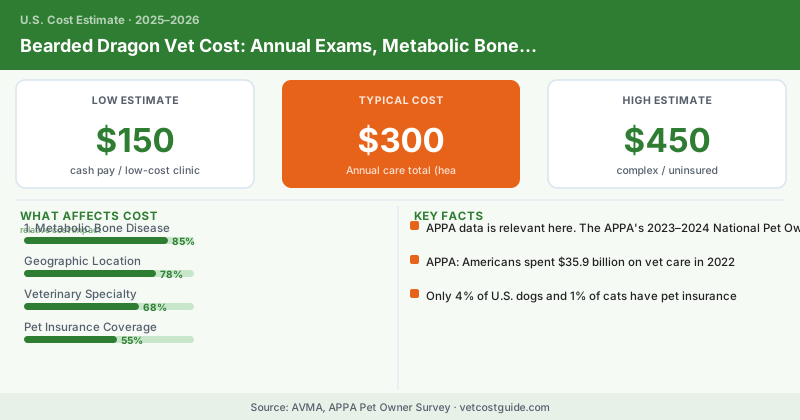
Most people don’t think of a bearded dragon as a “vet bill” kind of pet. That assumption gets expensive. Bearded dragons are exotic animals veterinarily speaking, which means fewer vets are qualified to treat them, the ones who are often charge more, and the diseases they commonly develop — metabolic bone disease, parasites, respiratory infections — can turn a $100 visit into a $600 one fast.
That said, with the right husbandry and annual care, most beardies stay healthy and vet costs are manageable. Here’s exactly what to expect.
Annual Wellness Care Costs
Bearded dragons should see an exotic-experienced vet at least once a year. New dragons warrant a check within the first two weeks of ownership — parasites are extremely common in captive-bred animals, and catching them early is far cheaper than treating a sick, parasite-burdened dragon later.
| Service | Low | Typical | High |
|---|---|---|---|
| Wellness exam (exotic vet) | $60 | $85 | $120 |
| Fecal float (parasite screen) | $25 | $40 | $65 |
| Blood panel (adults 3+) | $100 | $160 | $250 |
| Radiographs (x-rays) | $100 | $175 | $300 |
| Annual care total (healthy adult) | $150 | $300 | $450 |
Why Exotic Vet Rates Are Higher
The AVMA reported in its 2023 Workforce Study that demand for exotic animal veterinarians consistently outpaces supply in most U.S. regions. Practices that invest in exotic training and equipment charge $20–$50 more per visit than general practices — and they’re worth it. A general practice vet who doesn’t regularly treat reptiles won’t reliably identify early metabolic bone disease, respiratory infection, or internal parasites in a bearded dragon.
- Annual wellness exam: $60–$120
- Fecal parasite screen: $25–$65 (do this at every annual visit)
- Blood panel (adults, or any sick dragon): $100–$250
- Radiographs (if MBD or injury suspected): $100–$300
- Emergency fund: $300–$800
- Total annual budget (healthy adult): $150–$400
The Big Three Cost Drivers
1. Metabolic Bone Disease (MBD)
MBD is the most common serious condition in pet bearded dragons, and it’s almost entirely preventable — which makes it genuinely heartbreaking when it happens. Insufficient UVB lighting and calcium/vitamin D3 supplementation prevent the dragon from properly absorbing calcium. The bones weaken, causing deformities, pathologic fractures, and severe pain.
Early signs: slight jaw swelling, subtle tremors, or reluctance to climb. Late signs: visible bone deformities, paralysis, inability to walk. Late-stage MBD is one of the more distressing conditions in reptile medicine.
Treatment costs range from $150–$500 for mild cases (supplemental calcium, vitamin D3 injections, lighting upgrades) to $500–$2,000+ for severe cases requiring hospitalization and supportive care. MBD-related fractures may need splinting or surgery.
2. Parasites
Pinworms, coccidia, flagellates — internal parasites are extremely common in captive bearded dragons. Many young dragons arrive from breeders already infected. A low parasite burden may be tolerable; a high one causes weight loss, lethargy, and can be fatal without treatment.
Fecal float: $25–$65. Parasite treatment (various dewormers and antiprotozoals): $50–$150 per course. Some infections require multiple treatment courses.
3. Respiratory Infections
Respiratory infections (RIs) are frequently husbandry-related — temperatures too cool, humidity too high, or stress from inappropriate housing. Symptoms include wheezing, mucus, open-mouth breathing, and lethargy. Treatment requires antibiotics appropriate for reptiles, sometimes with supportive nebulization therapy.
Diagnosis and treatment: $150–$400 for a straightforward case. Severe pneumonia requiring hospitalization: $400–$1,000+.
| Condition | Diagnostic Cost | Treatment Cost | Outcome |
|---|---|---|---|
| Mild MBD | $100–$250 | $100–$300 | Good with husbandry fix |
| Severe MBD with fractures | $200–$400 | $500–$2,000 | Variable |
| Pinworms (mild) | $25–$65 | $50–$100 | Good |
| Coccidia | $25–$65 | $75–$200 | Usually good |
| Respiratory infection (mild) | $80–$150 | $100–$200 | Good |
| Respiratory infection (severe) | $150–$300 | $400–$1,000 | Variable |
| Adenovirus infection | $100–$300 | Supportive only | Poor in juveniles |
| Egg binding (females) | $150–$300 | $300–$1,500 | Good if treated early |
Egg Binding in Female Bearded Dragons
Female bearded dragons can develop eggs even without a male (infertile clutches). When they can’t pass the eggs — dystocia or “egg binding” — it becomes a medical emergency. Symptoms: straining, lethargy, anorexia, visible swelling of the abdomen.
Treatment options: oxytocin injections to stimulate egg passage ($100–$300), or surgery (salpingectomy/ovariohysterectomy) if injections fail ($500–$1,500). Left untreated, egg binding is fatal.
Never use heat alone to treat a sick bearded dragon. Owners often assume “putting them under the basking light more” will fix illness — it won’t. A lethargic dragon that isn’t eating, has discharge from mouth or nose, or is losing weight needs a vet visit within 24–48 hours. Reptiles hide illness well, and by the time it’s obvious they’re sick, the condition is often already serious.
Husbandry Is the Best Preventive Medicine
The majority of bearded dragon health problems are husbandry-related. Get these right and your vet bills drop dramatically:
- UVB lighting: A high-output UVB bulb (Ferguson Zone 3–4 species; T5 HO 10.0 or equivalent) replacing every 6–12 months. This is non-negotiable for MBD prevention.
- Temperatures: Basking spot 100–110°F, cool side 80–85°F, nighttime no lower than 65–70°F.
- Calcium dusting: Dust feeders with calcium without D3 most feedings, with D3 twice weekly if using appropriate UVB.
- Appropriate diet: Leafy greens (collard, mustard, dandelion) as the dietary base for adults; protein feeders (dubia roaches, crickets) as supplement.
An investment in good lighting equipment — often $60–$150 upfront — prevents the $500–$2,000 cost of treating MBD.
Saving Money on Bearded Dragon Care
Fecal exams twice in year one. New dragons should have two fecal exams in their first year — one right after purchase, one 3–6 months later. Catching parasites early is a $40–$65 fecal test versus a $300 hospitalization for a parasite-burdened, debilitated dragon.
APPA data is relevant here. The APPA’s 2023–2024 National Pet Owners Survey found reptile owners spent an average of $291 per year on veterinary care — lower than dogs or cats, but that average reflects a lot of owners who never go to the vet. When reptile owners do seek care, costs are often in the $200–$600 range per incident.
Exotic pet insurance. Nationwide’s exotic pet plan covers reptiles including bearded dragons. Premiums: $15–$30/month. Useful primarily for covering diagnostic workups and hospitalization costs.
Frequently Asked Questions
How long do bearded dragons live? Bearded dragons live 10–15 years in captivity with good care. That’s a significant long-term commitment, both emotionally and financially. Factor annual vet visits into your 10-year budget.
Do I really need to take my bearded dragon to the vet? Yes — at minimum annually, and any time you notice changes in appetite, stool, behavior, or appearance. Reptiles are masters at hiding illness, and “looking normal” doesn’t mean “being healthy.”
What should I look for in a reptile vet? Look for a practice that advertises exotic or reptile medicine specifically, and ask whether the vet has experience with bearded dragons in particular. The Association of Reptilian and Amphibian Veterinarians (ARAV) maintains a member directory online.
Frequently Asked Questions
A routine annual exam at an exotic veterinary specialist costs between $60–$120, though total annual care including vaccines and preventive treatments typically runs $150–$400. Emergency visits or exams that reveal health issues like metabolic bone disease can cost significantly more, often $300–$600 or higher depending on required diagnostics and treatment.
Most standard pet insurance policies exclude exotic animals like bearded dragons, though a few specialized exotic pet insurance providers offer limited coverage. Out-of-pocket costs typically range from $150–$400 annually for routine care, with serious conditions like metabolic bone disease potentially costing $500–$1,500+ in treatment and diagnostics that would not be covered.
Bearded dragons should have annual wellness exams to screen for common costly conditions including metabolic bone disease, parasites, and respiratory infections. Young bearded dragons (under 2 years) and those with symptoms should be seen 2–3 times yearly; annual exams catch early disease signs that, if left untreated, can escalate from a $100 preventive visit to emergency care costing $600 or more.