Here’s a belief that ends up costing cat owners thousands: “My cat is indoor-only, so I don’t really need insurance.” It’s understandable logic that turns out to be wrong in a costly way. My neighbor’s two-year-old cat, Miso, blocked — a urethral obstruction requiring emergency hospitalization and a $4,800 bill paid entirely out of pocket. The most expensive feline conditions — hyperthyroidism, diabetes, lymphoma, kidney disease — hit indoor cats just as hard as outdoor ones. Cats live long lives, and chronic illness over those years adds up fast.
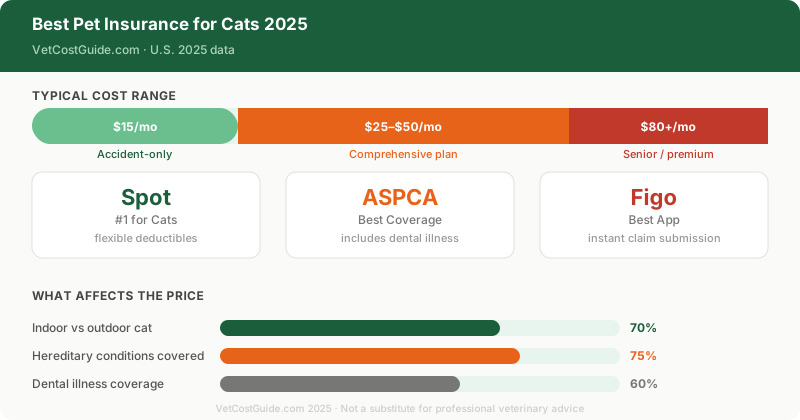
Cat insurance is genuinely affordable: $15–$35 a month for a solid comprehensive plan. The harder question is which provider actually pays when you need them to, and whether the fine print covers what your cat is most likely to develop.
- Cat insurance averages $18–$32/month for a comprehensive accident and illness plan—roughly half the cost of equivalent dog coverage.
- Lemonade offers the most competitive base premiums for cats, with AI-powered claims often settled within hours.
- Figo’s “Pet Cloud” app and 24/7 vet helpline make it particularly strong for first-time cat owners navigating the healthcare system.
- Urinary conditions, hyperthyroidism, and dental disease are among the most common cat claims—verify each is covered before enrolling.
Top 5 Cat Insurance Plans Compared (2025)
Pricing based on a 2-year-old female domestic shorthair in Austin, Texas. $250 annual deductible, 80% reimbursement, $10,000 annual limit where applicable.
| Provider | Monthly Premium | Reimbursement | Annual Limit | Standout Feature |
|---|---|---|---|---|
| Lemonade | $18 | 70–90% (choice) | $100K lifetime | Fastest claims processing |
| Embrace | $22 | 70–90% (choice) | $5K–unlimited | Dental illness included |
| ASPCA | $21 | 70–90% (choice) | $10K annual | Exam fees included |
| Spot | $19 | 70–90% (choice) | $2.5K–unlimited | Per-incident deductible option |
| Figo | $24 | 70–100% (choice) | $10K–unlimited | 24/7 vet helpline + app |
Breaking Down What Each Plan Actually Covers
Lemonade handles the full spectrum of cat health crises: accidents, illnesses, cancer, hereditary conditions, chronic diseases like hyperthyroidism and diabetes. Their wellness add-on layers in vaccines and flea prevention. What genuinely sets Lemonade apart is claims speed — their AI system processes minor claims in under 24 hours, sometimes within minutes. The $100,000 lifetime cap sounds limiting but is more than sufficient for nearly any cat’s lifetime of care.
Embrace is the plan to choose if dental health is a concern — and it should be. Periodontal disease affects over 70% of cats by age 3, according to the American Veterinary Dental Society. Most accident-and-illness plans cover broken teeth but exclude diseased gums. Embrace covers both. They also run a wellness rewards program reimbursing up to $650 annually in routine care, plus a diminishing deductible that drops $50 per claim-free year. Stay with them long enough and the deductible essentially disappears.
ASPCA (underwritten by Independence American) includes exam fees inside the base policy. That sounds minor until you realize every vet visit triggers a $60–$150 exam charge before anyone looks at your cat. Over years of twice-yearly checkups, those fees add up to real money. The ASPCA plan also covers alternative therapies and behavioral treatments as standard, not add-ons.
Spot wins on configurability. You can opt for an annual deductible or a per-incident structure — the latter becomes advantageous when your cat develops multiple separate conditions in the same policy year. Annual limits span from $2,500 all the way to unlimited, so Spot can function as either a budget safety net or comprehensive catastrophic coverage depending on how you set it up.
Figo is built for cat owners who want more than a reimbursement mechanism. Their Pet Cloud platform stores health records and vaccination histories, sends reminders, and tracks claims in real time. The 24/7 licensed vet helpline is included at no extra cost — valuable when your cat starts acting strange at 11 p.m. and you’re not sure whether it’s an emergency. They’re also the only provider offering a 100% reimbursement option, meaning zero out-of-pocket after your deductible is met.
What Actually Drives Your Premium
Breed influences pricing more than most cat owners expect. Domestic shorthairs and mixed breeds get the cheapest rates. Purebreds carry documented breed-specific risks that insurers price in: Maine Coons face hypertrophic cardiomyopathy, Persians are prone to polycystic kidney disease, and Siamese cats have elevated rates of mediastinal lymphoma. These aren’t hypothetical — they’re actuarial realities.
Indoor vs. outdoor status matters at some providers, but less than you’d think. The premium difference is usually $2–$6/month. More important: indoor status doesn’t substantially reduce the risk of the expensive stuff. Chronic disease doesn’t care whether your cat goes outside.
Age at enrollment is arguably the biggest lever you control. Cats enrolled before age 2 get the lowest rates and the fewest exclusions. A 3-year-old with even a “we’re watching this” cardiac notation in the chart may find cardiac conditions completely locked out of any new policy. Every year of delay adds more medical history for insurers to work with.
Location shifts premiums meaningfully. Veterinary markets in New York, Boston, and San Francisco run 25–40% more expensive than mid-sized metros, and insurers price accordingly. Your zip code is one of the first things a quote form asks for.
- Assuming indoor cats don’t need insurance. The biggest cat insurance claims—cancer, diabetes, urinary blockages, kidney disease—are just as common in indoor cats as outdoor cats. Indoor status doesn’t substantially reduce chronic disease risk.
- Not verifying that dental disease is covered. Many “accident and illness” plans cover dental accidents (broken tooth) but exclude dental illness (periodontal disease, tooth resorption). Since dental disease is one of the most common feline conditions, this exclusion represents a significant gap. Embrace and ASPCA both cover dental illness.
- Choosing a lifetime cap without doing the math on chronic diseases. A cat diagnosed with diabetes at age 5 may require insulin, glucose curves, and quarterly vet visits for 10+ years. That adds up to $8,000–$15,000 over a lifetime. A $100,000 lifetime cap is fine for most cats; if your cat has a chronic disease risk, consider an unlimited plan.
What We Recommend
Best overall for most cats: Lemonade. The combination of low premiums, fast digital claims, and solid comprehensive coverage makes it the strongest value for the average cat owner. The lifetime cap limitation is real but rarely a practical concern.
Best for dental coverage: Embrace. If your cat is any breed over age 2, dental illness is a near-certainty over their lifetime. Embrace’s inclusion of dental illness in the base plan is worth the modest premium difference over Lemonade.
Best for new cat owners: Figo. The 24/7 vet helpline, health tracking app, and responsive customer support make Figo the best choice for owners who want active guidance alongside insurance coverage.
Best for flexibility: Spot. Per-incident deductible options and the full range of annual limits make Spot uniquely configurable for different risk tolerances and budgets.
Getting Started the Right Way
- Enroll your cat as young as possible — ideally before their first annual wellness visit when a vet might document findings that become exclusions.
- Pull quotes from Lemonade, Embrace, and Spot simultaneously, using identical parameters, to identify the best current pricing for your cat’s age and location.
- Ask each insurer specifically about coverage for urinary conditions, hyperthyroidism, and dental disease — the three most common costly cat conditions.
- Consider adding a wellness plan only if your cat’s routine care costs (vaccines, annual exams, dental cleanings) approach or exceed the add-on cost.
- Review your policy at each renewal — insurers sometimes update exclusion lists, and a competitive re-quote every 2 years ensures you’re not overpaying.
Frequently Asked Questions
Does cat insurance cover urinary blockages? Yes — urinary blockages are covered by all five plans reviewed here as an acute illness event, provided the condition was not documented before your policy start date. Urethral obstruction treatment runs $1,500–$3,000 and is one of the most common reasons cat owners file large claims.
Is pet insurance worth it for indoor cats? In most cases, yes. The high-value cat insurance claims — lymphoma, hyperthyroidism, kidney disease, urinary issues — occur just as frequently in indoor cats. At $18–$25/month, even a single hospitalization event returns years of premiums.
What’s the waiting period for cat insurance? Most plans impose a 14-day waiting period for illnesses and a 2-day waiting period for accidents after enrollment. Some plans (including Figo) offer a shorter accident waiting period of 24 hours.
Can I insure a cat that already has hyperthyroidism? Yes, but the hyperthyroidism itself and any conditions related to it will be excluded as a pre-existing condition. The policy would still cover future unrelated illnesses, accidents, and cancer — still valuable coverage, especially for younger cats with a long remaining life expectancy.
Frequently Asked Questions
Emergency treatment for urethral obstruction in cats typically ranges from $3,000 to $5,500, with hospitalization, catheterization, and diagnostics making up the bulk of the bill. In the article example, one cat owner paid $4,800 out of pocket when their two-year-old cat required emergency hospitalization for this condition.
Yes, the best cat insurance plans cover indoor cats for accidents and illnesses like urinary blockages, though many policies have deductibles ranging from $250 to $1,000 and cover 70–90% of eligible expenses. Without insurance, an emergency like urethral obstruction can cost $4,000–$5,500 entirely out of pocket, making coverage valuable even for indoor-only cats.
Urethral obstruction is a medical emergency requiring treatment within 24–48 hours to prevent kidney damage, sepsis, or death, making immediate emergency veterinary care essential. Delaying treatment significantly increases both the severity of the condition and the final cost, which is why having pet insurance can be critical for covering these urgent expenses.