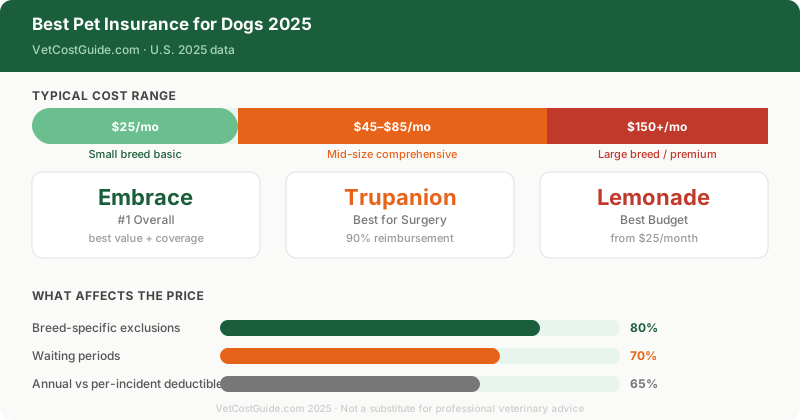
Two dogs. Same breed, same age, same city. One owner pays $41/month for pet insurance, the other pays $67/month. The gap isn’t explained by one company being more generous — it’s explained by completely different policy structures. That $41 plan has a $100,000 lifetime cap that could disappear after one bad orthopedic year. The $67 plan has no cap, pays 90% on every eligible claim, and sends payment directly to the vet.
Dog insurance premiums can vary by 200% or more between providers for the exact same dog because they’re pricing risk differently and offering fundamentally different products. We went through the actual policy documents for the five most-used providers in 2025. Here’s what we found.
- Trupanion is the only major insurer offering 90% reimbursement with no payout cap and direct vet payment—ideal for high-risk breeds.
- Embrace’s diminishing deductible feature (deductible drops $50/year with no claims) rewards healthy dogs and long-term loyalty.
- Lemonade offers the lowest entry-level premiums but caps out at $100,000 lifetime, which matters for dogs with chronic conditions.
- ASPCA’s plan is one of the few that covers behavioral therapy and exam fees within the base policy—a meaningful differentiator.
Top 5 Dog Insurance Plans Compared (2025)
Pricing based on a 3-year-old male Labrador Retriever in Columbus, Ohio. $250 annual deductible, 80% reimbursement, $10,000 annual limit where applicable. Actual quotes will vary by zip code, age, and breed.
| Provider | Monthly Premium | Reimbursement | Annual Limit | Standout Feature |
|---|---|---|---|---|
| Embrace | $52 | 70–90% (choice) | $5K–unlimited | Diminishing deductible |
| Trupanion | $67 | 90% | Unlimited | Direct vet payment |
| Lemonade | $41 | 70–90% (choice) | $100,000 lifetime | Fast AI-driven claims |
| ASPCA | $48 | 70–90% (choice) | $10K annual | Covers behavioral therapy |
| Spot | $44 | 70–90% (choice) | $2.5K–unlimited | Flexible add-ons |
How Each Plan Actually Works
Embrace covers accidents, illnesses, cancer, hereditary and congenital conditions, orthopedic issues, dental illness, and alternative therapies like acupuncture. The wellness rewards program handles routine care on a separate reimbursement track. What makes Embrace stand out structurally is the Healthy Pet Deductible — your deductible drops by $50 every claim-free year. Stay five years without filing a claim and you’ve effectively eliminated a $250 deductible. It’s a meaningful loyalty benefit that most insurers simply don’t offer.
Trupanion doesn’t play by the same rules as the others: one plan, 90% reimbursement, no annual or lifetime payout cap. Their direct payment network covers over 9,000 veterinary clinics, meaning the vet bills Trupanion directly and you walk out paying only your 10% share. For owners of French Bulldogs, Bernese Mountain Dogs, or other breeds with near-certain expensive health events ahead of them, Trupanion’s unlimited structure makes more financial sense than any capped alternative. The trade-off is higher premiums — this is the most expensive plan in our comparison.
Lemonade was built by engineers, and it shows. Claims submitted through their app get reviewed by AI — uncomplicated claims often resolve in minutes. Their coverage is solid across accidents and illnesses, with an optional preventive care add-on. The main thing to watch: the $100,000 lifetime cap. For dogs with expensive chronic conditions like diabetes or inflammatory bowel disease, that limit can approach faster than owners expect over a decade of treatment.
ASPCA (underwritten by Independence American) includes two things that most competitors charge extra for: exam fees and behavioral therapy. That $75–$150 exam fee appearing on virtually every illness visit? Covered. Anxiety, aggression, destructive behaviors? Also covered. If your dog has behavioral issues being addressed alongside physical health problems, ASPCA’s policy structure is the most inclusive available.
Spot earns its place through flexibility. Per-incident deductible options — rare in this industry — can work in your favor if your dog develops multiple separate conditions in one year. Annual limits range from $2,500 to unlimited. You can configure a very basic safety net policy or a comprehensive catastrophic coverage plan, depending on your risk tolerance and budget.
The Variables That Move Your Premium
Breed is the biggest single driver. Insurers have decades of actuarial data on breed-specific claim patterns, and the numbers are stark. A French Bulldog costs 60–90% more to insure than a comparable mixed breed because the data shows they’ll cost that much more to treat. Labs and Goldens sit in a middle tier — elevated orthopedic and cancer risk. Mixed breeds get the lowest rates, full stop.
Age at enrollment shapes both your immediate premium and your long-term coverage access. That $38/month Lab policy at age 1 may run $95/month by age 8 — if the insurer still offers renewal terms. More importantly, everything your vet documents before your policy starts becomes a permanent exclusion. Get ahead of the record.
Location matters more than people realize. An identical Lab costs $52/month in Columbus, $71/month in Los Angeles, and $78/month in Manhattan. Veterinary cost variations drive this directly — insurers price by market.
Deductible and reimbursement choices are the levers you control. Raising your annual deductible from $250 to $500 typically cuts your premium 20–28%. Dropping reimbursement from 90% to 70% saves another 15–20%. Neither of these moves changes what’s covered — just who pays what portion of an eligible bill.
- Choosing a plan with a low annual limit to save money. A $5,000 annual limit sounds reasonable until your dog needs a TPLO knee surgery ($4,500–$6,500) plus physical therapy. Choose unlimited or at least $15,000 annual coverage for large breeds.
- Not checking if your vet accepts direct payment from Trupanion. If Trupanion’s direct payment feature is a key selling point for you, verify your vet participates before enrolling—not all clinics are in the network.
- Skipping the waiting period planning. Most plans have a 14-day waiting period for illnesses and 6 months for orthopedic conditions. Don’t enroll the week before your dog starts limping.
Our Recommendation
Best overall for most dogs: Embrace. The combination of customizable deductibles, comprehensive coverage including dental illness, and the diminishing deductible loyalty benefit makes it the strongest all-around choice for dogs under age 6.
Best for high-risk or large breeds: Trupanion. The unlimited payout, single 90% reimbursement rate, and direct vet payment program make it the most protective option for dogs likely to face expensive orthopedic or chronic disease costs.
Best budget option: Lemonade. For owners with a decent emergency savings cushion who want protection against catastrophic costs, Lemonade’s lower premiums and fast claims processing provide solid value — just watch the lifetime cap.
Best for behavioral or exam fee coverage: ASPCA. If your dog has anxiety issues or you want exam fees included, ASPCA’s policy structure covers ground the others charge extra for.
How to Get Started
- Gather your dog’s medical records and confirm there are no recent illness or injury visits that could trigger pre-existing condition exclusions.
- Pull quotes from at least three providers using the same coverage parameters (same deductible, reimbursement %, and limit) to make an apples-to-apples comparison.
- Check your vet’s preferred payment methods — if they participate in Trupanion’s direct pay program, that may tip the scales.
- Enroll as soon as possible. Every month you wait is another month your dog can develop a condition that will be permanently excluded.
- Set a 2-year renewal reminder to re-shop your policy — premiums increase at renewal and a competing quote often prompts a retention offer.
Frequently Asked Questions
Which dog insurance has the best claim payout rate? Trupanion publishes industry-leading claim approval rates and processes most claims within 5 business days (same day for direct pay vets). Embrace and Lemonade also perform well for straightforward illness and accident claims.
Does dog insurance cover hip dysplasia? All five plans reviewed here cover hip dysplasia if it’s diagnosed after enrollment and not documented in your dog’s records before the policy start date. Breeds predisposed to hip dysplasia (Labs, German Shepherds, Golden Retrievers) pay higher premiums partly because of this coverage.
Can I use any vet with dog insurance? Yes — all five plans reviewed allow you to use any licensed veterinarian or specialist in the US. There are no networks or required referrals. Trupanion’s direct pay feature requires a participating clinic, but you can still get reimbursed at any vet.
What age is too old to insure a dog? Most insurers stop accepting new enrollments at age 14. However, premiums for dogs over age 7–8 are significantly higher and many pre-existing conditions will already be excluded. We cover this topic in depth in our guide to pet insurance for older dogs.
Frequently Asked Questions
Pet insurance for dogs typically ranges from $41 to $67 per month depending on the plan structure, breed, age, and location. Cheaper plans often come with annual caps or lifetime limits that can be exhausted after major claims, while higher-priced plans may offer higher reimbursement percentages (80-90%) with no annual or lifetime caps.
Most pet insurance plans cover accidents, illnesses, and hereditary conditions, with reimbursement ranging from 70-90% after you meet your deductible. Common exclusions include pre-existing conditions, routine care (vaccinations, checkups), dental cleanings, and breed-specific conditions, though some plans offer add-ons for these services at extra cost.
Most pet insurance companies process claims within 5-10 business days after you submit your veterinary records, though some companies like Trupanion offer direct payment to your vet, eliminating the wait. You typically pay the vet upfront and then receive reimbursement from the insurance company, or submit receipts within 90 days of the visit for reimbursement.