Birds hide illness until they can’t hide it anymore. By the time a budgie or parrot looks sick, it’s been sick for days — sometimes weeks. That’s not bad luck. It’s prey species behavior. A bird that acts sick in the wild becomes the target. So they perform wellness until performance becomes impossible.
It’s also why annual avian vet exams matter more than most bird owners realize. And it’s why finding a vet who actually knows birds is worth the extra effort — and extra cost.
- Avian wellness exam: $75–$200 (typically 20–50% more than a dog/cat exam)
- Annual blood panel for parrots: $80–$200
- Beak and nail trim: $20–$50
- DNA sexing: $30–$60
- Psittacosis testing: $50–$100
- Wing clip: $20–$40
- Treatment for common illness (respiratory, bacterial): $150–$400
- Hospitalization for serious conditions: $300–$2,000+
Finding an Avian Vet: The First Challenge
This is genuinely harder than finding a dog vet. Most general practitioners have little to no avian training — birds are anatomically different from mammals in ways that matter for diagnosis and treatment. Avian physiology, drug dosing, anesthetic protocols, and diagnostic interpretation require specialized knowledge.
The Association of Avian Veterinarians (AAV) maintains a member directory at aav.org where you can search for avian-experienced vets by zip code. For the highest level of care, look for a vet board-certified by the ABVP (American Board of Veterinary Practitioners) in Avian Practice — designated as Diplomate ABVP (Avian). These specialists have passed rigorous examinations and maintain continuing education requirements.
Not every area has one. Some bird owners legitimately drive 90 minutes each way for their parrot’s annual exam. It’s worth it.
Exam Costs: Why Avian Vets Charge More
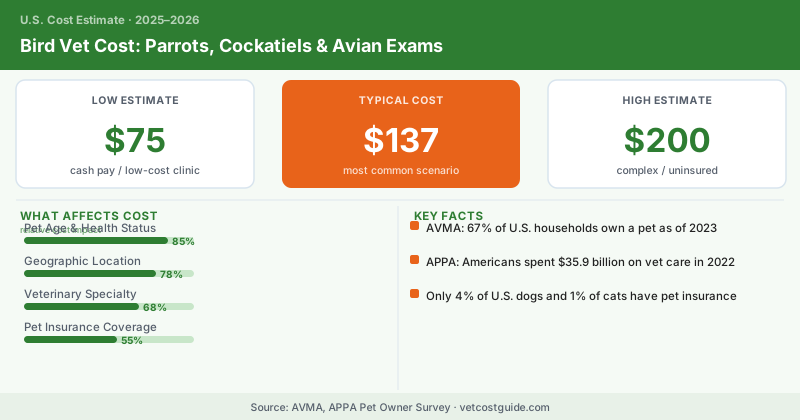
Avian exams run $75–$200, typically 20–50% higher than a comparable dog or cat exam. This reflects several real factors:
- Smaller patient base: Avian vets see fewer patients per day than small animal practices; overhead is spread across fewer appointments.
- Specialized training and equipment: Avian radiographs, endoscopy, and blood chemistry panels require different equipment and expertise.
- Visit complexity: A bird exam involves assessing weight relative to breed standards, examining the oral cavity (choana), assessing feather condition, performing crop evaluation, and observing the bird’s posture and breathing — all requiring hands-on handling and restraint.
Budget $100–$150 for a routine wellness exam at an avian-experienced vet in most US markets.
Annual Blood Panel for Parrots
If you own a parrot — African Grey, Amazon, cockatoo, macaw, conure, eclectus — an annual blood panel is not optional. It’s essential.
Large psittacines commonly develop:
- Liver disease (psittacine hepatic lipidosis and cholangiohepatitis) — often from high-fat seed diets, with no external symptoms until advanced
- Heavy metal toxicity (zinc and lead) from ingesting cage hardware, galvanized wire, old paint, or certain toys — detectable only via blood levels
- Psittacosis (Chlamydophila psittaci) — a bacterial infection that’s also a zoonotic risk to humans; some states require testing on import or sale
Blood panel cost: $80–$200 depending on what’s included (CBC, chemistry, heavy metals, psittacosis titer). A basic CBC plus chemistry runs $80–$130. Adding heavy metal screening adds $30–$50.
Species-by-Species Cost Comparison
| Species | Annual Exam Cost | Blood Panel | Notes |
|---|---|---|---|
| Budgerigar (parakeet) | $75–$120 | Optional ($80–$130) | Common health issues: tumors, mites, thyroid |
| Cockatiel | $80–$140 | Recommended ($80–$130) | Females prone to egg binding |
| Conure | $90–$160 | Recommended ($80–$150) | Social; respiratory issues common |
| African Grey | $100–$200 | Essential ($100–$200) | Hypocalcemia; psittacosis risk |
| Amazon parrot | $100–$180 | Essential ($100–$180) | Obesity; respiratory; liver disease |
| Cockatoo | $100–$200 | Essential ($100–$200) | Feather destructive behavior; psittacosis |
| Macaw | $120–$200 | Essential ($100–$200) | PDD risk; heavy metal toxicity common |
Common Procedures and Their Costs
Beak and nail trims are routine maintenance — $20–$50. Many birds need trims every 3–6 months. Overgrown beaks can indicate nutritional deficiency, liver disease, or psittacine beak and feather disease (PBFD), so your vet should look at the cause, not just the trim.
DNA sexing ($30–$60) uses a blood feather or feather pulp sample to determine sex in monomorphic species (cockatiels, African Greys, conures) where males and females look identical. Useful for behavioral management and medical history — females of most species are prone to egg binding and chronic egg-laying problems that males obviously aren’t.
Wing clip ($20–$40) is elective and owner-preference-based. Many avian vets will teach owners to do this at home with proper instruction.
Egg Binding: A Common Emergency
Female birds — especially cockatiels, budgies, and lovebirds — can develop egg binding, where an egg becomes lodged in the reproductive tract. It’s a life-threatening emergency if not treated promptly.
Signs: sitting fluffed on the cage floor, straining, tail bobbing, wide-based stance. Time matters — a bound egg can cause cloacal prolapse, toxemia, or death within hours.
Emergency treatment cost: $300–$800 depending on whether the egg can be manually assisted out with calcium injections and lubrication versus requiring surgical intervention. Chronic egg layers may benefit from hormone implants (Suprelorin, if available in your state) or surgical spay — $400–$1,500 depending on the procedure.
Psittacosis: The Zoonotic Risk
Psittacosis (Chlamydophila psittaci) infects birds and can be transmitted to humans, causing a flu-like illness and, in severe cases, pneumonia. It’s a reportable disease in many US states.
Birds can carry the organism asymptomatically. Testing runs $50–$100. Treatment with doxycycline (45-day course) costs $30–$80 for the medication. If you have young children, immunocompromised family members, or you’ve recently acquired a new bird, psittacosis testing is worth discussing with your avian vet.
When It Becomes Serious: Hospitalization Costs
The AAV notes that avian medicine has advanced considerably, but some conditions still carry serious treatment costs:
- Proventricular dilatation disease (PDD/macaw wasting disease): inflammatory neurologic disease affecting the GI tract; management with COX-2 inhibitors ($50–$150/month) — no cure
- Aspergillosis: fungal infection of the respiratory system; treatment requires antifungal medication ($200–$600/month) and often extended hospitalization ($300–$1,500+ per episode)
- Proventricular foreign body (ingested object): endoscopic or surgical removal ($500–$1,500)
Hospitalization for a critically ill bird: $200–$500/day at a facility equipped for avian intensive care, which not every vet hospital offers.
Don’t use aerosol sprays, scented candles, non-stick (PTFE/Teflon) cookware, or air fresheners near birds. Polytetrafluoroethylene (PTFE) fumes from overheated non-stick pans are acutely lethal to birds — they can die within minutes of exposure. Avocado is also toxic. These aren’t minor precautions; they’re genuine immediate-death risks. Even a brief exposure to PTFE fumes from a pan heated too high can kill a parrot before you notice anything is wrong.
Building Your Annual Bird Care Budget
A realistic annual budget for a healthy parrot in the US:
- Annual wellness exam: $100–$175
- Blood panel: $100–$180
- Beak and nail trims (2x per year): $40–$100
- Psittacosis titer (every 2–3 years): $50–$100 amortized
- Unexpected sick visit cushion: $200–$400
Total for a healthy large parrot: $440–$855/year. For smaller species like cockatiels or budgies, trim this by 30–40%.
These are the baseline costs when everything goes right. Have a financial plan for when it doesn’t.
Frequently Asked Questions
The Association of Avian Veterinarians (AAV) recommends annual wellness exams for all pet birds. For parrots and large psittacines, a comprehensive blood panel should be included annually — these species commonly develop liver disease, heavy metal toxicity, and psittacosis silently, without obvious symptoms. Cockatiels and budgies can sometimes go 1–2 years between exams if completely healthy, but annual visits are still best practice. Given how well birds hide illness, a bird that looks fine at a yearly exam is very different from a bird that hasn't been examined in four years.
Most general practice veterinarians have minimal training in avian medicine — birds are anatomically and physiologically different from mammals in ways that matter clinically. Avian vets have pursued additional education and clinical experience specifically with birds. Some are board-certified by the ABVP (American Board of Veterinary Practitioners) in the Avian Practice specialty — these are the highest-qualified avian vets. You can find AAV member vets and ABVP-certified avian specialists through the AAV's online locator at aav.org. Not every city has one; some owners drive 1–2 hours for avian care.
In cockatiels: respiratory infections, psittacine beak and feather disease (PBFD), and egg binding in females. In budgies: tumors (especially kidney and gonadal tumors — very common in older budgies), thyroid issues, and air sac mites. In African Greys and Amazons: calcium deficiency (hypocalcemia), psittacosis, and proventricular dilatation disease (PDD, also known as macaw wasting disease). In all large parrots: heavy metal toxicity from zinc or lead ingestion is more common than most owners expect — anything galvanized, old paint, or certain toys can be sources.