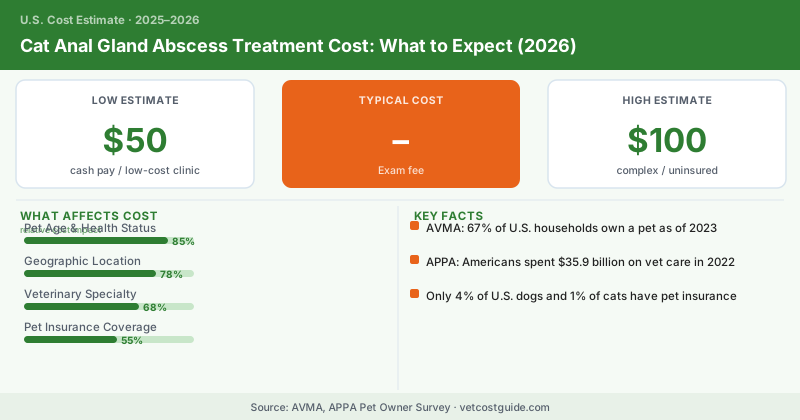
Is that swollen, painful lump near your cat’s tail actually an anal gland abscess? If your cat is licking obsessively at their rear end, scooting, or you’ve noticed a foul-smelling discharge on furniture, the answer is probably yes — and this is one of those problems that gets dramatically more expensive the longer it’s left untreated.
Anal gland abscesses happen when one of the two small scent glands near a cat’s anus becomes blocked, infected, and eventually ruptures through the skin. Unlike dogs, cats develop this condition less often — but when they do, it tends to be more painful and requires faster intervention because cats are less tolerant of manual gland expression and the infection can progress quickly.
- Exam and diagnosis: $50–$100
- Draining, flushing, and antibiotics (non-surgical): $200–$500
- Sedation or general anesthesia for thorough cleaning: $150–$400 additional
- Surgical removal (anal sacculectomy) if recurrent or severe: $800–$1,500
- Most cases resolve without surgery if caught early
Full Cost Breakdown
| Treatment Component | Low End | High End | When Needed |
|---|---|---|---|
| Exam fee | $50 | $100 | Every case |
| Manual expression/drainage | $50 | $150 | Uncomplicated cases |
| Flushing and cleaning (sedated) | $150 | $400 | Ruptured or deep abscess |
| Oral antibiotics (2-week course) | $30 | $80 | Nearly all cases |
| Pain medication | $20 | $60 | Nearly all cases |
| E-collar | $10 | $25 | To prevent licking during healing |
| Follow-up recheck | $40 | $90 | 1-2 weeks after initial treatment |
| Anal sacculectomy (surgical removal) | $800 | $1,500 | Recurrent or severely damaged glands |
What Actually Happens at the Vet
For an uncomplicated abscess that hasn’t ruptured yet, your vet will sedate or lightly anesthetize your cat to thoroughly express and flush the affected gland, since cats tolerate this far less well awake than dogs do. If the abscess has already ruptured — which is common by the time owners notice something’s wrong — the open wound gets flushed, cleaned, and left to heal from the inside out, similar to how a lanced boil heals in humans. Your cat goes home on oral antibiotics and pain medication, wearing an e-collar to prevent licking at the site.
Most cases resolve within 1-2 weeks with this approach. The total non-surgical cost, including the follow-up recheck, typically lands at $300–$650.
When Surgery Becomes Necessary
If a cat has recurrent abscesses — meaning the same gland has become infected multiple times — or if the tissue damage from a single severe abscess is extensive, your vet may recommend surgical removal of the affected gland (anal sacculectomy). This is a more involved surgery than in dogs proportionally, since cat anal glands sit close to nerves controlling continence, and a skilled surgeon matters here.
Surgical removal runs $800–$1,500 depending on whether one or both glands are removed and whether a general practitioner or specialist performs it. Recovery takes 10-14 days with an e-collar and restricted activity.
- Scooting, excessive licking near the tail base, or a strong fishy odor are early warning signs — don’t wait for visible swelling
- A ruptured abscess needs vet attention within 24 hours to prevent the infection from spreading
- Recurrent abscesses in the same location often indicate an underlying issue (obesity, chronic loose stool, glandular abnormality) worth investigating
- Never attempt to lance or drain an abscess at home — this risks worsening the infection and causing significant pain
Why This Is Less Common in Cats Than Dogs
Cats naturally express their anal glands more effectively during normal defecation because of differences in stool consistency and gland anatomy compared to dogs. This is part of why anal gland issues are reported far less frequently in cats in general veterinary practice. When it does happen, an underlying cause — like chronic diarrhea, obesity making normal expression harder, or a structural gland abnormality — is often present, and it’s worth your vet investigating that root cause rather than just treating the immediate abscess.
Preventing Recurrence
If your cat has had one abscess, ask your vet about weight management if your cat is overweight, since excess weight is a genuine risk factor for reduced natural gland expression. Chronic soft stool from food sensitivities or GI issues can also contribute, so addressing diet if your vet identifies a connection is worthwhile. For cats with two or more abscesses in the same gland, discuss surgical removal proactively — it’s a one-time cost of $800-$1,500 versus repeated $300-$650 treatments plus ongoing discomfort for your cat.
Frequently Asked Questions
Treating a ruptured anal gland abscess in cats typically costs $200–$800, covering the exam, draining and flushing, antibiotics, and pain medication. If the gland is severely damaged and requires surgical removal (anal sacculectomy), total cost rises to $800–$1,500.
Anal gland abscesses are far less common in cats than in dogs — cats rely much more on scent marking through these glands and typically express them naturally during defecation. When abscesses do occur in cats, they're often linked to underlying issues like obesity, chronic soft stool, or glandular infection, so a vet should look for a root cause rather than treating it as an isolated event.