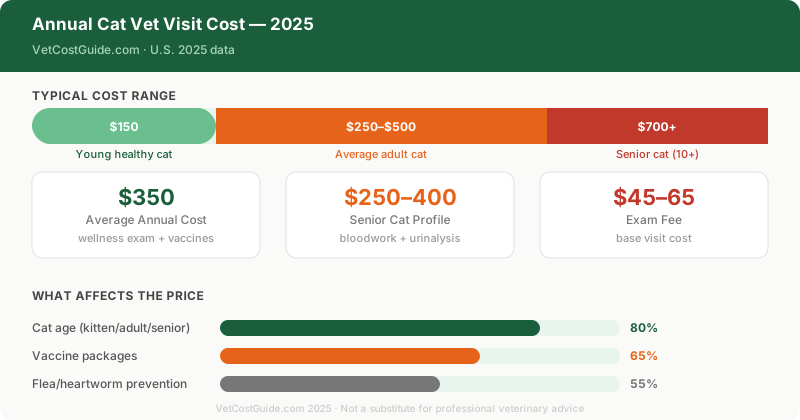
Myth: Healthy cats don’t cost much at the vet. The reality is that keeping a cat healthy requires consistent, real spending — just not the dramatic kind. AVMA surveys consistently show that roughly half of new cat owners underestimate annual preventive care costs before their first full year of ownership. A young, indoor cat will run you $200–$400 this year for the basics — exam, vaccines, parasite prevention. That same cat at age 12 will cost you $500–$900 because bloodwork and dental cleanings become medically necessary, not optional. The budget doesn’t blow up overnight; it escalates predictably as your cat ages.
- The wellness exam itself costs $45–$75 at most US veterinary clinics — the foundation of every annual visit.
- Core vaccine series (FVRCP + rabies) adds $45–$75 annually for boosters; vaccines due less frequently in adults reduce this cost in off years.
- Dental cleaning every 1–3 years costs $300–$700 and is the largest single planned expense for most cats.
- Senior cats (age 10+) should have bloodwork every 6–12 months at $150–$350 per panel — the most impactful age-related cost increase.
Cost Breakdown
| Service | Low | Average | High |
|---|---|---|---|
| Wellness Exam | $45 | $60 | $75 |
| FVRCP Vaccine (booster) | $25 | $35 | $45 |
| Rabies Vaccine | $20 | $25 | $30 |
| FeLV Vaccine (at-risk cats) | $30 | $38 | $45 |
| Flea/Tick Prevention (annual) | $60 | $120 | $200 |
| Heartworm Prevention (annual) | $40 | $65 | $90 |
| Senior Bloodwork Panel | $150 | $250 | $350 |
| Dental Cleaning (no extractions) | $300 | $475 | $700 |
| Annual Total — Young Healthy Cat | $200 | $300 | $400 |
| Annual Total — Adult Cat (3–9 yrs) | $300 | $450 | $600 |
| Annual Total — Senior Cat (10+ yrs) | $500 | $700 | $900 |
The senior total assumes annual bloodwork and a dental cleaning every 2 years averaged out monthly. If a dental cleaning falls in a given year, the bill for that year can be $400–$700 higher than average.
What Each Line Item Actually Is
The wellness exam. This is where everything starts — $45 to $75 for a nose-to-tail physical. Your vet checks eyes, ears, teeth, heart, lungs, lymph nodes, and weight. It’s how a heart murmur gets caught before it’s a problem, how early dental disease shows up before it’s a $1,400 extraction bill, how subtle weight loss points toward hyperthyroidism before it’s a crisis. Don’t skip this to save money. It’s the only exam your cat gets.
Core vaccines. FVRCP covers the three major respiratory and systemic diseases. After the initial kitten series, most adult cats switch to a 3-year booster schedule — so you won’t pay for it every single year. Rabies is legally required in most US states and runs annually or every 3 years depending on the product. Most years, vaccines total $45–$75.
FeLV vaccine. Recommended for kittens and cats with any outdoor access. Strictly indoor adults with no exposure risk can often skip it. When it’s due, add $30–$45.
Parasite prevention. Combined flea, tick, and heartworm prevention runs $100–$200/year for a reliable product like Revolution Plus. Cats in high-heartworm states especially shouldn’t skip this — and even indoor cats can be exposed.
Senior bloodwork. This is the cost that surprises people most. A chemistry panel plus CBC screens for kidney disease, liver problems, hyperthyroidism, diabetes, and anemia — all conditions that climb sharply in frequency after age 10. Catching hyperthyroidism at Stage 1 costs a fraction of managing it at Stage 3. Each panel runs $150–$350, and the AVMA recommends annual testing starting at age 10 — every 6 months once your cat hits 12.
Dental cleaning. The biggest planned expense on this list. Most adult cats need professional cleaning under general anesthesia every 1–3 years. Without extractions: $300–$700. With extractions (which most cats eventually need): $700–$1,400 or more.
What Pushes Your Bill Higher
Your cat’s age. Nothing moves the needle like this. A 2-year-old with clean teeth and current vaccines is genuinely cheap to maintain. A 12-year-old with chronic conditions and dental disease is not. After age 10, costs escalate meaningfully with each passing year.
Indoor vs. outdoor. Outdoor and indoor-outdoor cats need more: FeLV vaccine, stronger flea/tick coverage, more frequent parasite screenings. Expect to add $50–$100/year compared to a strictly indoor cat.
Geography. Veterinary fees in New York City or San Francisco routinely run 40–80% higher than rural Midwest practices. Same 15-minute wellness exam — very different numbers on the invoice.
The dental year problem. Annual budgets are misleading because dental cleanings don’t happen every year. If you’re budgeting $500/year but your cat needs a $900 dental every 3 years, you’ll spend $1,500 in year 3 and feel blindsided. Bank money monthly for it instead.
Clinic type. Corporate wellness plans through Banfield or VCA bundle services at $30–$60/month for predictable costs. Independent practices vary widely. Low-cost vaccine clinics trim spending on vaccines but don’t replace a full physical exam.
- “Vaccine-only” low-cost clinics as a complete care substitute. Low-cost vaccine events at pet stores or shelters offer real savings on vaccines at $15–$30 each. But they typically skip the full physical exam. A wellness exam with an experienced vet catches problems your cat isn’t visibly showing yet. Use these clinics to save on vaccine costs, but don’t skip the annual exam.
- Skipping senior bloodwork. Many owners skip the $150–$350 blood panel to save money — not realizing that’s exactly when it matters most. Hyperthyroidism, early kidney disease, and diabetes caught at Stage 1 are far cheaper to manage than at Stage 3 or 4. Early detection often pays for itself multiple times over.
- Dental disease compounding silently. Cats rarely show obvious pain from dental disease. Skipping recommended cleanings allows periodontal disease to progress — and each year of delay typically means more extractions needed, dramatically increasing the eventual bill.
On Pet Insurance
Wellness riders — add-ons from companies like Embrace, Spot, or ASPCA — reimburse annual exams, vaccines, and sometimes dental cleanings. They typically cost $9–$18/month and return $200–$400 in annual wellness reimbursements. For a young, healthy cat, they often don’t pencil out once you do the math.
The real case for pet insurance is what you can’t plan for: the $4,000 urinary blockage, the cancer diagnosis, the broken bone from a fall. Comprehensive illness coverage is where insurance actually protects your finances. The wellness rider is just a bonus.
Practical Ways to Spend Less
Bank the dental money year-round. Even when your vet gives your cat a clean dental report this year, set aside $50–$75/month in a dedicated pet fund. When the cleaning comes due, you’re ready.
Use the 3-year FVRCP interval. Adult cats with current vaccine history only need FVRCP every 3 years per AAFP guidelines. Confirm with your vet and avoid unnecessary annual boosters — saves $25–$45 every other year.
Shop routine care. A 2025 review of US veterinary fees found up to a 3x price range for identical wellness services within the same metro area. For emergency care you go wherever’s open. For scheduled wellness? Call two or three clinics for pricing first.
Ask about wellness packages. Many practices bundle exam, vaccines, bloodwork, and fecal test at 10–20% below itemized pricing. Worth asking about at your next visit.
Brush your cat’s teeth. Daily brushing delays professional cleanings by 1–2 years in many cats. A $10 toothbrush and enzymatic paste can defer a $500+ cleaning. It takes two weeks of persistence to get most cats comfortable with it — but it’s worth it.
Frequently Asked Questions
Does my indoor cat really need annual vet visits? Yes. Rabies vaccines are legally required in most states regardless of indoor status. And cats age silently — hyperthyroidism, kidney disease, dental disease, diabetes all progress without visible symptoms until they’re advanced. The annual exam is the safety net that catches these before they get expensive.
How often do adult cats need vaccines? After kittenhood, FVRCP boosters are given every 3 years for adult cats with low risk. Rabies is given every 1 or 3 years depending on the vaccine product. FeLV is recommended annually for at-risk cats. Your cat’s specific schedule depends on individual risk factors and vaccination history.
At what age is a cat considered a senior? Most veterinary guidelines classify cats as senior at age 10–11 and geriatric at 15+. Senior cats should have a wellness exam twice yearly rather than annually, and bloodwork at least once yearly. Six months is a long time in a senior cat’s life — a lot can change between annual visits once they’re past 10.
What’s typically not covered in a standard annual wellness visit? Illness diagnosis and treatment, medications, dental procedures, specialist referrals, and imaging are all additional costs beyond the wellness visit. If your cat shows any signs of illness at the annual exam — weight loss, lumps, abnormal bloodwork — those issues are billed separately and can substantially increase the visit total.
Frequently Asked Questions
A routine annual wellness exam typically costs $50–$150, while core vaccines (FVRCP and rabies) add another $80–$150 combined. For a young, healthy indoor cat, you should budget $200–$400 total annually when including parasite prevention medications.
Most pet insurance plans do not cover routine preventive care like wellness exams and vaccines—these are considered maintenance rather than treatment of illness. You will typically pay out-of-pocket for annual visits ($200–$400 for young cats), though some premium plans offer optional wellness add-ons that reimburse 70–90% of preventive costs for an extra $15–$30 per month.
Young, healthy cats (under 7 years) need one annual wellness visit, while senior cats (age 12+) should visit twice yearly to catch age-related conditions early—this is why senior cat costs jump to $500–$900 annually. More frequent visits allow your vet to monitor for diabetes, kidney disease, and other conditions common in older cats before they become emergencies.