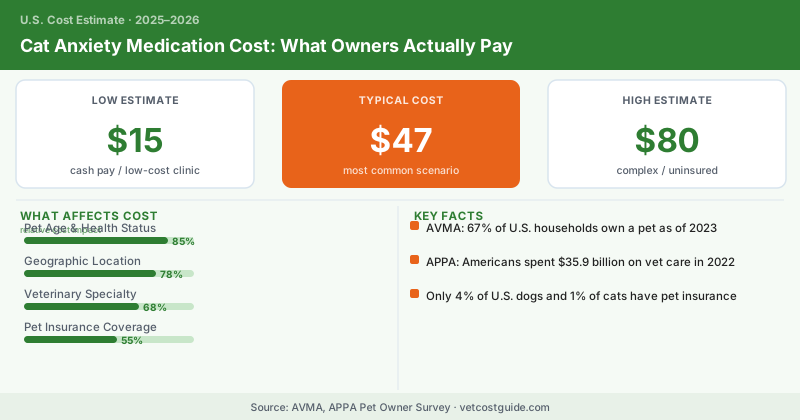
Whiskers hides under the bed every Fourth of July, and last year she wouldn’t come out for two full days. If that sounds familiar, you’re not imagining it — cat anxiety is real, common, and treatable. Cat anxiety medication typically costs $15–$80 per month, plus an initial veterinary behavioral consultation running $150–$300.
Feline anxiety shows up in different forms: noise phobia (fireworks, thunderstorms), separation anxiety, inter-cat aggression in multi-cat households, and generalized stress that shows up as over-grooming, inappropriate urination, or hiding. The right medication depends heavily on which pattern your cat shows.
Common medications and their cost
| Medication | Use Case | Typical Monthly Cost |
|---|---|---|
| Gabapentin | Situational (vet visits, travel, fireworks) | $15–$30 |
| Fluoxetine (Prozac) | Daily, for chronic anxiety or aggression | $20–$45 |
| Trazodone | Situational or short-term | $15–$35 |
| Clomipramine | Daily, for severe/chronic cases | $25–$50 |
| Behavioral consultation (initial) | One-time | $150–$300 |
Situational medications like gabapentin or trazodone are given only before a known stressful event — a vet appointment, a move, or a fireworks-heavy holiday — and cost less overall since they’re not a daily expense. Daily maintenance medications like fluoxetine are for cats with chronic, ongoing anxiety and represent a longer-term monthly cost, but they also tend to produce more significant, lasting behavioral improvement over weeks.
Why the consultation matters
A proper behavioral consultation isn’t just a formality — anxiety symptoms can overlap with medical issues. Over-grooming can indicate allergies or pain, not just stress. Inappropriate urination can be a urinary tract infection rather than a behavioral issue entirely. Your vet will typically rule out medical causes with a physical exam and possibly blood work or a urinalysis before settling on an anxiety diagnosis and medication plan.
- Situational anxiety medications (gabapentin, trazodone) cost $15–$35/month and are used only for known stressful events.
- Daily maintenance medications (fluoxetine, clomipramine) cost $20–$50/month and take 4–6 weeks for full effect.
- A proper diagnosis rules out medical causes of anxiety-like symptoms first.
- Combining medication with environmental changes (more vertical space, pheromone diffusers) improves outcomes.
What makes treatment work better
Medication alone rarely solves feline anxiety completely — it works best paired with environmental changes. Adding vertical space (cat trees, shelves), separate feeding stations in multi-cat homes, consistent routines, and pheromone diffusers like Feliway ($20–$40) all reduce baseline stress and often let you use a lower medication dose. Your vet or a certified feline behaviorist can help build a plan specific to what’s triggering your cat’s anxiety.
- Stopping medication abruptly. Some anxiety medications, particularly daily ones like fluoxetine, need to be tapered off gradually under veterinary guidance rather than stopped suddenly.
- Assuming a “bad” cat is the problem, not anxiety. Aggression, hiding, and destructive scratching are frequently anxiety symptoms, not personality flaws — a behavioral evaluation is worth the cost before giving up on a cat’s behavior.
- Skipping the medical workup. Anxiety-like symptoms sometimes have a physical cause — thyroid disease, pain, or urinary issues can all present as “behavioral” problems that medication won’t fix.
Is medication the right call?
For mild, occasional stress — a single stressful car ride, an unfamiliar house guest — a situational medication or calming supplement is often enough. For cats showing chronic symptoms like persistent over-grooming, ongoing inappropriate urination, or aggression toward other pets in the home, a full veterinary behavioral consultation is worth the upfront cost. Left unaddressed, chronic stress in cats has been linked to conditions like feline idiopathic cystitis, which is both painful for your cat and considerably more expensive to treat than the anxiety itself.
Frequently Asked Questions
Situational medications like gabapentin work within 1–2 hours and are used as needed for specific stressful events like vet visits or travel. Daily maintenance medications like fluoxetine typically take 4–6 weeks to reach full effectiveness, since they work by gradually adjusting brain chemistry rather than providing immediate calming.
Products like pheromone diffusers (Feliway), calming treats, and supplements cost $20–$40 and can meaningfully help mild anxiety, but they're generally not strong enough for moderate to severe cases like inter-cat aggression or severe noise phobia. Many vets recommend combining these with prescription medication rather than using them as a full replacement.
Coverage varies significantly by insurer — some accident-and-illness plans cover behavioral medication when prescribed for a diagnosed condition like separation anxiety or noise phobia, while others explicitly exclude behavioral treatment. Check your specific policy's behavioral health clause before assuming it's covered, since this is one of the more inconsistently covered categories in pet insurance.