Until 2022, cats with arthritis pain had almost no good pharmaceutical options. NSAIDs that work safely in dogs cause gastrointestinal hemorrhage and acute kidney failure in cats — they’re largely off the table for long-term use. Corticosteroids offered some relief but came with serious metabolic side effects over time. For decades, “feline arthritis treatment” mostly meant environmental modifications and hoping for the best.
Solensia (frunevetmab) changed that. The FDA approved it in January 2022 specifically for the control of pain associated with osteoarthritis in cats — the first drug ever approved for this indication in felines. It’s a monoclonal antibody that targets nerve growth factor (NGF), blocking a key pain signaling pathway. Monthly injections. No kidney toxicity.
The cost picture for feline arthritis management is now meaningfully better than it was three years ago. Here’s what you’re looking at.
- Solensia injection (monthly): $80–$150 per injection at the vet clinic
- Gabapentin (daily oral): $20–$50/month — most effective for nerve pain component
- Radiographs to confirm diagnosis: $150–$400
- Environmental modifications (ramps, heated beds, low litter box): $50–$200 one-time
- Veterinary acupuncture: $50–$100/session for cats who tolerate it
Why Feline Arthritis Is Harder to Treat Than Canine
The NSAID problem is real and significant. Meloxicam and other NSAIDs used routinely in dogs can be toxic to cats at similar doses. Cats lack the metabolic enzymes to process these drugs safely over long periods. A small subset of cats tolerate low-dose meloxicam under careful veterinary supervision, but it’s not the standard first-line approach.
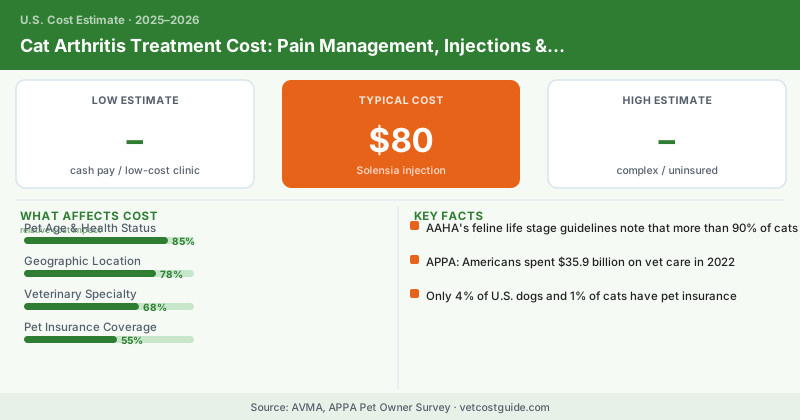
The second challenge: cats hide pain extremely well. By the time owners notice behavioral changes, osteoarthritis is often moderate-to-severe. AAHA’s feline life stage guidelines note that more than 90% of cats over age 12 show radiographic evidence of osteoarthritis — yet the condition is dramatically underdiagnosed because cats compensate behaviorally rather than vocalizing.
Cost Breakdown by Treatment Type
| Treatment | Monthly Cost | Notes |
|---|---|---|
| Solensia injection | $80–$150 | Monthly vet visit required |
| Gabapentin | $20–$50 | Twice-daily oral; inexpensive |
| Buprenorphine (short-term) | $30–$80 | Controlled substance; limited dispensing |
| Joint supplements (omega-3) | $20–$40 | Fish oil — modest anti-inflammatory effect |
| Glucosamine/chondroitin | $20–$35 | Weak evidence in cats; low risk |
| Veterinary acupuncture | $50–$100 | Per session; 4–6 initially; monthly maintenance |
| Radiographs (initial diagnosis) | $150–$400 | One-time; confirms OA and rules out other causes |
Solensia: The New Standard
Solensia (frunevetmab) is a felinized monoclonal antibody — engineered specifically for cats — that neutralizes nerve growth factor (NGF), which drives chronic OA pain signaling. It’s given as a subcutaneous injection at your vet clinic once monthly.
Clinical trials submitted for FDA approval showed statistically significant improvements in owner-assessed mobility and veterinary-assessed pain scores. The safety profile is strong — no kidney toxicity, no GI risk, no drug-drug interactions documented.
Cost: $80–$150 per injection depending on your clinic and geographic area. The monthly vet visit also typically includes a brief exam ($30–$60). Budget $110–$200/month total for Solensia-centered management.
Gabapentin: The Affordable Workhorse
Gabapentin is an anticonvulsant that works well for neuropathic (nerve) pain — which plays a role in many OA cases alongside the mechanical joint pain. It’s inexpensive, well-tolerated by most cats, and can be compounded into flavored liquid for cats who resist pills.
Typical dosing: 5–10mg/kg twice daily. Monthly cost: $20–$50. Many owners use gabapentin alongside Solensia for a multimodal approach.
Environmental Modifications: High Value, Low Cost
Before or alongside pharmaceutical management, environmental changes reduce the physical demands on arthritic joints every day:
- Ramps and steps to favorite furniture: $30–$80 one-time — eliminates the jump that hurts
- Heated orthopedic beds: $40–$80 one-time — warmth genuinely helps stiff joints
- Lower-sided litter box: $15–$30 or cut down a storage bin — reduces pain of entry/exit
- Food and water at floor level: eliminates the reach that strains arthritic necks and spines
- Non-slip mats: $10–$20 — reduces the effort of pushing off slick floors
These changes are free to cheap and often produce the most visible improvement in daily comfort.
Weight Management: The Most Impactful Free Intervention
Every extra pound on a cat is roughly 10 extra pounds of stress on arthritic joints — scaled to cat size. A 14-pound cat that reaches a healthier 11 pounds is a fundamentally different patient.
Dietary management for weight loss doesn’t require prescription food if cost is a concern — it mostly requires feeding consistent measured amounts and reducing or eliminating treats. Your vet can set a target weight and caloric goal. This is free.
Do not give your cat human pain medications for arthritis — not ibuprofen, acetaminophen (Tylenol), naproxen, or aspirin. Acetaminophen is rapidly fatal in cats. NSAIDs destroy feline GI and kidney function. These are not just warnings about large doses — even one or two tablets of Tylenol can kill a cat within hours. If your cat is in pain and you can’t get to a vet immediately, call the ASPCA Poison Control at 888-426-4435 for guidance.
Acupuncture and Physical Rehabilitation
Veterinary acupuncture has a growing evidence base for chronic pain conditions including OA. Sessions run $50–$100 each; initial courses typically involve 4–6 sessions, then monthly maintenance. Not all cats tolerate needles calmly, but many do — especially under the hands of an experienced practitioner.
Veterinary physical rehabilitation (hydrotherapy, therapeutic exercises) is available at specialty centers, typically $75–$150/session. Usually more practical for dogs than cats, but some owners find value in it for high-quality-of-life-focused management of severe feline OA.
Building a Realistic Monthly Budget
A practical multimodal approach for a cat with moderate-to-severe OA:
- Solensia monthly injection: $80–$150
- Gabapentin: $20–$50
- Joint supplements: $20–$35
- Environmental modifications: one-time $100–$200
- Monitoring vet exam every 3 months: $45–$80 amortized monthly
Realistic monthly total: $120–$300 for well-managed moderate OA. Severe cases requiring more frequent vet visits or additional pain medications may run $300–$500/month.
Frequently Asked Questions
Cats hide pain instinctively — it's a survival behavior. Signs are subtle: reluctance to jump up to favorite spots, missing the litter box (can't climb in easily), decreased grooming of the back and tail, sleeping more, less interest in play, or unusual aggression when touched near the back or hips. If your senior cat has stopped doing something it used to do routinely, arthritis pain is a reasonable suspect. A vet exam with mobility assessment and radiographs confirms the diagnosis.
Solensia (frunevetmab) has a favorable safety profile and does not cause the kidney or GI damage associated with NSAIDs. It's a monoclonal antibody, not a small molecule drug — it doesn't get processed through the liver or kidneys the same way. Clinical trials included cats with concurrent conditions. That said, always disclose all current medications and health conditions to your vet before starting any new treatment. Your vet will assess whether Solensia is appropriate for your cat's specific situation.
The evidence is modest but not zero. Omega-3 fatty acids (EPA and DHA from fish oil) have the strongest support for a mild anti-inflammatory effect. Glucosamine and chondroitin have weaker evidence in cats than in dogs or humans, but they're low-risk and inexpensive. Joint supplements work best as part of a multimodal approach — not as a sole treatment for moderate-to-severe OA. Don't expect supplements alone to make a meaningful difference if your cat is significantly painful.