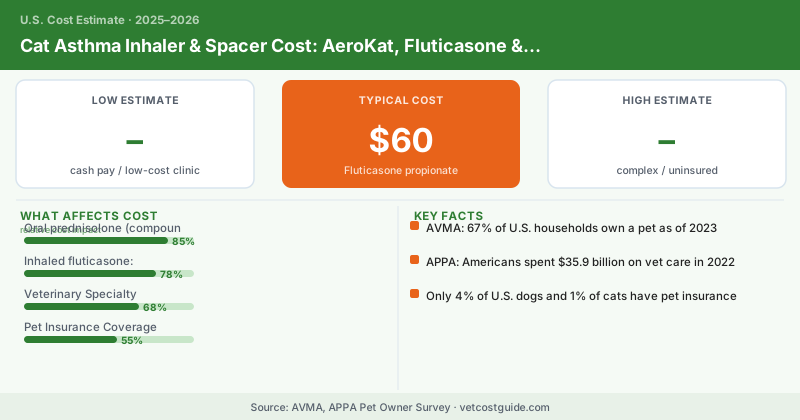
Your vet prescribed a metered-dose inhaler for your cat. Now you’re staring at a device designed for a human lung and wondering how you’re supposed to get your cat to cooperate. The good news: cats can absolutely use inhalers, and with the right spacer, most cats adapt within a few weeks. The better news: inhaled steroid therapy is often cheaper per month than oral prednisolone, with fewer systemic side effects.
Here’s exactly what the inhaler setup costs, and what monthly treatment looks like financially.
The AeroKat Spacer: The One-Time Setup Cost
You can’t just hold a human inhaler up to a cat’s face. The propellant spray is too fast for cats to inhale effectively, and the technique required for human inhalers doesn’t translate to an animal that doesn’t understand “breathe in slowly.”
The AeroKat is a veterinary-specific spacer with a flow indicator and a fitted feline mask. It slows the aerosol into a small chamber, and the cat breathes normally from the mask for 7–10 breaths per actuation. It’s made by Trudell Medical International and is the most widely used device in North America for feline inhaler therapy.
AeroKat spacer cost: $60–$80 (one-time). The mask comes in two sizes (adult and kitten); the spacer itself lasts years if properly cleaned.
There’s a flow indicator — a little flag inside the chamber — that moves with each breath, confirming your cat actually inhaled the medication. It’s genuinely useful for knowing whether the treatment worked.
Inhaler Medication Costs
| Medication | Type | Monthly Cost | Notes |
|---|---|---|---|
| Fluticasone propionate (Flovent HFA) | Inhaled corticosteroid (controller) | $60–$120 | Generic available; 44mcg, 110mcg, 220mcg doses |
| Ciclesonide (Alvesco) | Inhaled corticosteroid (controller) | $80–$150 | Alternative to fluticasone; once daily |
| Albuterol (ProAir, Ventolin) | Rescue bronchodilator | $15–$40 | Used during acute attacks only; generic available |
| Salmeterol | Long-acting bronchodilator | $60–$100 | Sometimes added to fluticasone for persistent cases |
| AeroKat spacer (one-time) | Device | $60–$80 | Lasts 2–3 years with proper cleaning |
Fluticasone is the most commonly prescribed controller inhaler for cats. It’s a corticosteroid delivered directly to the airways, with minimal systemic absorption — which is the key advantage over oral prednisolone for long-term control. Cats on inhaled fluticasone don’t get the glucose dysregulation and muscle wasting that can develop with long-term oral steroids.
The AAHA and most veterinary internists now recommend inhaled therapy as the preferred long-term management strategy for cats with chronic asthma, based on research showing equivalent efficacy to oral steroids with a significantly better side effect profile.
Total Monthly Treatment Cost
A cat on fluticasone controller therapy plus an albuterol rescue inhaler (for breakthrough attacks) typically spends:
- Controller inhaler (fluticasone 110mcg, 1 puff twice daily): $60–$120/month
- Rescue inhaler (albuterol, used as needed): $15–$40/month
- Total monthly ongoing cost: $75–$160/month
Initial setup costs (first month):
- AeroKat spacer: $60–$80
- Initial vet visit + diagnosis: $150–$400
- Chest radiographs: $150–$300
- First inhaler prescription: $60–$120
- First month total: $420–$900
After setup, most cats require $75–$160/month in medication. Mild cases using lower-dose fluticasone only run $60–$80/month.
Most cats need 1–3 weeks of desensitization before they’ll tolerate the mask calmly. Start by introducing the spacer without medication — just the device and mask near their face. Work up to placing the mask gently for a few seconds while offering high-value treats. Most cats habituate well when training is positive and gradual.
A stressed, struggling cat doesn’t inhale properly — which defeats the purpose. If your cat fights the mask consistently after 2–3 weeks of training, talk to your vet about whether oral medication is a better fit for your specific cat.
How This Compares to Oral Steroid Costs
Many owners wonder whether it’s worth switching to inhaler therapy from oral prednisolone, especially when the inhaler is initially confusing.
Oral prednisolone (compounded liquid): $25–$60/month. Easy to administer (pill pockets, pill gun, or flavored liquid).
Inhaled fluticasone: $60–$120/month. Requires training and spacer device.
The cost difference is real — oral prednisolone is cheaper. But the side effect difference matters for long-term management. Cats on chronic oral steroids develop diabetes, weight gain, muscle wasting, and immune suppression at measurable rates. Cats on inhaled fluticasone show dramatically less systemic absorption.
For a cat likely to need lifelong therapy, the additional $30–$60/month for inhaled treatment may prevent the cost of managing steroid-induced diabetes — which runs $100–$300/month and doesn’t go away.
Albuterol is a rescue medication for acute attacks — it’s not meant for daily use as a controller. If your cat needs albuterol more than twice a week, that’s a sign the chronic asthma isn’t well-controlled. Contact your vet to reassess the controller therapy rather than increasing rescue inhaler use. Overuse of albuterol can mask worsening asthma and delay appropriate treatment changes.
Diagnosing Asthma: The Upfront Costs
Before you’re spending on inhalers, there’s a diagnosis process. Feline asthma is diagnosed primarily by clinical signs and chest radiographs, sometimes supplemented by bronchoscopy in atypical cases.
Typical diagnostic workup:
- Physical exam: $60–$120
- Chest radiographs (2–3 views): $150–$300
- Bronchial wash cytology (if done): $300–$600
- Blood eosinophil count (part of CBC): included in $100–$200 blood panel
Most straightforward feline asthma diagnoses run $300–$600 in diagnostics before you start treatment.
Is Pet Insurance Worth It for Asthmatic Cats?
If your cat is newly diagnosed, submit your claim immediately — a significant portion of ongoing inhaler costs may be reimbursable under an illness plan.
If you’re shopping for insurance and your cat already has documented asthma, that condition will be excluded as pre-existing by all major insurers. But the insurer will still cover everything else — and a cat already managed for asthma is otherwise a healthy animal who may develop entirely different conditions worth covering.
Frequently Asked Questions
Can I use a human spacer instead of the AeroKat? Some vets and owners improvise with small-volume spacers, but the AeroKat’s flow indicator and fitted feline mask are specifically designed for this application. The $60–$80 upfront cost is worth it for the confirmation that your cat is actually inhaling the medication — which you can’t verify with improvised devices.
Does fluticasone control asthma attacks or prevent them? It prevents them — it’s a controller, not a rescue medication. Fluticasone reduces airway inflammation when used daily, over time reducing attack frequency and severity. Albuterol is the rescue medication that dilates airways during an acute attack. You need both, and they work very differently.
How long will my cat need asthma treatment? Feline asthma is a chronic condition. Most cats require long-term management — some for years, many for life. A few cats with very mild or trigger-related asthma may be weaned off medication during periods of low exposure. For most cats, plan on ongoing treatment as part of their care.
Frequently Asked Questions
Monthly costs for fluticasone inhaler therapy typically range from $60–$180, depending on medication dosage and frequency prescribed by your veterinarian. The AeroKat spacer device is a one-time purchase of $60–$80 that attaches to the inhaler and makes administration easier for most cats.
Most standard pet insurance plans do not cover prescription medications like inhalers, though some comprehensive or wellness add-ons may offer partial reimbursement; you'll need to check your specific policy details. Many cat owners pay the full $60–$180 monthly cost out-of-pocket, though some veterinary clinics offer generic alternatives or medication discounts that can reduce expenses.
Most cats adapt to inhaler use within 2–4 weeks with consistent daily training and a properly fitted AeroKat spacer device. Your veterinarian can demonstrate the correct technique during your appointment to ensure your cat receives the full dose and that you're comfortable administering it at home.