Your cat is crouched low, neck stretched out, sides heaving. If you’ve witnessed a feline asthma attack, that image doesn’t leave you. Feline asthma affects somewhere between 1–5% of cats — and the costs can range just as widely as the severity.
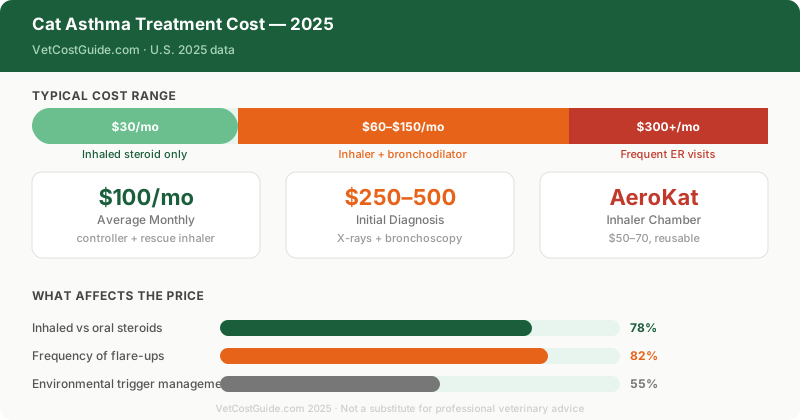
Here’s the thing: a cat with mild, well-controlled asthma on daily inhaled steroids might cost $40–$80 per month to manage. That’s less than most streaming bundles. But a cat cycling in and out of emergency rooms because triggers haven’t been identified or controller meds keep getting skipped? Those ER visits at $300–$800 each add up fast. The gap between those two outcomes is almost entirely about management quality — not the severity of the underlying disease.
- Initial diagnosis of feline asthma (chest X-rays plus bronchoalveolar lavage) costs $250–$600 and is necessary to confirm the diagnosis and rule out heart disease and infection.
- Daily controller medication using an inhaled fluticasone corticosteroid via AeroKat chamber costs $40–$80/month—less than most chronic disease management regimens.
- An acute asthma attack ER visit requiring oxygen, injectable steroids, and bronchodilators runs $300–$800 and is the biggest avoidable cost for owners who maintain controller therapy consistently.
- Eliminating common environmental triggers—cigarette smoke, dusty litter, scented candles, and aerosol sprays—is free and can dramatically reduce attack frequency.
Cat Asthma Treatment Cost Breakdown
| Type | Low | Average | High |
|---|---|---|---|
| Initial exam + chest X-rays | $150 | $300 | $450 |
| Bronchoalveolar lavage (BAL) | $100 | $175 | $250 |
| AeroKat inhaler chamber (one-time) | $50 | $60 | $70 |
| Fluticasone inhaler (controller/month) | $40 | $60 | $80 |
| Albuterol rescue inhaler (monthly) | $30 | $45 | $60 |
| Oral prednisolone (monthly) | $15 | $22 | $30 |
| ER visit for acute attack | $300 | $550 | $800 |
| Annual monitoring chest X-rays | $150 | $225 | $300 |
| Total: stable well-controlled cat/month | $40 | $65 | $100 |
| Total: acute ER episode (one-time) | $300 | $550 | $800 |
Getting the Diagnosis Right
You can’t assume it’s asthma — and that assumption has consequences. Feline respiratory disease is genuinely tricky. Heart disease, pleural effusion, pneumonia, lungworm, and thoracic masses can all look nearly identical from the outside. Chest radiographs ($150–$250) are the standard starting point. They typically reveal the hyperinflated lungs and classic bronchial wall thickening that points toward asthma. But X-rays don’t always nail it.
When the picture is ambiguous, a bronchoalveolar lavage (BAL) settles things. A sample from the airways gets analyzed for eosinophils — the telltale inflammatory cells of allergic asthma — versus neutrophils that would suggest infection. It requires sedation and adds $100–$250, but it’s worth doing before committing to a lifetime of steroid therapy. Getting the wrong diagnosis costs money in more ways than one.
The Treatment Toolkit
Controller therapy is the daily foundation — what keeps attacks from happening in the first place. Inhaled fluticasone via an AeroKat spacer chamber is the gold standard. The medication goes directly to the airways, which means less systemic steroid absorption and fewer long-term side effects than oral prednisone. The AeroKat chamber is a one-time purchase at $50–$70. The fluticasone inhaler (standard human MDI) runs $40–$80/month.
Most cats adapt to the face mask and spacer within a week or two. It looks a little ridiculous at first. It works well.
Rescue therapy means keeping albuterol on hand for flare-ups at home. The same human albuterol MDI used through the AeroKat chamber costs $30–$60/month for a cat using it occasionally. If you’re reaching for it constantly, that’s a signal the controller regimen needs adjusting — not that you just need to refill the rescue inhaler more often.
Emergency care for a serious attack is a different financial universe. Oxygen supplementation, injectable steroids (dexamethasone), bronchodilators if needed, monitoring time in an oxygen cage. Oxygen alone runs $50–$150 per hour. Most cats need 2–6 hours before they can breathe comfortably without it. That’s where the $300–$800 ER bill comes from — and it’s almost entirely avoidable with consistent controller therapy.
Why Costs Vary So Much
Control status is the dominant variable. Mild, well-managed asthma with clear triggers eliminated costs the least. Poorly controlled disease with unidentified or multiple overlapping triggers drives the highest ongoing costs. It’s not just severity that determines spending — it’s management quality.
Trigger burden. Some cats have one identifiable culprit — a specific clumping litter, household cigarette smoke — and removing it produces dramatic improvement, for free. Other cats have complex or unidentifiable trigger profiles and need more medication to compensate.
Steroid route. Oral prednisolone ($15–$30/month) is cheaper than inhaled fluticasone ($40–$80/month), but the trade-off is systemic side effects over time: increased diabetes risk, weight gain, adrenal suppression. For cats expected to need lifelong treatment, inhaled steroids are usually the smarter long-term investment — medically and financially.
Location and facility type. The same 4-hour oxygen episode runs $250 in a mid-sized city and $500+ in San Francisco. Urban emergency centers charge significantly more across the board.
Concurrent conditions. Cats with asthma plus allergic skin disease, or asthma plus hypertrophic cardiomyopathy, need multiple conditions managed at once. Monthly costs compound accordingly.
- Confusing asthma with hairballs. The classic “cat hunched low, neck extended, coughing or retching” posture is how many owners describe hairballs—but it’s exactly how asthma attacks present too. Cats with true hairballs ultimately produce material and then act completely normal. A cat that doesn’t produce anything, remains crouched or labored, or has any bluish tint to the gums needs emergency veterinary care immediately.
- Using room air fresheners, plug-in diffusers, or essential oils near asthmatic cats. Cats are extremely sensitive to airborne particulates and volatile compounds. Febreze, scented candles, air fresheners, and many essential oil diffusers have all been documented to trigger attacks. This is a zero-cost change that owners frequently overlook.
- Skipping controller medication when the cat “seems fine.” Feline asthma is an inflammatory airway disease that causes ongoing airway remodeling even when the cat appears asymptomatic. Stopping controller therapy when the cat looks normal is the most common cause of subsequent severe attacks.
The Insurance Question
Pet insurance can make real financial sense for asthmatic cats — with one hard constraint. If asthma is already diagnosed, or if medical records document any respiratory symptoms before enrollment, the condition gets excluded. Full stop. Owners who adopt kittens and enroll before any respiratory issues are documented have the clearest path to meaningful coverage.
Run the numbers: a year of asthma management with fluticasone, two rescue inhaler replacements, one monitoring X-ray, and one ER visit might total $1,400. After a $200 deductible, an 80% reimbursement policy covers approximately $960 of that. Annual premiums for a young cat run $300–$500. The math works — especially in years with an emergency.
Uninsured asthmatic cat owners should keep at least $1,000 in accessible emergency savings. One acute attack shouldn’t force a care decision based on what’s in your checking account.
Cutting Costs Without Cutting Corners
Buy inhalers through GoodRx or Cost Plus Drugs. Fluticasone and albuterol are human medications used off-label in cats. GoodRx coupons at Costco, Walmart, or CVS often bring fluticasone down to $20–$40 per inhaler. Ask your vet for a written prescription to take to a human pharmacy.
Eliminate triggers first. Before adjusting medication, go through your home systematically. Switch to a low-dust, unscented litter (World’s Best Cat Litter and Dr. Elsey’s Precious Cat are popular options). Remove aerosol sprays, plug-in fresheners, and scented candles. This costs nothing and can reduce attack frequency by 30–60% in some cats.
Get a HEPA air purifier. A quality unit ($80–$200 one-time cost) in the room where your cat spends most time continuously reduces airborne allergen and particulate load. One purchase, ongoing benefit.
Stretch monitoring X-ray intervals. Well-controlled, stable feline asthma can often be safely managed with annual rather than semi-annual chest X-rays — cutting monitoring costs from $450–$600 annually down to $150–$300.
Frequently Asked Questions
How do I know if my cat is having an asthma attack? Forced, labored breathing — belly pumping, neck stretched forward, crouched low. The cat may cough, wheeze, or breathe with an open mouth. Open-mouth breathing in a cat is a respiratory emergency. Get to a vet immediately.
What triggers feline asthma? Common triggers include cigarette smoke, dusty litter, scented candles and air fresheners, aerosol household sprays, mold, pollen through open windows, and certain laundry product fragrances. Not every cat’s triggers are identifiable, which is why controller medication matters even when triggers are known.
Is feline asthma curable? No. It’s a chronic inflammatory condition that can be controlled very effectively but not cured. Most cats with well-managed asthma have normal life expectancy and quality of life. The goal is preventing attacks and slowing airway remodeling — and it’s very achievable with consistent management.
Can cats use the same inhalers as humans? Yes — fluticasone and albuterol are human medications used in cats via the AeroKat veterinary spacer chamber. The cat breathes through a face mask attached to the spacer rather than actuating the inhaler directly. Most cats adapt within 1–2 weeks of consistent training.
Frequently Asked Questions
Daily inhaled steroid controller medications cost $40–$80 per month for mild, well-controlled asthma, while cats requiring more frequent treatments or additional medications may see costs climb to $60–$150 monthly. An acute asthma attack requiring emergency veterinary care typically costs $300–$800, depending on diagnostics and oxygen therapy needed.
Most pet insurance plans cover asthma diagnostics and medications if the condition develops after your policy start date, though you'll typically pay 10–30% coinsurance after meeting your annual deductible ($250–$500). Pre-existing asthma is almost universally excluded by all major insurers, and chronic condition management requires ongoing claims to stay within annual benefit limits ($5,000–$10,000 for many mid-tier plans).
Yes—inhaled steroids via aerosol chamber are the preferred first-line treatment and are often more affordable and easier to administer than oral medications, costing $40–$100 monthly depending on the steroid type. However, not all cats tolerate inhalers, and some may require oral steroids like prednisone ($15–$30/month) or bronchodilators as backup during flare-ups.