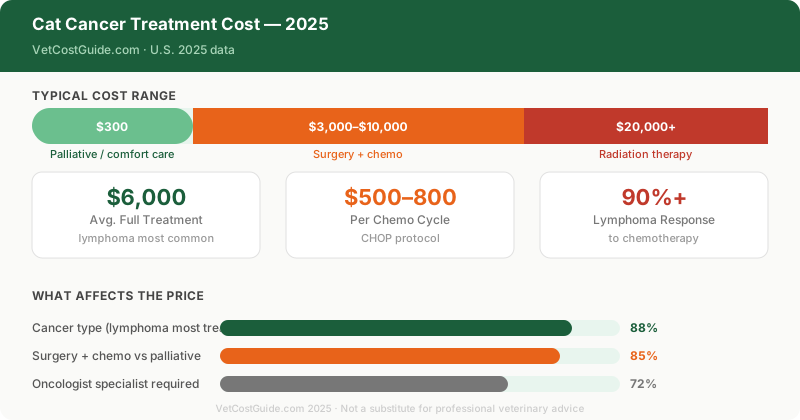
Let’s start with the numbers nobody wants to google, then put them in context.
Feline lymphoma treated with oral chlorambucil: $50–$100/month, median survival over two years. Vaccine-associated sarcoma requiring surgery and radiation: $5,000–$15,000, with uncertain outcomes even then. Between those extremes sits a wide range of feline cancers — some very manageable, some not — and understanding what your cat is actually dealing with is the most important step before any financial decision gets made.
Cancer is the leading cause of death in cats over age 10, according to AVMA mortality surveys. But that statistic doesn’t tell you much about your cat’s specific situation. Type matters. Stage matters. What treatment you choose matters. This guide breaks down the real costs for the most common feline cancers so decisions can be made on actual numbers, not fear.
- Feline lymphoma is the most common cat cancer and responds well to chemotherapy; the CHOP protocol costs $500–$800 per cycle for 6+ cycles, with 60–70% of cats achieving remission and a median survival of 6–12 months.
- Mammary tumor surgery costs $800–$2,500 and is potentially curative for small, early-stage tumors; unlike dogs, 85–90% of cat mammary tumors are malignant, making early detection and prompt treatment critical.
- Vaccine-associated sarcoma (FISS) requires aggressive wide-margin surgery plus radiation therapy, totaling $5,000–$15,000, due to extremely high local recurrence rates with surgery alone.
- Pet insurance enrolled before any mass is noted in a medical record can cover 70–90% of oncology costs—a potential saving of $3,000–$12,000 for major cancer cases.
Cat Cancer Treatment Cost Breakdown
| Type | Low | Average | High |
|---|---|---|---|
| Diagnostics (biopsy + staging) | $300 | $550 | $800 |
| Feline lymphoma chemo (per cycle) | $500 | $650 | $800 |
| CHOP protocol full course (6+ cycles) | $3,000 | $4,500 | $6,000 |
| Mammary tumor surgery | $800 | $1,650 | $2,500 |
| FISS surgery + radiation | $5,000 | $10,000 | $15,000 |
| Oral squamous cell carcinoma palliative (monthly) | $300 | $650 | $1,000 |
| Splenectomy (for splenic masses) | $1,500 | $2,250 | $3,000 |
| Palliative care only (monthly) | $100 | $250 | $400 |
| Total: curative intent (lymphoma) | $3,000 | $5,500 | $8,000 |
| Total: curative intent (FISS) | $5,000 | $10,500 | $15,000 |
Step One: Get the Diagnosis Right
Before any treatment decision, you need to know exactly what you’re dealing with. Fine-needle aspirate ($100–$200) provides preliminary cytology within 24 hours and works well for many accessible masses. It’s minimally invasive and fast. For definitive diagnosis and tumor grading — which directly shapes treatment planning — biopsy with histopathology ($250–$500) is usually necessary.
Staging for lymphoma adds another layer: chest X-rays, abdominal ultrasound, lymph node aspiration, sometimes bone marrow sampling. That adds $400–$700 to the workup. It’s a real upfront expense, but staging determines whether you’re treating a potentially curable disease or managing an incurable one — and that changes everything about how you proceed.
Feline Lymphoma: The Most Common Feline Cancer
Lymphoma accounts for roughly 30% of all feline tumors, making it the most frequently diagnosed cat cancer. And unlike many cancers, it’s actually one of the more treatable. Two very different forms exist:
Small-cell intestinal lymphoma is slow-growing and responds beautifully to oral chlorambucil combined with prednisolone. Monthly medication cost runs $50–$100. Median survival exceeds two years. Some cats reach 3–4 years in remission. This is genuinely encouraging news for a cancer diagnosis.
High-grade lymphoma is more aggressive and requires the multi-agent CHOP protocol — cyclophosphamide, doxorubicin, vincristine, prednisone, given in cycles over roughly 6 months. Each cycle runs $500–$800, with a full course totaling $3,000–$6,000. About 60–70% of cats achieve initial remission. Median survival is 6–12 months. Cats handle chemotherapy dramatically better than humans — fewer than 15% experience side effects severe enough to require supportive care.
For cats with cardiac concerns, the COP protocol (omitting doxorubicin) costs $300–$500 per cycle and is medically indicated in those cases regardless.
Mammary Tumors: Early Detection Changes Everything
Feline mammary tumors are malignant in 85–90% of cases — unlike dogs, where roughly half are benign. That asymmetry makes early detection non-negotiable. Tumors smaller than 2 cm at surgery carry a median survival over 3 years. Tumors larger than 3 cm: median survival drops to about 6 months even with treatment.
Surgery is the primary treatment. Because feline mammary carcinoma is almost always malignant, surgeons typically recommend unilateral or bilateral mastectomy — removing the entire mammary chain rather than just the lump — costing $800–$2,500. Following aggressive surgery, adjuvant doxorubicin chemotherapy ($500–$700 per cycle for 4–6 cycles) is often recommended for high-grade tumors.
How do you find these early? Monthly home wellness checks. Gently palpate the mammary chain — the row of glands running along each side of the belly. Two minutes, no equipment. Potentially the most valuable two minutes you spend with your cat each month.
Vaccine-Associated Sarcoma: The High-Cost Scenario
Feline injection-site sarcoma (FISS) develops at vaccination sites, most often between the shoulder blades. It’s rare — affecting roughly 1 in 10,000–30,000 vaccinated cats — but vicious. These tumors invade locally and recur after surgery at rates exceeding 70% within 6 months when excision margins aren’t wide enough.
Adequate treatment requires surgery with wide (3–5 cm) margins plus radiation therapy, often preceded by chemotherapy. The total bill: $5,000–$15,000. It’s expensive specifically because half measures don’t work. Incomplete surgery almost guarantees recurrence, meaning you pay again — and your cat’s prognosis gets worse.
What Drives the Cost
Cancer type creates the widest variability on this list. Oral chlorambucil for small-cell lymphoma versus a FISS surgery-plus-radiation approach represent opposite ends of the cost spectrum for reasons rooted entirely in the biology of each disease.
Stage at diagnosis. A palpable mammary mass in a cat over 8 that’s been “watched for a few months” may have already progressed from a curable lesion to a guarded prognosis. Fine-needle aspirate takes 10 minutes and costs under $200. There’s no reason to wait.
Specialist involvement. Veterinary oncologists charge $250–$450 for initial consultations and higher per-procedure fees than GPs. For lymphoma and FISS especially, that expertise pays for itself in protocol selection and complication management. Academic teaching hospitals (Tufts, Cornell, UC Davis, Colorado State) offer oncology services at 15–30% below private specialty practice rates.
Your cat’s age and organ function. Cats over 14 or those with concurrent kidney or cardiac disease may not tolerate full-dose CHOP. Dose reductions somewhat affect efficacy, but treatment can continue. Annual bloodwork during chemotherapy — $80–$150 per panel — monitors for organ toxicity.
Location. Oncology specialty centers in Boston, Chicago, or Los Angeles charge 30–50% more than comparable facilities in mid-sized cities.
- Delaying diagnosis of lumps or masses in senior cats. Any new lump in a cat over age 8 should be evaluated within 2–4 weeks of discovery, not monitored for months. Fine-needle aspirate is a 10-minute, minimally invasive, low-cost procedure that provides preliminary answers quickly. The cost of delayed diagnosis of a curable mammary tumor or resectable sarcoma is measured in lost survival time, not just dollars.
- Enrolling in pet insurance after a mass has already been noted in the medical record. Insurance companies review medical records at enrollment, and any documented mass, lump, or “monitor this area” notation becomes grounds for exclusion of cancer-related claims. Enroll before your cat has any documented abnormalities.
- Assuming palliative care means giving up on quality of life. For cats with cancers that have no curative options (oral squamous cell carcinoma, stage IV lymphoma), palliative care using pain management, appetite stimulants, anti-nausea medications, and prednisone at $100–$300/month can provide weeks to months of genuinely comfortable life. It’s not the same as aggressive treatment, but it’s not doing nothing either.
Pet Insurance and Cancer Costs
Oncology is where pet insurance delivers its most unambiguous value in cats. Cancer is the single largest category of unexpected veterinary expense in cats over age 7. A policy enrolled before any cancer-related findings can cover 70–90% of chemotherapy, surgery, and staging costs after deductibles.
Annual premiums for cats run $200–$600 depending on age, breed, and coverage level. Against a $5,000 lymphoma treatment course, an 80% reimbursement policy with a $250 deductible returns approximately $3,800. That’s more than 5–10 years of premiums for a young cat enrolled early.
Siamese, Burmese, and other Oriental breeds carry elevated lymphoma risk. Persian and Himalayan cats have elevated rates of nasal and facial cancers. Breed-specific risk strengthens the insurance case for these populations.
The enrollment timing constraint is firm: once any lymph node enlargement, abdominal mass, or unusual lump is documented anywhere in any medical record, those findings — and anything related — are typically excluded retroactively.
Money-Saving Strategies
Do monthly home exams. Palpate the mammary chain, feel the neck and armpit lymph nodes, notice any new lumps. This takes 2–3 minutes. Finding a tumor at 1 cm versus 3 cm changes both prognosis and cost trajectory significantly.
Ask about metronomic maintenance protocols. After CHOP remission, some oncologists transition cats to oral low-dose cyclophosphamide plus chlorambucil for maintenance at $30–$80/month — dramatically cheaper than continued full CHOP cycles.
Explore clinical trials at veterinary academic hospitals. The Comparative Oncology Trials Consortium runs feline cancer trials at multiple academic centers. Cornell, UC Davis, Colorado State, and other veterinary schools are worth contacting — cutting-edge treatment, often at reduced or no cost to the owner.
Consider COP over CHOP when medically appropriate. For cats without cardiac concerns but where cost is a factor, discuss this with your oncologist. COP runs $300–$500 per cycle versus $500–$800 for CHOP. That’s a meaningful difference over a 6-cycle course.
Use compounding pharmacies for maintenance drugs. Prednisolone, chlorambucil, and piroxicam can be compounded into fish-flavored transdermal gels at costs well below retail — and in forms cats are far more willing to accept than pills.
Frequently Asked Questions
What is the most common cancer in cats? Lymphoma, accounting for roughly 30% of all feline tumors. It most commonly affects the intestinal tract but can also involve the chest, kidneys, and lymph nodes. Small-cell intestinal lymphoma has an excellent prognosis with oral chemotherapy; high-grade lymphoma is treated more aggressively with a more guarded outlook.
What is the survival time for cats with lymphoma on chemotherapy? Small-cell intestinal lymphoma treated with oral chlorambucil and prednisone has a median survival exceeding 2 years, with some cats reaching 3–4 years. High-grade lymphoma on CHOP protocol has a median survival of 6–12 months, with 60–70% achieving initial remission. Without treatment, high-grade lymphoma is typically fatal within 4–6 weeks.
Is chemotherapy in cats as hard as in humans? No. Veterinary protocols use lower doses because the goal is quality of life, not maximum tumor kill. Fewer than 15% of cats receiving chemotherapy experience side effects severe enough to require supportive treatment. Most maintain normal appetite, weight, and activity throughout their treatment course.
Should I spay my cat to reduce cancer risk? Yes — spaying before the first heat cycle reduces lifetime mammary cancer risk by over 90%. After the first heat, the protective effect decreases significantly. Spaying after age 2 provides minimal reduction in mammary cancer risk. It’s one of the clearest preventive interventions in all of veterinary medicine.
Frequently Asked Questions
Oral chemotherapy for feline lymphoma typically costs $500–$800 per cycle, with most cats receiving treatment monthly. The total cost depends on how many cycles your cat needs, but median survival with treatment extends over two years, making the cumulative cost $6,000–$19,200 for a full treatment course.
Most pet insurance plans cover cancer treatment, but many policies exclude pre-existing conditions and may have annual or lifetime caps ranging from $5,000 to $15,000. You'll typically pay out-of-pocket first and then submit claims for reimbursement at 70–90% depending on your plan, meaning expect to cover 10–30% of costs yourself.
The most effective treatment is surgical removal combined with radiation therapy, which costs $5,000–$15,000 total but offers the best chance of controlling the tumor. If surgery and radiation aren't feasible due to cost or tumor location, palliative chemotherapy is an alternative option, though outcomes are less predictable and the tumor may recur.