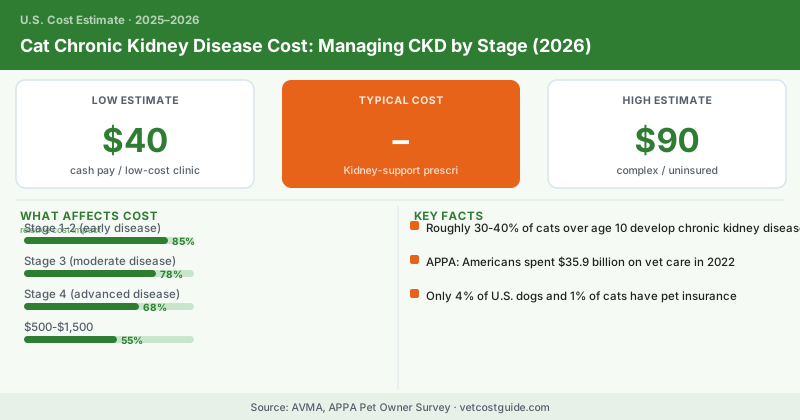
Roughly 30-40% of cats over age 10 develop chronic kidney disease, according to veterinary internal medicine estimates — making it one of the most common conditions your cat is statistically likely to face as she ages. If your cat was just diagnosed, here’s what ongoing management actually costs at each stage.
Chronic kidney disease (CKD) is a progressive, currently incurable condition where the kidneys gradually lose their ability to filter waste and concentrate urine. It’s staged 1 through 4 by the International Renal Interest Society (IRIS) based on bloodwork markers, and management costs scale directly with how advanced the disease is at diagnosis and over time as it progresses.
- Stage 1-2 (early, mild): $50–$150/month — mainly diet and monitoring
- Stage 3 (moderate): $100–$250/month — adds medications, more frequent bloodwork
- Stage 4 (advanced): $200–$400/month — subcutaneous fluids, multiple medications
- Acute flare-up/crisis treatment: $500–$1,500 per episode
- Diagnostic bloodwork panel: $100–$250 per check (every 3-6 months)
Full Cost Breakdown
| Component | Low End | High End | Frequency |
|---|---|---|---|
| Kidney-support prescription diet | $40 | $90 | Monthly, ongoing |
| Bloodwork/urinalysis monitoring | $100 | $250 | Every 3-6 months |
| Phosphate binder medication | $15 | $40 | Monthly, Stage 2+ |
| Anti-nausea medication | $15 | $40 | Monthly, as needed |
| Subcutaneous fluids (home, supplies) | $30 | $80 | Monthly, Stage 3-4 |
| Blood pressure medication | $10 | $30 | Monthly, if hypertensive |
| Appetite stimulant | $20 | $50 | Monthly, as needed |
| Acute flare-up hospitalization | $500 | $1,500 | Per episode |
Why Cost Rises With Each Stage
Stage 1-2 (early disease) is largely managed through diet alone — a kidney-support prescription diet reduces phosphorus and protein load on the kidneys, slowing progression. Monitoring bloodwork every 6 months confirms stability. This is the cheapest stage to manage and, crucially, the stage where management has the most impact on long-term outcomes.
Stage 3 (moderate disease) typically adds phosphate binders (since phosphorus builds up as kidney function declines) and more frequent bloodwork — every 3-4 months instead of 6 — to catch further decline early. Some cats develop hypertension at this stage, requiring blood pressure medication.
Stage 4 (advanced disease) is the most intensive and expensive to manage. Many cats need regular subcutaneous fluid administration at home (which owners are taught to do themselves, reducing but not eliminating cost) to help flush toxins and manage dehydration, plus anti-nausea medication and appetite stimulants as the disease affects comfort and eating.
The Real Cost Driver: Acute Flare-Ups
Chronic management costs are predictable and budgetable. What isn’t predictable is an acute uremic crisis — a sudden worsening where a cat becomes profoundly dehydrated, stops eating, and needs hospitalization with IV fluids and intensive monitoring. These episodes cost $500-$1,500 per event and can happen at any stage, though they become more frequent as the disease advances. Cats with CKD should be monitored closely for sudden appetite loss, vomiting, or lethargy, since prompt treatment of a flare-up significantly improves the outcome compared to delayed care.
- Increased thirst and urination are often the earliest visible signs, sometimes noticed months before diagnosis
- Sudden loss of appetite or vomiting in a cat with known CKD warrants same-day vet attention, not a wait-and-see approach
- Weight loss despite normal or increased eating can indicate disease progression
- Bad breath with an ammonia-like odor can indicate advancing disease and warrants a bloodwork recheck
Building a Realistic CKD Budget
For a cat diagnosed in early-stage CKD, budgeting $75-$150/month for diet and periodic bloodwork is realistic and, done consistently, is exactly the kind of management that keeps cats in earlier, cheaper stages longer. As disease progresses, budget increases to $150-$350/month are common, plus keeping $500-$1,000 available as an emergency cushion for a potential flare-up.
Pet insurance enrolled before any kidney values show abnormality typically covers ongoing CKD management, making this one of the stronger arguments for insuring cats while young, since kidney disease diagnosed after enrollment is generally covered as a chronic condition, but a diagnosis made before applying will be treated as pre-existing and excluded.
Frequently Asked Questions
Chronic kidney disease is extremely common in older cats — studies cited by veterinary internal medicine sources estimate it affects roughly 30-40% of cats over age 10, making it one of the most prevalent chronic conditions in senior cats. Early detection through routine senior bloodwork significantly improves the ability to slow disease progression through diet and management.
Yes — many cats diagnosed in early stages (IRIS Stage 1 or 2) live comfortably for years with proper management, including a kidney-support diet and regular monitoring. Cats diagnosed later, in Stage 3 or 4, have a more guarded prognosis, but supportive treatments like subcutaneous fluids and phosphate binders can still meaningfully improve quality of life and extend time.