Nobody plans a cremation in advance. Most people are standing in a vet’s office, still processing what just happened, when someone mentions “aftercare options.” Knowing these numbers ahead of time — even in the abstract — makes that moment slightly less overwhelming.
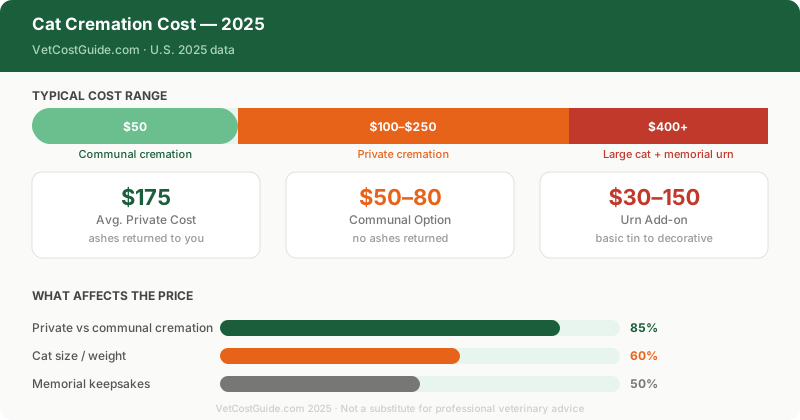
For cats, the decision is simpler than for dogs because size varies less dramatically. Communal cremation runs $50–$100. Private cremation with your cat’s individual ashes returned runs $100–$250. A large Maine Coon and a petite domestic shorthair will land within $20–$40 of each other. The main choice isn’t about size — it’s about what you want returned to you afterward.
- Communal cat cremation costs $50–$100 — your cat is cremated with other pets; no individual ashes returned.
- Private cat cremation costs $100–$250 — your cat is cremated alone; ashes returned within 1–2 weeks.
- Urns range from $30 for a basic tin to $150 for engraved ceramic and are typically sold separately.
- In-home euthanasia services (Lap of Love, Peaceful Pet Passages) often bundle aftercare coordination at no extra charge.
Cat Cremation Cost Breakdown
| Service | Low Estimate | High Estimate |
|---|---|---|
| Communal cremation | $50 | $100 |
| Private cremation (ashes returned) | $100 | $250 |
| Witnessed/memorial cremation | $150 | $300 |
| Basic tin or cardboard urn (often included) | $0 | $30 |
| Decorative or engraved urn | $40 | $150 |
| Clay paw print impression | $25 | $50 |
| Memorial photo frame or certificate | $20 | $50 |
| Home burial (check local ordinances) | $0 | $15 |
Your Options, Explained Plainly
Communal cremation is the most affordable choice. Your cat is cremated alongside other animals in the same chamber. This is handled with genuine care by trained professionals — the difference from private cremation isn’t about respect or dignity, it’s purely about what happens to the ashes afterward. In communal cremation, the combined remains are typically scattered in a designated memorial garden at the facility. You don’t receive individual ashes back. For families who don’t feel strongly about keeping physical remains, or for whom cost is a real constraint, communal cremation is a completely reasonable choice.
Private cremation means your cat is the only animal in the chamber during the process. A numbered metal tag stays with your cat throughout, establishing chain of custody. The ashes returned to you are exclusively your cat’s. They come in a basic container — usually a tin or simple cardboard box — within 7–14 days. You can transfer them to any urn you choose, whenever you’re ready.
Witnessed cremation lets you or your family be present, either in a viewing area or through a window. Some facilities offer a brief ceremony. It costs more because of scheduling requirements and additional staff time, but families saying goodbye to a cat they’ve had for 15 or 18 years sometimes find that presence meaningful and worth the premium.
Urns and keepsakes are almost always sold separately from the cremation itself. Facility prices for urns tend to run high; the same styles are available for 30–60% less online. Common memorial options include clay paw print impressions ($25–$50, often made by the vet or cremation service), fur clipping keepsakes collected before the appointment, and cremation jewelry — pendants, rings, or stones incorporating a small portion of ashes — at $80–$300.
What Actually Happens
The logistics are simpler than most people picture. After your cat passes at a clinic or at home, the veterinary practice coordinates with their affiliated cremation provider. Your cat is typically transported within 24–48 hours. For private cremation, a chain-of-custody identification tag is attached and travels with your cat throughout the entire process.
Cremation occurs at 1,400–1,800°F for roughly 30–60 minutes for a typical cat. Remaining bone fragments are processed into the fine, gray-white cremains most people are familiar with. A typical adult cat yields about a quarter to three-quarters of a pound of remains — a standard small pet urn accommodates this easily.
For private cremation, ashes are returned via your vet clinic or by direct mail within 7–14 days.
What Affects the Price
Facility type and your vet’s referral relationship. Most veterinarians work with one or two preferred cremation partners. That’s convenient, but the price may be slightly above what you’d find by arranging services independently. If cost matters, it’s worth asking your vet whether you can work directly with a cremation provider of your choice.
Geographic location. Urban markets — particularly coastal cities — charge meaningfully more. Cat cremation in New York City or Los Angeles typically runs $40–$100 higher than equivalent services in a mid-size inland city.
Turnaround time. Standard private cremation takes 7–14 days. Expedited service (3–5 days) carries a surcharge of $20–$50.
In-home euthanasia services. If you use a provider like Lap of Love, they typically coordinate aftercare pickup directly and work with vetted cremation partners. This is often seamlessly priced — competitive with or below what a clinic would charge for the same service.
- Unverified cremation providers: Fraud in pet cremation exists and is particularly painful for grieving families. Choose a facility that is a member of the Pet Loss Professionals Alliance (PLPA) or one your veterinarian has specifically vetted and worked with over time.
- Pressure to decide immediately: You do not need to make aftercare decisions at the vet clinic in the moment of loss. Most clinics will hold your cat’s remains for 24–48 hours while you consider options. Take that time if you need it.
- Overpriced urns at the cremation facility: Urns sold at cremation facilities and vet clinics are typically marked up significantly over retail. The same urn available on Amazon or Etsy for $30–$50 may cost $80–$120 at the facility. Buy separately if budget matters.
- Communal cremation misrepresentation: Ask explicitly: “Is this individual private cremation, or communal cremation where my cat is cremated with other animals?” Price alone doesn’t always make this clear.
When Cost Is a Real Barrier
No one’s cat should go without dignified aftercare because of financial hardship. Real options exist:
Local humane societies frequently help with basic cremation arrangements for families facing genuine financial difficulty. Call and explain the situation — many have quiet protocols for exactly this.
Veterinarian payment plans. Some practices allow aftercare costs to be billed and paid over time. It costs nothing to ask.
Pet Loss Professionals Alliance members often have hardship pricing or sliding-scale options. The PLPA website lists verified member facilities.
Home burial is legal in most residential and rural areas at no cost beyond a basic container. Most local ordinances require a depth of 2–3 feet and prohibit burial near water sources or property lines. Many families find this meaningful, particularly in backyards where the cat spent years of their life.
Practical Ways to Save
Choose communal if you’re comfortable with it. The care and professionalism is the same as private cremation — the only difference is whether individual ashes are returned. If that doesn’t matter deeply to you, communal cremation is a dignified $50–$100 choice with nothing to apologize for.
Buy the urn separately and online. Search before the ashes arrive. You’ll find equal or better quality at 30–60% below facility prices on Amazon or Etsy. There’s no deadline — ashes are chemically stable indefinitely.
Ask about options beyond your vet’s default referral. Simply asking “Are there other cremation facilities I could contact directly?” sometimes surfaces lower-cost alternatives your vet hasn’t mentioned.
Plan ahead when you can. If your cat has a terminal diagnosis, use that window to research providers, compare prices, and pre-arrange if possible. Some facilities lock in current pricing for pre-arranged services. Making decisions without acute grief almost always leads to better choices.
FAQ
How much do cat ashes weigh? Cremated remains typically weigh roughly 3.5% of body weight. A 10-lb cat yields approximately 0.35 lbs (about 6 ounces) of cremains. A 15-lb cat yields about half a pound. Standard small pet urns hold up to 1 lb and are appropriate for most cats.
Can I scatter my cat’s ashes anywhere? Scattering on private property you own is generally unrestricted in the US. Scattering on public land varies by jurisdiction — most state and federal agencies don’t have explicit prohibitions on small amounts of pet ashes scattered discreetly. Many families scatter in meaningful private locations without issue.
Is communal cremation disrespectful to my cat? No. It’s a common concern, but communal cremation is a respectful process handled by trained professionals. The difference from private cremation is entirely about whether individual ashes are returned — not about how your cat is treated. Many families choose it as a deliberate decision, some finding the memorial garden scattering meaningful in its own way.
How long can I keep my cat’s ashes? Indefinitely. Cremated remains are chemically stable and don’t degrade. Many families keep them for years, transfer them to different vessels over time, or scatter them when the moment feels right. There’s no obligation to do anything on any particular timeline.
Frequently Asked Questions
Private cremation, where your cat is cremated individually and you receive the ashes returned, typically costs $100–$250 depending on your location and the veterinary clinic. Some facilities may charge on the higher end if they offer premium urns or expedited service, while basic private cremation often falls in the $100–$150 range.
Most standard pet insurance plans do not cover cremation or aftercare services, as these are considered end-of-life expenses rather than medical treatment. You will typically pay the full cremation cost out-of-pocket, though some premium or specialized pet insurance policies may offer optional add-ons for end-of-life care—check your specific policy details.
Communal cremation costs $50–$100 and combines your cat with other pets during the cremation process, so you do not receive individual ashes back. Private cremation costs $100–$250, ensures your cat is cremated alone, and you receive your cat's ashes returned in an urn or container of your choice.