In 2010, a cat CT scan was a rare, expensive procedure you could only get at a handful of academic vet hospitals. Today it’s available at specialty and emergency hospitals in most mid-sized cities, and the cost has dropped enough that it’s a real diagnostic option for many pet owners. Still — $800 to $2,000 is real money. Here’s exactly what you’re paying for, what affects the price, and how to make a smart decision.
What a Cat CT Scan Costs
| Scan Type | Low | Typical | High |
|---|---|---|---|
| Thoracic (chest) CT | $800 | $1,100 | $1,500 |
| Abdominal CT | $800 | $1,100 | $1,500 |
| Nasal/skull CT | $900 | $1,200 | $1,800 |
| Full-body CT | $1,200 | $1,600 | $2,200 |
| CT with contrast dye | +$200 | +$300 | +$500 |
| Anesthesia (required) | $250 | $450 | $700 |
| Specialist consultation (if included) | $150 | $250 | $400 |
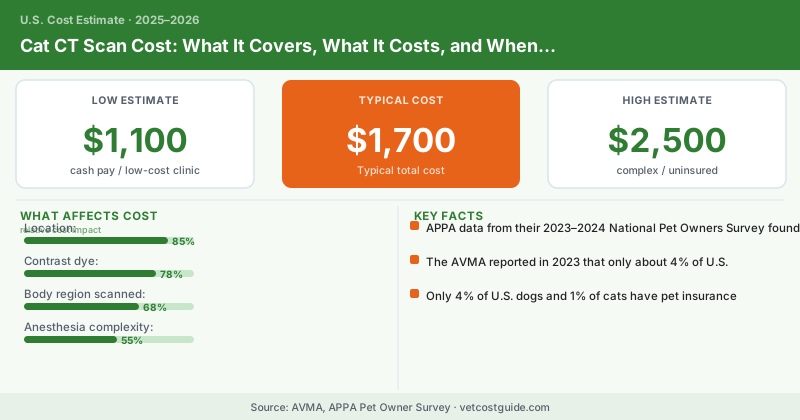
| Typical total cost | $1,100 | $1,700 | $2,500 |
Anesthesia is always required — cats won’t hold still in a scanner. Many facilities bundle anesthesia into the quoted price; others list it separately. Ask upfront so you’re not surprised at checkout.
When Your Vet Recommends a CT
CT scans use X-rays taken from multiple angles to create detailed 3D images. They’re particularly good at:
- Chest/lung assessment: Staging cancer, identifying masses, evaluating pleural effusion detail, assessing lung tumors before surgery
- Nasal cavity: Diagnosing nasal tumors, chronic rhinitis, fungal infections (Cryptococcus) — nasal CT is far more informative than skull x-rays for these conditions
- Abdominal masses: Characterizing liver, spleen, kidney, or lymph node lesions before surgery or biopsy
- Bone trauma: Complex fractures, joint assessment, orthopedic surgical planning
- Vascular abnormalities: Portosystemic shunts (liver shunts) in cats benefit from CT angiography
CT is faster than MRI (5–20 minutes versus 30–90 minutes under anesthesia) and generally costs less. For soft tissue of the brain and spinal cord, MRI is usually superior — but for everything listed above, CT is often the better or equivalent tool.
Standard X-ray ($100–$250): Great first step. Shows bones, gross lung changes, obvious masses. Limited for soft tissue detail.
CT scan ($800–$2,000): 3D detail, excellent for chest, abdomen, bones, nasal. Much faster than MRI under anesthesia.
MRI ($1,500–$3,500): Best for brain, spinal cord, nerve tissue. Longest anesthesia time.
Most diagnostic workups follow this order: X-ray first, then CT or MRI if more detail is needed. Your vet or specialist will guide which is appropriate for your cat’s specific situation.
What Drives the Cost Up or Down
Location: Veterinary specialty hospitals in major metro areas charge more than those in smaller cities. Academic veterinary hospitals (vet school teaching hospitals) typically charge 20–30% less than private practices.
Contrast dye: Iodinated contrast helps delineate vascular structures and enhances tumor visibility. It adds $200–$500 to the scan. Not every scan requires it — your specialist will advise.
Body region scanned: A single-region scan costs less. Full-body or multi-region scans are more expensive.
Anesthesia complexity: A healthy 6-year-old cat undergoing a straightforward chest CT needs simpler anesthesia protocol than a 14-year-old with heart disease. More complex cases cost more.
Specialist interpretation: A board-certified radiologist (DACVR) or internal medicine specialist typically reads and reports the images. This expertise is factored into the facility fee.
The Volume Behind the Numbers
The AVMA’s U.S. Pet Ownership and Demographic Sourcebook notes that advanced imaging use in companion animals has grown more than 300% since 2010. A 2022 survey in Veterinary Radiology & Ultrasound found CT to be the most frequently performed advanced imaging modality at private specialty hospitals, with anesthesia complication rates under 0.3% in healthy cats — meaning the procedure is well-standardized.
APPA data from their 2023–2024 National Pet Owners Survey found cat owners spent an average of $687 per year on vet care, but that number skews low because it includes many owners who skip specialist care. When specialist visits and advanced diagnostics are involved, out-of-pocket costs frequently run $1,000–$3,000+ per incident.
Nasal CT: The Most Common Cat-Specific Use
Chronic sneezing, bloody discharge, and one-sided facial swelling in cats often point to nasal cavity disease — and plain X-rays don’t give you enough detail to distinguish a fungal infection from a tumor from chronic inflammatory rhinitis. Nasal CT changes the diagnostic picture entirely.
For a cat with nasal symptoms, CT is often the first advanced diagnostic your internist or specialist recommends. The $1,000–$1,800 spent on nasal CT can prevent months of antibiotics that won’t work (if it’s a tumor) or an unnecessary biopsy (if the pattern is diagnostic for Cryptococcus).
Cats with nasal discharge and facial asymmetry should be seen promptly. Nasal tumors in cats — particularly squamous cell carcinoma and lymphoma — are locally invasive and progress quickly. A cat that’s been sneezing with bloody discharge for four months and “seems okay otherwise” may have a tumor that’s been growing since the first symptom appeared. Don’t wait on nasal symptoms.
Paying for a Cat CT Scan
Pet insurance: If your cat has a policy, a CT scan for a covered condition is typically reimbursed at 70–90% after deductible. Check your policy for any exclusion of advanced imaging or specific conditions. The AVMA reported in 2023 that only about 4% of U.S. cats are insured — if yours is one of them, you’re in a financially better position for exactly this kind of unexpected diagnostic cost.
CareCredit and ScratchPay: Both are widely accepted at veterinary specialty hospitals. CareCredit’s promotional periods (6–24 months interest-free for qualifying amounts) can make a $1,500 CT manageable as a monthly payment.
Academic vet hospitals: If you’re within reasonable driving distance of a veterinary college, their specialty hospital almost always performs CT at lower rates than private specialty practices. Search for AVMA-accredited veterinary colleges by state.
Ask what’s bundled: Some facilities quote CT + anesthesia + radiologist interpretation as one number. Others itemize. Know before you book so you’re comparing apples to apples across facilities.
Frequently Asked Questions
How long does a cat CT scan take? The actual scan is 5–20 minutes, much faster than MRI. Total time at the facility (check-in, anesthesia induction, scan, recovery monitoring) is usually 3–5 hours.
Is a CT scan safe for my cat? CT uses ionizing radiation, but the dose for a single diagnostic scan is low and the anesthetic risk in a healthy cat is minimal (under 0.3% for routine procedures). For cats with significant comorbidities, discuss anesthetic risk specifically with the team before proceeding.
What if the CT finds something bad? Your specialist will walk through findings and options with you. Not every mass found on CT requires immediate surgery or treatment — some are monitored, some biopsied with a needle (less invasive and far cheaper), and some change treatment plans significantly. The CT gives you information to make better decisions, even if the news is hard.
Can I get a CT at my regular vet? Most general practices don’t have CT equipment — it requires significant capital investment and trained personnel to operate. General vets refer to specialty hospitals or mobile CT services for this.
Frequently Asked Questions
A cat CT scan typically costs between $800 and $2,000 at veterinary specialty and emergency hospitals in the US. The final price depends on factors like your location, whether sedation or anesthesia is required, the number of body regions scanned, and whether contrast dye is used.
Many pet insurance plans cover CT scans as part of diagnostic imaging benefits, though you'll typically pay 10-30% out-of-pocket after meeting your deductible, with most plans covering 70-90% of the remaining cost. However, some insurers exclude CT scans or charge higher deductibles for advanced diagnostics, so review your specific policy details before scheduling.
A CT scan itself takes only 5-10 minutes to complete, but the entire appointment including preparation usually lasts 1-2 hours. Most cats require sedation or general anesthesia to stay still during imaging, which adds $200-$500 to the total cost and means your cat may need to fast beforehand and have recovery time afterward.