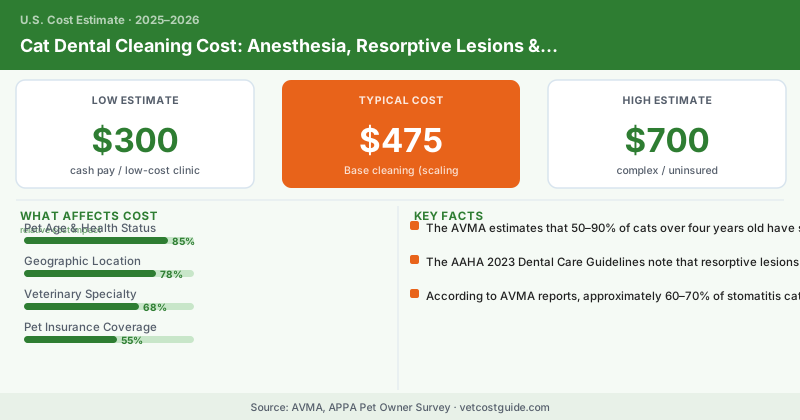
Dogs get more dental attention than cats — but cats may actually need it more. By age 5, up to 60% of cats have tooth resorption, a painful condition that doesn’t show on the surface and is completely invisible without dental radiographs. The AVMA estimates that 50–90% of cats over four years old have some form of dental disease — rates that dwarf what we see in dogs of comparable age.
And yet cat dental cleanings are underperformed. Owners see a cat eating normally and assume the mouth is fine. Cats are expert pain hiders — they don’t stop eating until tooth pain is severe, and even then they adapt. The absence of obvious distress is not the same as the absence of disease.
- Base dental cleaning (no extractions): $300–$800
- Full-mouth dental radiographs: $150–$300 (if not included in base fee)
- Simple tooth extraction: $100–$200 per tooth
- Complex/surgical extraction: $200–$300 per tooth
- Full-mouth extraction (severe stomatitis): $800–$2,000 additional
- Pre-anesthetic bloodwork: $80–$180
- VOHC-approved dental products (home care): $10–$30/month
Feline Tooth Resorption (FORL): The Cat-Specific Problem
Tooth resorption — also called feline odontoclastic resorptive lesions (FORL) or feline oral resorptive lesions — is the most common dental condition unique to cats. The AAHA 2023 Dental Care Guidelines note that resorptive lesions are present in 20–60% of cats presented for dental care, with prevalence increasing dramatically with age.
Here’s what’s happening: specialized cells called odontoclasts (normally responsible for breaking down deciduous baby teeth) begin attacking adult tooth structure. The lesion starts at the root surface and progresses inward, eventually reaching the pulp cavity — the equivalent of a deep cavity reaching the nerve. It’s genuinely painful.
The problem is that resorptive lesions at early or moderate stages look completely normal on visual inspection. The tooth surface looks intact. Only dental radiographs reveal the internal destruction. This is why the AAHA guidelines consider full-mouth radiographs the standard of care for every feline dental procedure — not an optional add-on, but a required diagnostic.
A cat with three or four resorptive lesions will have those teeth extracted. Each extraction adds to the bill — and feline extractions are often technically complex because the roots become partially fused to the surrounding bone (a phenomenon called replacement resorption), requiring careful surgical technique to remove without leaving fragments.
What the Procedure Involves
Your cat will be dropped off in the morning — fasted from the night before. Pre-anesthetic bloodwork is run first. Then:
- IV catheter placed for fluid support and medication delivery
- Induction with injectable anesthesia, followed by intubation
- Gas anesthesia maintained throughout; technician monitors heart rate, oxygen saturation, temperature, and blood pressure continuously
- Full-mouth dental radiographs — every tooth, all four quadrants
- Oral exam and charting — documenting findings for each tooth
- Ultrasonic scaling above and below the gumline; polishing
- Extractions as indicated — number determined by what radiographs reveal
- Pain medication administered before patient wakes
- Recovery — your cat is monitored until fully awake before going home
Total anesthesia time: 60–90 minutes for a routine cleaning; 2–3+ hours when multiple complex extractions are needed.
| Service | Low | Mid | High |
|---|---|---|---|
| Base cleaning (scaling, polish, exam) | $300 | $475 | $700 |
| Full-mouth radiographs | $100 | $200 | $300 |
| Pre-anesthetic bloodwork | $80 | $130 | $180 |
| Simple extraction (per tooth) | $100 | $150 | $200 |
| Surgical extraction (per tooth) | $150 | $250 | $300 |
| Full-mouth extraction (stomatitis case) | $800 | $1,200 | $2,000 |
A realistic total for a middle-aged cat with moderate disease — cleaning plus radiographs plus 2–3 extractions — runs $700–$1,200 at most full-service clinics.
Feline Stomatitis: When Full-Mouth Extraction Is the Answer
Chronic feline stomatitis is a severe immune-mediated condition where the cat’s own immune system attacks tooth root surfaces, causing diffuse, painful oral inflammation. Affected cats may stop eating, drool excessively, and paw at their mouths. The inside of the mouth is visibly raw and inflamed.
The counterintuitive but effective treatment is full-mouth extraction — removing all or nearly all teeth eliminates the antigenic stimulus (tooth roots) driving the immune response. According to AVMA reports, approximately 60–70% of stomatitis cats experience significant improvement after full-mouth extraction, often dramatically so. The remaining cats may require ongoing medication.
Full-mouth extraction is a long, complex procedure — often 2–4+ hours of surgical time. Expect $1,500–$3,000+ for the procedure alone at a general practice; more at a veterinary dentist. It’s expensive upfront, but for severe stomatitis cats, it can be life-changing.
Why Cat Dental Care Differs From Dog Dental Care
Beyond tooth resorption, feline dentistry differs in a few key ways:
Extraction complexity. Cat teeth are small with multiple curved roots. Multi-rooted premolars and molars often require surgical sectioning and dental drill work to extract cleanly. This takes more time and skill — and costs more per tooth — than comparable dog extractions.
Anesthesia sensitivity. Older cats, particularly those with concurrent kidney disease (very common in senior cats), require more intensive monitoring and sometimes adjusted anesthetic protocols. This can add to base costs but is non-negotiable for safety.
Stomatitis risk. Dogs almost never develop feline stomatitis. In cats, it’s a meaningful disease entity that can transform a routine dental cleaning into a complex surgical case.
“Anesthesia-free dental cleanings” are not dental care. These services — offered at some grooming facilities and low-cost clinics — scale visible tartar from tooth surfaces while the cat is conscious and restrained. They address surface appearance only. They do nothing for disease below the gumline, cannot include radiographs, and subject the cat to significant stress. The AVDC and AAHA both classify anesthesia-free dental cleanings as an ineffective and inappropriate substitute for proper dental care. Don’t be misled by the lower price.
Home Care: VOHC-Approved Options
Daily tooth brushing is the gold standard. The Veterinary Oral Health Council (VOHC) accepts products that have demonstrated efficacy in reducing plaque and tartar through controlled clinical trials. Their seal means something.
VOHC-approved options for cats include:
- Toothpaste: Virbac C.E.T., Sanos
- Dental chews: Greenies for cats (in appropriate size)
- Water additives: Healthymouth and a few others
- Dental food: Hill’s t/d
Even once-weekly brushing is better than no brushing. Daily is dramatically better than weekly. If you can establish a brushing routine with a kitten, you’ll save meaningfully on dental bills over the cat’s lifetime.
Does Pet Insurance Cover Feline Dental Care?
Dental illness coverage in pet insurance varies widely. Many policies exclude periodontal disease and tooth resorption as “dental illness.” Some — including Embrace and ASPCA Pet Health Insurance at certain tiers — do cover dental illness after the deductible. Routine preventive cleanings are rarely covered under illness policies but may be partially reimbursed under wellness add-on riders ($75–$150/year).
For any cat over age 3 with a history of dental disease, a policy with dental illness coverage can pay for itself within a cleaning or two.
Frequently Asked Questions
Anesthesia is not optional — it's medically necessary. Cats can't hold still for probing, scaling below the gumline, or radiographs. An awake cat can't be properly treated, and attempting to scale teeth on an awake, stressed cat is both dangerous and ineffective — it only removes visible surface tartar while leaving disease below the gumline untouched. 'Anesthesia-free dental cleanings' are considered substandard care by the AAHA and the American Veterinary Dental College and don't address the disease driving dental problems in cats.
Tooth resorption (FORL) means the body is essentially dissolving the tooth structure from the root up. It's painful — imagine a cavity that reaches the nerve and can't be filled. Once a tooth has significant resorption, the only treatment is extraction. Unlike a simple extraction in a dog, feline resorptive lesion extractions are often complex because the roots may be partially fused to the jawbone. Full removal is required to eliminate pain, which is why these cases often run higher than expected.
Yes, tooth brushing is the single most effective home dental care method, but it has to be done consistently — ideally daily. Use a soft-bristled brush (finger brush or small toothbrush) and veterinary-formulated toothpaste (never human toothpaste, which contains xylitol and fluoride). Start slowly: let your cat lick the toothpaste for a week, then introduce the brush. Even a 30-second daily session focusing on the outer surfaces makes a meaningful difference. If brushing isn't feasible, VOHC-approved dental chews and water additives are evidence-based second-best options.