Here’s something most newly diagnosed diabetic cat owners haven’t heard yet: unlike dogs, a real percentage of diabetic cats can go into remission — meaning they eventually stop needing insulin altogether. That single fact changes how you should think about the first few months of treatment, both medically and financially.
Feline diabetes mellitus develops differently than canine diabetes in an important way: many cats have a form similar to human Type 2 diabetes, where the pancreas still produces some insulin but the body’s cells have become resistant to it. This is why aggressive early management — tight glucose control combined with a low-carbohydrate diet — gives some cats a real shot at remission, unlike dogs, where diabetes is typically a permanent, lifelong condition requiring insulin indefinitely.
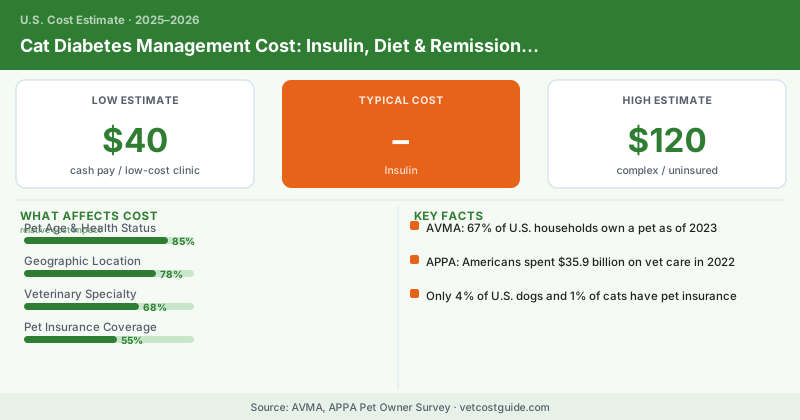
- Insulin: $40–$120/month
- Syringes: $10–$25/month
- Low-carbohydrate prescription diet: $25–$60/month
- Home glucose monitoring supplies: $20–$70/month
- Vet recheck with glucose curve: $100–$300 (every 2-6 months, more frequent early on)
- Remission is a genuine possibility with early, aggressive management
Full Cost Breakdown
| Component | Low End | High End | Frequency |
|---|---|---|---|
| Insulin | $40 | $120 | Monthly, ongoing until stable or remission |
| Syringes | $10 | $25 | Monthly |
| Low-carbohydrate prescription diet | $25 | $60 | Monthly |
| Home glucose test strips | $20 | $50 | Monthly, if using this method |
| Continuous glucose monitor sensor | $35 | $70 | Every 2 weeks, if using this method |
| Vet recheck/glucose curve (early, frequent) | $100 | $300 | Every 2-4 weeks during initial stabilization |
| Vet recheck (once stable) | $100 | $250 | Every 3-6 months |
Why Early Aggressive Treatment Matters So Much
The window right after diagnosis is genuinely the most important period for a diabetic cat’s long-term outlook. Veterinary internal medicine research has shown that cats started promptly on a low-carbohydrate diet combined with tight glucose control in the weeks after diagnosis have meaningfully better odds of achieving diabetic remission compared to cats managed less aggressively or diagnosed later in the disease course. This means more frequent vet visits and glucose monitoring in the first 1-3 months — which costs more upfront — but can eliminate the ongoing cost and burden of lifelong insulin if remission is achieved.
This is worth discussing directly with your vet: ask specifically about a remission-focused management plan versus standard long-term management, since the approach and the frequency of monitoring differ.
Home Monitoring Options
Similar to canine diabetes management, cats can be monitored via traditional glucometer and test strips or a continuous glucose monitor (CGM) sensor. Many cat owners find CGMs particularly valuable for feline diabetes since obtaining a blood sample from a cat’s ear can be more difficult than from a dog, especially for less cooperative cats. The sensor attaches to the skin and tracks glucose continuously for about two weeks per sensor, at a higher monthly cost than strips but often with better real-world compliance.
What Happens If Remission Is Achieved
If a cat achieves remission, insulin injections stop, dramatically reducing monthly cost to primarily the ongoing low-carbohydrate diet ($25-$60/month) and periodic monitoring to catch any relapse early. It’s important to understand that remission isn’t necessarily permanent — some cats relapse into needing insulin again, particularly if weight gain returns or the low-carb diet lapses, which is why periodic bloodwork monitoring continues even after remission.
- Lethargy, weakness, or wobbliness in the back legs can indicate dangerously low blood sugar or diabetic neuropathy
- Vomiting combined with rapid breathing and lethargy can indicate diabetic ketoacidosis, a life-threatening emergency
- Sudden return of excessive thirst and urination after a period of stability may signal the insulin dose needs adjustment
- Never skip or double up on an insulin dose without vet guidance if you’re unsure whether a previous dose was given
Building a Realistic Budget
Budget for higher costs in the first 1-3 months after diagnosis — $150-$400/month — given the more frequent monitoring needed for aggressive early stabilization and the real chance at remission. Once stable (whether on ongoing insulin or in remission), costs typically settle to $70-$200/month for insulin-dependent cats or $30-$70/month for cats in remission on diet management alone. Pet insurance enrolled before a diabetes diagnosis typically covers management costs as a chronic condition, making early enrollment in healthy cats a genuinely strong financial hedge against this common feline disease.
Frequently Asked Questions
Yes — unlike dogs, a meaningful percentage of cats diagnosed with diabetes can achieve remission, meaning they no longer need insulin, especially with early diagnosis, a low-carbohydrate diet, and tight initial glucose control. Studies cited in veterinary literature report remission rates ranging widely depending on how quickly treatment starts, making early, aggressive management financially and medically worthwhile.
Insulin for a diabetic cat typically costs $40–$120 per month depending on the type prescribed, since cats often require lower doses than dogs due to their smaller size. Combined with syringes, monitoring supplies, and a prescription low-carbohydrate diet, total monthly management for a diabetic cat usually runs $70–$200.