Your cat’s been shaking her head for three days and pawing at her left ear. You peek inside and see dark, waxy buildup. You’re guessing ear mites. Your vet’s guessing something more complicated.
That’s the thing about cat ear infections — owners rarely guess the cause correctly, and guessing wrong costs more time and money than just getting a diagnosis. Ear mites, bacterial infections, yeast overgrowth, and nasopharyngeal polyps all look similar from the outside and require completely different treatments.
Here’s what diagnosis and treatment actually costs, and what drives prices up.
- Vet exam + ear cytology: $100–$250
- Topical ear medication (prescription): $40–$120
- Ear mite treatment: $30–$80
- Culture and sensitivity test: $80–$200
- Sedated ear cleaning: $150–$300
- Nasopharyngeal polyp removal: $500–$1,500
- CT scan (middle ear disease): $800–$1,500
The Most Common Causes in Cats
Cats develop ear infections differently than dogs. While dogs are frequently plagued by bacterial and yeast infections tied to allergies, cats have their own set of typical culprits:
- Ear mites (Otodectes cynotis): Especially common in outdoor cats and kittens. Dark, crumbly discharge is the hallmark sign. Highly contagious between cats.
- Yeast (Malassezia): Less common in cats than dogs, but does occur — often alongside another underlying condition.
- Bacteria: Secondary infections following another problem. Uncommon as a primary cause in otherwise healthy cats.
- Nasopharyngeal polyps: Benign growths that develop in the middle ear or Eustachian tube and extend into the ear canal or throat. More common in young cats.
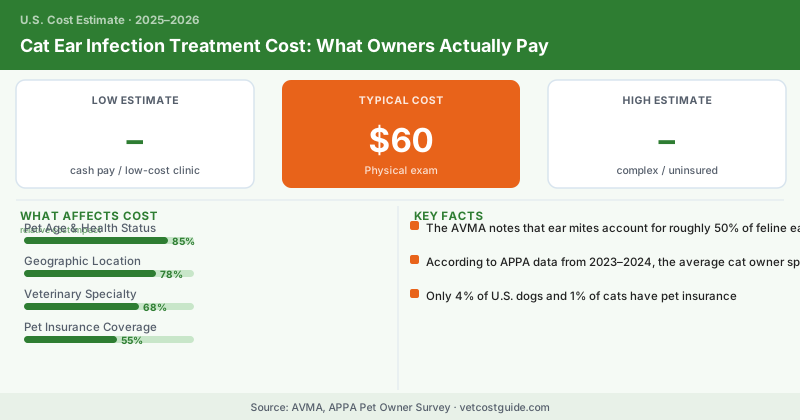
The AVMA notes that ear mites account for roughly 50% of feline ear infections — a much higher proportion than in dogs, where allergic disease dominates. That stat matters because it affects how your vet approaches the workup and which treatments get recommended first.
Cost Breakdown by Treatment Type
| Service | Cost Range | Notes |
|---|---|---|
| Physical exam | $60–$120 | Required at every visit |
| Ear cytology (microscopic swab) | $60–$150 | Distinguishes mites vs. yeast vs. bacteria |
| Ear mite treatment (topical) | $30–$80 | Revolution, Advantage Multi, or similar |
| Prescription antifungal/antibiotic drops | $40–$120 | 7–14 day course typical |
| Culture and sensitivity test | $80–$200 | Chronic or non-responsive cases |
| Sedated ear flush | $150–$300 | For impacted debris or painful ears |
| Nasopharyngeal polyp removal | $500–$1,500 | Traction avulsion vs. ventral bulla osteotomy |
| CT scan (skull/middle ear) | $800–$1,500 | Pre-surgical planning for polyps |
Ear Cytology: Why Vets Swab Before They Prescribe
A cytology swab takes about two minutes in the clinic and tells your vet what organism is actually in the ear. Under a microscope, ear mites look nothing like Malassezia, which looks nothing like rod-shaped bacteria. Each requires a different treatment.
Skipping cytology means guessing — and an antifungal medication does nothing against ear mites, just as an ear mite treatment won’t clear a bacterial infection. Most cytologies run $60–$150 and are worth every dollar.
For cats with recurrent or treatment-resistant infections, a culture and sensitivity test ($80–$200) identifies the specific pathogen and which antibiotic can kill it. This is less common in cats than in dogs but matters when infections keep coming back.
Nasopharyngeal Polyps: The Complication Most Owners Don’t Know About
This is the diagnosis that catches cat owners off guard. Nasopharyngeal polyps are benign masses that originate in the middle ear or Eustachian tube. They can grow into the external ear canal, causing a persistent “ear infection” that doesn’t fully resolve with standard treatment. Some polyps extend into the back of the throat instead, causing sneezing, snoring, or difficulty swallowing.
The ASPCA estimates that polyps are one of the more frequently missed diagnoses in young cats presented for recurrent ear problems, in part because they’re not visible on a standard otoscope exam without sedation.
Removal options:
- Traction avulsion: Under sedation, the polyp is grasped and pulled free. Fast and affordable ($300–$600 for the procedure), but recurrence rates are around 30–50%.
- Ventral bulla osteotomy (VBO): Surgical access to the middle ear to remove the polyp at its root. More invasive, $800–$1,500+, but recurrence rates drop to under 10%.
If your cat has had ear problems since kittenhood or the same ear keeps re-infecting despite treatment, polyps should be on your vet’s differential list.
Chronic or Bilateral Infections: When Costs Climb
A single straightforward ear infection diagnosed and treated at one visit typically costs $150–$350 total — exam, cytology, and a prescription topical. That’s the common scenario.
Costs climb significantly when:
- Both ears are infected — medication volumes double, sedated cleanings cost more
- The infection is deep — middle ear involvement (otitis media) requires imaging and potentially surgery
- There’s an underlying condition — immune suppression, allergic disease, or an anatomical abnormality driving repeated infections
A cat with recurrent bilateral ear infections over a 12-month period might accumulate $800–$2,000 in total veterinary costs if the root cause isn’t identified and addressed.
At-Home Care: What Helps and What Doesn’t
Never put anything in a cat’s ear without a diagnosis and veterinary guidance. The ear canal connects to the eardrum, and an already-damaged eardrum can be worsened by over-the-counter products, even ones marketed specifically for cats.
Ear mites are contagious — if one cat in your household has them, all cats (and often dogs) need treatment simultaneously or the cycle continues.
Safe between-visit care, only with vet approval: gently wiping the visible outer ear with a cotton ball moistened with a vet-approved cleaner. No swabs in the canal. No cotton tips deeper than you can see.
Dark, crumbly discharge in a cat’s ear looks exactly like ear mites but can also be dried blood from a yeast or bacterial infection. Don’t treat at home with over-the-counter mite products unless your vet has confirmed mites via cytology — the wrong treatment delays resolution and allows a real infection to worsen. One vet visit for an accurate diagnosis is almost always cheaper than two or three rounds of the wrong product.
Ways to Keep Costs Down
Get the cytology. It adds $60–$150 upfront but prevents paying for the wrong medication.
Treat all cats simultaneously for ear mites. Treating only the symptomatic cat while mites spread to housemates means multiple rounds of treatment and multiple vet bills.
Don’t skip the recheck. A $50–$80 recheck exam confirms the infection resolved. An infection that appears cleared but lingers can progress to the middle ear — where treatment costs are 5–10x higher.
Ask about prevention if it’s a young outdoor cat. Monthly parasite preventives that cover ear mites are available by prescription and cost $15–$40/month — less than one ear infection visit per year.
According to APPA data from 2023–2024, the average cat owner spends approximately $250–$400 on an ear problem that requires a single course of treatment. With polyps or middle ear disease, that figure climbs considerably. Getting to a diagnosis quickly is both the medically and financially sound approach.
Frequently Asked Questions
A straightforward ear infection diagnosis and treatment typically costs $100–$400, which usually includes an exam, ear cytology or culture, and medication like ear drops or oral antibiotics. Chronic or complicated infections involving ear polyps or middle ear involvement can range from $500–$3,000, especially if imaging (X-rays or CT scans) and specialist referrals are needed.
Most pet insurance plans cover ear infection treatment as part of accident and illness coverage, but many policies exclude chronic ear conditions or require a waiting period before coverage begins. Out-of-pocket costs typically range from $100–$400 for standard cases after deductibles ($250–$500) and copays are applied, though chronic cases may exceed your annual or per-condition limit.
Initial treatment takes 1–2 weeks with prescribed ear drops or oral antibiotics, though some infections require 4–6 weeks of therapy depending on the underlying cause. Home treatment alone is not recommended because misdiagnosis is common—ear mites, bacterial infections, yeast, and polyps require different medications, so a vet exam is essential to avoid prolonging infection and increasing costs.