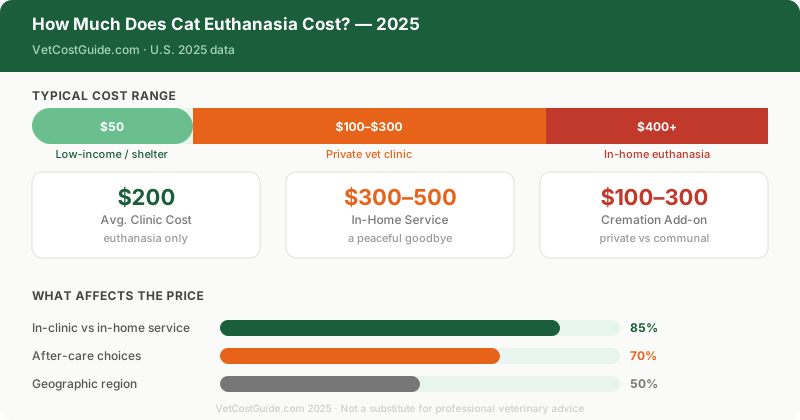
Knowing these numbers ahead of time is one small act of preparation in an otherwise impossible situation. Most people research this topic weeks or months before they need to act on it — and that’s exactly the right way to approach it. In 2025, at-clinic euthanasia for a cat costs $75–$250. In-home services, where a veterinarian comes to your home and your cat passes in their own space, run $250–$500. Cremation and other aftercare add $50–$250 depending on what you choose. None of this should be a surprise on the day itself.
- At-clinic cat euthanasia costs $75–$250 including exam and procedure at most private vet practices.
- In-home euthanasia services (Lap of Love, Peaceful Pet Passages) charge $250–$500 for a home visit.
- Humane society or shelter euthanasia for owned pets may cost as little as $25–$75, or be free in hardship cases.
- Private cremation with ashes returned costs $100–$250 for a cat; communal cremation runs $50–$100.
Cat Euthanasia Cost Breakdown
| Service | Low Estimate | High Estimate |
|---|---|---|
| At-clinic exam plus euthanasia | $75 | $250 |
| Low-income/shelter euthanasia for owned pets | $25 | $75 |
| In-home euthanasia service | $250 | $500 |
| Communal cremation (no ashes returned) | $50 | $100 |
| Private cremation (ashes returned) | $100 | $250 |
| Memorial urn (basic to decorative) | $30 | $150 |
| Clay paw print keepsake | $25 | $50 |
| Home burial (DIY — check local laws) | $0 | $20 |
What Each Option Actually Involves
At-clinic euthanasia is the most common and affordable choice. The process typically begins with a brief consultation — your vet explains what will happen and answers any questions. A sedative injection is given first, ensuring your cat is deeply calm and sleepy before anything else occurs. The final injection of pentobarbital follows. Most cats pass within 30–60 seconds, peacefully. Most clinics offer a private room and welcome you to stay as long as you need, before and after. There’s no rush.
In-home euthanasia follows the same medical process, but in your home. Your cat is on their favorite chair, or in your arms, in a familiar space that doesn’t smell like a clinic. Services like Lap of Love and Peaceful Pet Passages specialize exclusively in this — they’ve done it thousands of times and bring everything needed. The veterinarian can also coordinate cremation pickup the same day. For cats who were chronically stressed by car trips and clinic environments, there’s something genuinely important about this option.
Aftercare starts with a choice:
- Communal cremation: Your cat is cremated with other animals. No individual ashes returned. The combined remains are typically scattered in a memorial garden at the facility. Most affordable option.
- Private cremation: Your cat is cremated individually. A chain-of-custody tag ensures the ashes returned are solely your cat’s. They come in a basic tin or cardboard container within 7–14 days; you can transfer them to any urn you choose.
- Memorial urn options: A simple tin runs about $30. A personalized ceramic or wood urn with your cat’s name engraved goes up to $80–$150. The same urns are often available for less online.
- Home burial: Legal in most US jurisdictions. Most areas require burial at least 2 feet deep, away from water sources and property lines. Some families plant a tree or flowering shrub over a home burial site.
What Determines the Price
The setting. At-clinic is always more affordable than in-home. In-home services include the veterinarian’s travel time, flexible scheduling, and the premium of a private home visit. Neither is medically superior to the other. The difference is entirely experiential.
The clinic type. Corporate chains like Banfield and VCA have standardized pricing that tends toward mid-range. Independent practices vary more widely. Humane societies and shelters that offer owner-requested euthanasia for suffering pets typically use a sliding-scale or donation model.
Geographic location. In major cities, at-clinic fees trend toward the top of the range and in-home services often reach $500. In smaller markets, both run 20–40% lower.
Cremation pricing and cat size. Cats are relatively uniform compared to dogs, so cremation pricing doesn’t vary as dramatically — but a 20-lb Maine Coon will cost slightly more than a 9-lb domestic shorthair. Expect a $20–$50 difference across size ranges.
- Unclear fee structures: Ask your vet or service provider for an itemized quote. Some quotes include the exam, sedation, and procedure; others quote only the injection. Surprise charges during an emotional moment are unnecessarily distressing.
- Not planning aftercare in advance: You can make aftercare decisions before the appointment — in fact, in-home services often require it. Deciding on cremation type ahead of time removes one burden from a hard day.
- Unvetted cremation providers: Ask your vet who they work with and whether the crematorium is certified. Sadly, fraud in pet cremation does occur. Look for membership in the Pet Loss Professionals Alliance (PLPA).
- Assuming humane society services are for strays only: Many shelters extend low-cost or compassionate end-of-life services to owned pets whose families are facing financial hardship. Call and ask — there is no shame in it.
When Cost Is a Real Barrier
No cat should suffer because euthanasia feels financially out of reach. This matters enough to say plainly.
Local humane societies and shelters often offer euthanasia for suffering owned pets on a sliding scale or free basis. Call ahead and explain the situation honestly. Many have a private room separate from the main shelter specifically for this purpose.
Veterinary schools with teaching clinics offer services at reduced cost — typically $50–$100 for euthanasia.
National assistance organizations. The Pet Fund, RedRover Relief, the Brown Dog Foundation, and the ASPCA maintain emergency assistance funds. Applications for end-of-life situations are often processed quickly.
Your own vet. Don’t underestimate this option. Many veterinarians will defer payment, reduce fees, or absorb the cost entirely for long-term clients in genuine hardship. It costs nothing to ask, and most vets would rather have that conversation than have an animal suffer.
Planning Ahead When You Have Time
If your cat has a terminal diagnosis — chronic kidney disease, cancer, advanced heart disease — you have a window. Use it. Research in-home services in your area. Decide between communal and private cremation. Set aside the funds. Look into which memorial keepsakes matter to you. Making these decisions under calm, not crisis, conditions means they actually reflect what you want.
A budget of $300–$600 covers at-clinic euthanasia plus private cremation with ashes returned for most cats. In-home service plus private cremation typically runs $400–$750 in most markets. These are manageable amounts to set aside when you have weeks rather than hours.
Pet insurance rarely covers euthanasia itself, though it often covers substantial costs of the underlying condition in the months prior.
FAQ
How do I know when it’s time? Quality-of-life frameworks like the HHHHHMM Scale (Hurt, Hunger, Hydration, Hygiene, Happiness, Mobility, More good days than bad) provide a useful structure. Your veterinarian is your best guide. Most vets will give you a direct, honest answer if you ask: “What would you do if this were your cat?” Many families find that making the decision is the hardest part — once made, the process itself is quiet and gentle.
Is in-home euthanasia really worth the extra cost? For cats especially — who tend to be more stressed by travel and clinical environments than dogs — the home option can make a meaningful difference. If your cat was anxious at the vet, visibly distressed by car rides, or simply lived a very home-centered life, the home option is worth serious consideration. Whether the $150–$300 premium is worth it is a personal call only you can make.
Can I stay with my cat? Yes, always. You can hold your cat, stay in the room throughout, or step out if you prefer. There is no wrong way to do this. If you cannot be present for any reason, the veterinarian or technician will stay with your cat so they are not alone.
What do I do with the ashes after private cremation? You can keep them in the urn indefinitely, scatter them in a meaningful location (check local regulations), incorporate them into a memorial garden, or have them made into cremation jewelry or glass. Some families keep ashes for years; others scatter them within weeks of receiving them. There is no right answer and no timeline.
Frequently Asked Questions
At-clinic euthanasia for a cat typically costs $75–$250 in 2025, depending on your location and the veterinary practice. This price covers the euthanasia procedure itself, though cremation and aftercare services are usually additional costs ranging from $50–$250.
Most pet insurance policies do not cover euthanasia or end-of-life care, as these are considered elective procedures rather than treatments for illness or injury. You should expect to pay the full euthanasia cost out-of-pocket, though some veterinary clinics offer payment plans or financial assistance programs for families in difficult situations.
In-clinic euthanasia costs $75–$250 and takes place at the veterinary office, while in-home euthanasia costs $250–$500 and allows your cat to pass away in the comfort of your home with a veterinarian present. In-home services typically take longer and provide a more private, personalized experience, but come at a premium price.