Five years ago, a FIP diagnosis was effectively a death sentence. Feline Infectious Peritonitis killed nearly every cat it infected, and there was nothing vets could do except manage symptoms until the end. That’s no longer true.
In 2021, the FDA approved Remdesivir-related antiviral compounds — specifically GS-441524 and GC376 — for FIP treatment after clinical trials showed cure rates above 85%. The AVMA and University of California Davis FIP Working Group now recognize antiviral therapy as the standard of care. For the first time in veterinary medicine, FIP went from uniformly fatal to genuinely treatable. But treatment is not cheap, and navigating the options is genuinely confusing for most owners.
FIP Treatment Cost Summary
| Treatment Option | Duration | Estimated Total Cost |
|---|---|---|
| GS-441524 (FDA-approved Bova or similar brand) | 84 days | $3,500–$6,000 |
| Mutian X (imported GS-441524) | 84 days | $2,000–$5,000 |
| GC376 (for neurological FIP, combined protocol) | 84+ days | $4,000–$8,000 |
| Monitoring bloodwork (every 2–4 weeks) | Per panel | $80–$200 |
| Hospitalization if critically ill at diagnosis | 3–7 days | $1,500–$4,000 |
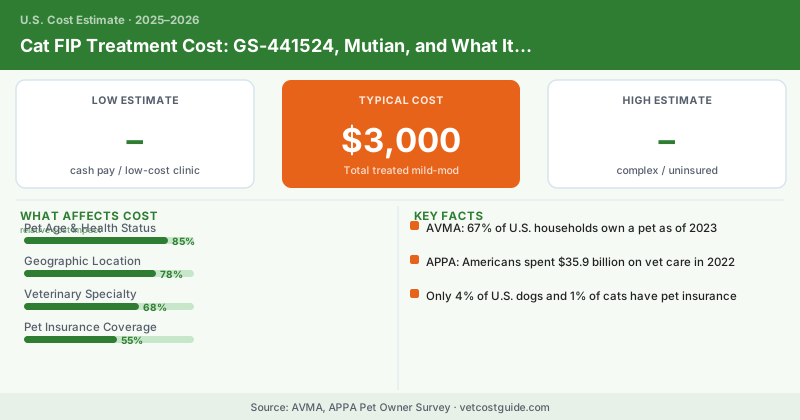
| Total treated mild-moderate FIP | — | $3,000–$6,500 |
| Total treated severe/neurological FIP | — | $5,000–$10,000 |
What Is FIP, Exactly?
FIP is caused by a mutated form of the common feline coronavirus (FCoV). Most cats exposed to FCoV never develop FIP — it’s a mutation event that’s not fully predictable. When FCoV mutates into FIP, it attacks macrophages (white blood cells) and causes systemic inflammation in one of two major forms:
Wet (effusive) FIP: fluid accumulates in the chest or abdomen, causing labored breathing or a distended belly. This form progresses rapidly — days to weeks.
Dry (non-effusive) FIP: inflammatory lesions develop in the eyes, brain, kidneys, or liver without major fluid accumulation. This form progresses more slowly but is harder to diagnose.
A third “mixed” presentation has features of both.
The Niemann-Pick Institute for FIP Research and the UC Davis FIP Working Group estimate that FIP affects approximately 1 in 100 to 1 in 5,000 cats (depending on environment), with multicat households, shelters, and catteries seeing significantly higher rates.
The Antiviral Drugs — What You’re Actually Paying For
GS-441524 is the compound that changed everything. It’s a nucleoside analog that blocks FIP viral replication. In UC Davis clinical trials, 87% of cats treated with adequate GS-441524 doses achieved remission, and most remained in remission long-term.
The challenge: until 2024, GS-441524 was available in the U.S. only through compounding pharmacies or imported products (primarily from China, sold under brand names like Mutian, Brava, Lucky, and others). In 2024, FDA-cleared veterinary formulations became commercially available, which improved quality assurance but also raised cost.
What drives the cost:
- Cat’s weight: dosing is weight-based. A 10-lb cat needs roughly twice the drug a 5-lb cat needs.
- FIP form: neurological or ocular FIP requires higher doses (from ~4 mg/kg to 8–10 mg/kg), which directly multiplies cost.
- Duration: the standard protocol is 84 days of daily injections, followed by a 12-week observation period. If relapse occurs, another 84-day course begins.
- Route: injectable GS-441524 is most common; oral pills are available and sometimes cheaper, but bioavailability varies by product.
- 4–5 kg (9–11 lbs): ~$35–$55/day → $2,900–$4,600 for 84 days
- 5–7 kg (11–15 lbs): ~$50–$75/day → $4,200–$6,300 for 84 days
- Neurological FIP (any weight, higher dose): multiply by 1.5–2.5x
Monitoring Costs During Treatment
Treatment isn’t just the drug. Your vet will monitor your cat’s response every 2–4 weeks with:
- Serum protein electrophoresis (SPEP): tracks the characteristic FIP gamma globulin elevation resolving → $80–$180
- CBC + chemistry panel: monitors organ function and white blood cell counts → $80–$200 per visit
- FIP biomarkers (AGP test): Alpha-1 acid glycoprotein levels, used to track treatment response → $60–$150
- Ocular or neurological recheck: if the cat has ocular or CNS involvement → $150–$400
Budget $600–$1,500 in monitoring costs over the full 84-day treatment period on top of drug costs.
Where to Source the Drug
This is where FIP treatment gets complicated. There are three main options:
Compounding pharmacies (prescription required): your vet writes a prescription for GS-441524 and a licensed compounder formulates it. Quality is variable but legal. Cost varies significantly by pharmacy.
Veterinary-prescribed commercial brands: FDA-cleared formulations (e.g., Bova, Xraphconn) have consistent dosing and quality. More expensive than compounded options but preferred by most internists.
Imported products (Mutian, Lucky Cat, etc.): Not FDA-approved for U.S. use. Many owners have successfully used these products — they were the only option available for years — but batch-to-batch consistency is a real concern. If you go this route, do it through a vet who can monitor response closely.
The UC Davis FIP Treatment Facebook group (with 50,000+ members) is a significant resource for navigating product sourcing, but always pair it with veterinary oversight.
Do not attempt to treat FIP without veterinary involvement. Dosing errors — particularly underdosing — are the primary cause of relapse. Underdosed treatment doesn’t just fail; it can select for drug-resistant viral variants, which are much harder to treat. The UC Davis protocol requires specific serum monitoring at weeks 4, 8, and 12. Skip the monitoring, and you’re flying blind on whether the drug is working.
Is Pet Insurance Going to Help?
Here’s the painful reality: most cats are diagnosed with FIP young — often before they were insured, or before the policy’s waiting period expired. And even if a cat is insured, many policies have annual caps ($5,000–$10,000) that may not fully cover a severe case. Still, comprehensive pet insurance that was in place before diagnosis will cover FIP as an illness condition on most plans. If you’re getting a kitten, especially from a cattery or multicat household, getting insurance immediately — before any symptoms or vet visits — is the best financial protection for a disease that hits fast.
For owners facing a diagnosis without insurance, CareCredit for vet bills and veterinary school clinics with FIP specialty programs are options worth exploring. Some FIP awareness foundations also offer owner grants.
The Bottom Line
FIP is no longer a death sentence — it’s an 85%+ cure rate with proper treatment. But that treatment costs $3,000–$8,000 depending on the cat’s weight, FIP form, and drug source. Neurological and ocular FIP require higher doses and push costs to the top of the range. Budget separately for monitoring bloodwork ($600–$1,500 over 12 weeks). The drug works — the challenge is affording it and finding a vet experienced with the protocol. If your cat has just been diagnosed, the first call after your vet is to check your pet insurance policy carefully, because the window between diagnosis and initiating treatment is short.
Frequently Asked Questions
A complete 12-week antiviral course typically costs $3,000 to $8,000, depending on your cat's weight, the specific medication (GS-441524 or GC376), and whether you source it through a licensed veterinarian or compounding pharmacy. Most cats require the full 12-week treatment to achieve remission, with some cases needing extended therapy that can push costs toward the higher end of this range.
Most pet insurance plans classify FIP treatment as a pre-existing condition or exclude it entirely, meaning you'll likely pay the full $3,000 to $8,000 out-of-pocket. Some newer policies or add-on riders may offer partial coverage, so contact your insurer directly to confirm your plan's specific exclusions before starting treatment.
FIP treatment requires a continuous 12-week course of daily injections or oral antivirals, with most cats showing clinical improvement within 2 to 4 weeks of starting therapy. After completing the 12 weeks, cats typically enter a monitoring phase to confirm remission and watch for relapse, which occurs in approximately 5 to 10% of treated cats.