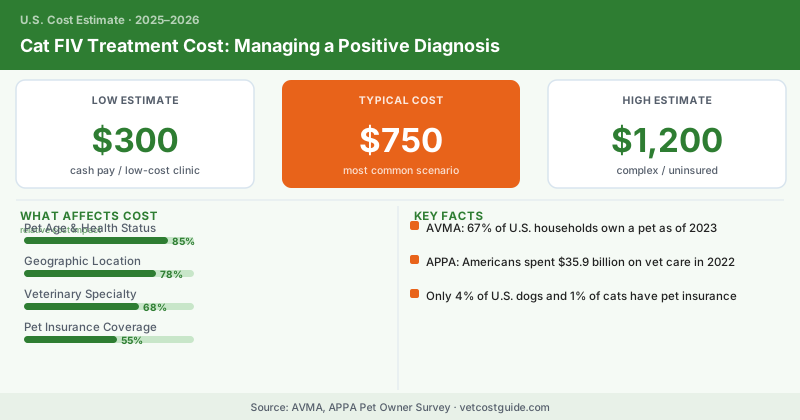
Most people hear “FIV-positive” and assume the worst. Wrong — a diagnosis isn’t a death sentence, and plenty of FIV-positive cats live a decade or more with unremarkable, mostly normal lives. The Cornell Feline Health Center estimates roughly 2.5%–5% of cats in North America carry feline immunodeficiency virus, making it far more common — and far more manageable — than most owners realize. Ongoing management for a stable FIV-positive cat typically runs $300–$1,200 per year.
FIV attacks a cat’s immune system similarly to how HIV affects humans, but it’s a different virus specific to cats and cannot be transmitted to people or dogs. Most FIV-positive cats live for years showing no symptoms at all, with the virus only becoming a problem if their immune system weakens significantly, usually in old age.
What ongoing management actually costs
| Item | Frequency | Annual Cost |
|---|---|---|
| Wellness exam & bloodwork | 2x/year | $300–$500 |
| Dental care (higher priority for FIV cats) | Every 1–2 years | $150–$700 (averaged) |
| Secondary infection treatment (as needed) | Variable | $100–$600 |
| Core vaccines (non-live only) | Annual/as directed | $40–$80 |
| Nutritional support/supplements | Ongoing | $50–$150 |
A stable, asymptomatic FIV-positive cat with no complications often costs about the same as any other cat in routine care, with the main additions being closer dental monitoring (FIV cats are more prone to chronic gum disease) and prompt attention to any infection before it becomes serious.
Why dental care gets more attention
FIV-positive cats have a notably higher rate of chronic stomatitis and gum disease because their weakened immune response struggles to control the bacteria naturally present in the mouth. Veterinarians typically recommend more frequent dental exams and earlier intervention for FIV-positive cats — catching gingivitis before it progresses to painful stomatitis saves both money and your cat’s comfort. Budget for dental checks at every routine visit rather than waiting for annual cleanings alone; see our cat teeth cleaning cost guide for the full pricing picture.
- FIV is manageable, not an automatic death sentence — many cats live 10–15+ years.
- Roughly 2.5%–5% of North American cats are FIV-positive, per Cornell Feline Health Center estimates.
- Ongoing costs for a stable cat run $300–$1,200/year, similar to routine care for any indoor cat.
- Dental disease and secondary infections are the two biggest cost drivers to watch for.
Keeping an FIV-positive cat indoors
Veterinarians strongly recommend keeping FIV-positive cats strictly indoors, both to protect them from picking up additional infections their weakened immune system may struggle with, and to prevent them from transmitting FIV to other cats through fighting. This isn’t just a health recommendation — it’s also a cost-saving one, since indoor cats avoid the injuries, parasites, and infectious diseases that outdoor cats regularly encounter.
- Delaying treatment for “minor” symptoms. A cold or minor wound that would resolve on its own in a healthy cat can escalate faster in an FIV-positive cat — don’t wait it out.
- Skipping routine dental care. Gum disease progresses faster and more painfully in FIV-positive cats — regular dental checks catch problems while they’re still cheap to treat.
- Assuming a positive test at a shelter is final. Kittens under 6 months can show false positives from maternal antibodies — always confirm with a follow-up test at your regular vet before making major decisions.
Insurance and long-term budgeting
Pet insurance is difficult to obtain or very limited for a cat already diagnosed with FIV, since it’s considered a pre-existing condition once confirmed. If you’re adopting a cat that’s already FIV-positive, plan on self-funding a dedicated care account instead — $50–$100 set aside monthly comfortably covers routine monitoring with a cushion for the occasional infection.
The bigger picture
An FIV diagnosis changes your management approach, not necessarily your cat’s life expectancy. Focus on keeping them indoors, staying current with twice-yearly wellness exams, watching dental health closely, and treating any infection promptly rather than waiting to see if it resolves. With that routine in place, most FIV-positive cats live full, comfortable lives right alongside their FIV-negative housemates.
Frequently Asked Questions
Many FIV-positive cats live normal or near-normal lifespans with proper care, often reaching 10–15 years or more, especially if they're kept indoors and receive routine veterinary monitoring. FIV weakens the immune system over time, but the virus itself often progresses slowly, and many cats die of unrelated causes in old age rather than from FIV directly.
There is currently no cure for feline immunodeficiency virus, and the FIV vaccine that was previously available in the U.S. was discontinued due to limited effectiveness and interference with FIV antibody testing. Management focuses on supportive care, twice-yearly wellness exams, and prompt treatment of secondary infections rather than treating the virus directly.
FIV is primarily transmitted through deep bite wounds during fighting, so FIV-positive and FIV-negative cats can often coexist safely in the same household if they get along well and don't fight, though many veterinarians recommend caution and close supervision, especially during introductions. Spaying or neutering all cats reduces the aggressive and territorial behavior that leads to the bite wounds that spread the virus.