Your indoor cat never goes outside. So you skipped flea prevention for a few years. Then you got the bill: $350 to treat a full household flea infestation, three vet visits for a cat with flea allergy dermatitis, and a month of stress. Fleas don’t need your cat to go outside — they need a guest, a delivery driver, or a dog to hitch a ride in on. Here’s what prevention costs, what’s actually effective for cats, and the critical safety information most product labels bury.
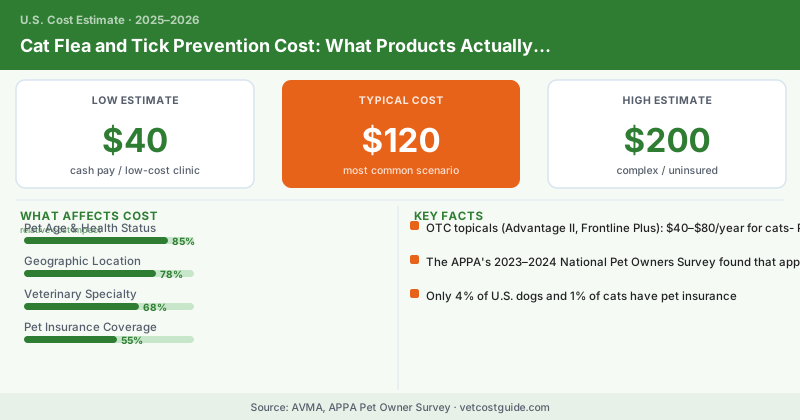
- OTC topicals (Advantage II, Frontline Plus): $40–$80/year for cats
- Prescription topicals (Revolution Plus, Bravecto Plus): $80–$160/year
- Oral prescription options (Comfortis, Capstar for acute): $100–$180/year for monthly oral
- Seresto collar (8-month protection): $50–$70/collar; 1–2 per year
- Treating an active flea infestation in the home: $150–$600+ depending on severity
- Flea prevention for indoor-only cats: still strongly recommended by the AVMA
What You’re Comparing
Flea and tick prevention for cats comes in four delivery formats. Each has a different cost structure, efficacy profile, and safety consideration.
| Product Type | Examples | Annual Cost | Tick Protection | Rx Required |
|---|---|---|---|---|
| OTC spot-on topical | Advantage II, Frontline Plus | $40–$80 | Limited | No |
| Prescription topical | Revolution Plus, Bravecto Plus | $80–$160 | Yes | Yes |
| Oral tablet | Comfortis, Capstar (acute) | $100–$180 | No (fleas only) | Yes |
| Flea collar | Seresto (8-month) | $50–$70/collar | Yes (Seresto) | No |
| Combination parasite prevention | Revolution Plus, Bravecto Plus | $100–$160 | Yes | Yes |
The Safety Issue That Matters Most for Cats
This is the thing to know before you buy anything: permethrin is toxic to cats. Many over-the-counter flea products marketed for dogs — including Sergeant’s, Hartz, and some Frontline formulations — contain permethrin. It’s safe for dogs. It can cause tremors, seizures, and death in cats. Never apply a dog flea product to a cat, and keep treated dogs away from cats until the product has dried completely.
The ASPCA Animal Poison Control Center lists pyrethrin/permethrin toxicosis as one of the most common cat poisoning calls they receive. With flea products easily available at big-box retailers, misapplication accidents happen constantly.
For cats, stick to products specifically formulated and labeled for feline use.
OTC vs. Prescription: What the Price Difference Buys
Over-the-counter topicals like Advantage II (imidacloprid) and Frontline Plus (fipronil + s-methoprene) are effective against fleas and some ticks and cost $40–$80/year for cats. They’re broadly available, don’t require a vet visit, and have a long safety record. The limitation: no heartworm prevention, limited or no tick coverage in many formulations, and no intestinal parasite coverage.
Prescription combination topicals like Revolution Plus (selamectin + sarolaner) and Bravecto Plus (moxidectin + fluralaner) cost more — $80–$160/year — but cover fleas, ticks, ear mites, heartworm, and intestinal parasites in a single monthly or bimonthly application. The AVMA and American Association of Feline Practitioners (AAFP) recommend year-round parasite prevention for all cats, including indoor ones, using combination products that cover the spectrum. If your cat is on any parasite prevention at all, the combination prescription products often represent the best value per condition prevented.
The prescription requirement also means an annual wellness visit, which is independently valuable for early disease detection.
Indoor Cats: Do They Really Need This?
Technically, risk is lower. Practically, fleas get inside on:
- Other pets (dogs, visiting animals)
- Humans (fleas can hitchhike on clothing and shoes)
- Second-hand furniture and rugs
- New apartments or homes with previous pet residents
The APPA’s 2023–2024 National Pet Owners Survey found that approximately 14% of cat owners reported a flea problem in the past year — including owners of predominantly indoor cats. That’s not a trivial risk. A single flea can lay 40–50 eggs per day. An untreated infestation that requires professional pest control, home treatment, and multiple vet visits typically costs $300–$800 and takes 3–6 months to fully eliminate.
Prevention at $50–$100/year is straightforwardly cheaper than remediation.
Treating an Active Flea Infestation
If you’re reading this because you already have fleas, the math changes. Treating the cat alone won’t work — adult fleas on the pet are roughly 5% of the total infestation. The other 95% (eggs, larvae, pupae) are in your carpet, furniture, and bedding.
Effective treatment requires simultaneous action on:
- The cat (immediate adulticide — Capstar oral tablet kills adult fleas within 30 minutes, $25–$50 for a package, then start monthly prevention)
- Home environment (vacuuming daily, washing all bedding, treating carpets and furniture with a product containing an insect growth regulator — IGR — not just an adulticide)
- Continued prevention for 3–4 months to break the life cycle
If that sounds like a lot, it is. That’s why prevention exists.
Never use essential oil-based flea products on cats — tea tree oil, peppermint, eucalyptus, and clove oil are all toxic to cats in varying degrees. “Natural” does not mean safe for felines. Also avoid flea sprays, powders, or dips not specifically labeled for cats. When in doubt, call the ASPCA Poison Control hotline: (888) 426-4435.
Getting the Best Price on Prescription Prevention
Prescription flea products require a vet’s authorization but don’t have to be purchased at the clinic. Most practices will provide a written prescription or call it in to:
- 1-800-PetMeds and similar online pharmacies (often 20–30% less than clinic pricing)
- Costco Pharmacy — carries some pet medications at substantial discounts
- Chewy AutoShip — 5–35% discounts on repeat orders plus free delivery
Your vet may also offer price-matching or rebates through manufacturer loyalty programs (Revolution Plus, Bravecto, and Advantage Multi all run periodic rebate promotions). Ask at your next visit.
Frequently Asked Questions
Can I use dog flea prevention on my cat to save money? No. Never. Dog flea and tick products commonly contain permethrin, which is lethal to cats. Even small exposures can cause severe neurological reactions. Always use products specifically formulated for cats.
How often do I apply topical flea prevention to my cat? Most topicals are monthly. Bravecto Plus is every 2 months. Seresto collars last 8 months per collar. Follow the product’s specific schedule — extending intervals reduces efficacy and can leave gaps in protection.
My cat scratches constantly — is it fleas? Flea allergy dermatitis (FAD) is triggered by a reaction to flea saliva and can cause intense itching from a single flea bite. Cats with FAD may be intensely symptomatic even when fleas aren’t visible. Your vet can diagnose FAD and prescribe appropriate treatment. If you haven’t been using year-round prevention and your cat is scratching chronically, fleas are a primary suspect.
Frequently Asked Questions
Annual flea and tick prevention for cats ranges from $40 to $200 depending on the product type. Topical treatments (like Revolution or Advantage) typically cost $15–$25 per month ($180–$300 yearly), oral medications (like Comfortis) run $20–$30 monthly ($240–$360 yearly), and prescription collars (Seresto) cost $50–$80 for 8-month protection, making them the most affordable long-term option.
Most pet insurance plans do not cover routine flea and tick prevention because it is considered preventive care rather than treatment for illness or injury. However, if your cat develops a flea-related condition like flea allergy dermatitis requiring vet treatment, that condition may be covered after you meet your deductible, though the prevention itself remains your out-of-pocket responsibility.
Most topical and oral flea preventatives are applied or given monthly, requiring 12 doses per year for year-round protection. Prescription collars like Seresto last 8 months and only need replacement twice annually, making them a convenient option if your cat tolerates collar wear.