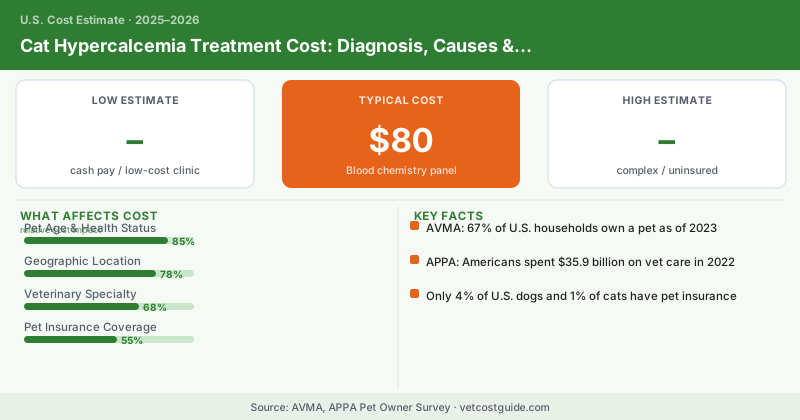
42% of cats diagnosed with hypercalcemia (high blood calcium) have a condition called idiopathic hypercalcemia — where after extensive and expensive testing, no clear cause is found. That sounds frustrating, but it’s also important information: idiopathic hypercalcemia is manageable and, in many cats, controlled with dietary changes alone. The other 58% have conditions that range from serious to life-threatening: cancer, kidney disease, vitamin D toxicity, or parathyroid tumors. Here’s what diagnosis and treatment actually costs.
- Initial blood panel (finding elevated calcium): $80–$200
- Ionized calcium test (more specific): $60–$120
- Parathyroid hormone (PTH) test: $80–$150
- Abdominal and chest X-rays: $150–$350
- Abdominal ultrasound: $200–$500
- Bone marrow aspirate (if lymphoma suspected): $300–$600
- Parathyroid surgery (hyperparathyroidism): $1,500–$4,000
- Dietary management (idiopathic): $40–$80/month
- Prednisolone (if lymphoma-related): $20–$50/month
Why Elevated Calcium Is a Problem
Calcium plays roles in nerve conduction, muscle contraction, blood clotting, and cell signaling. When blood calcium is persistently elevated, several serious consequences develop:
- Kidney damage: Calcium deposits in kidney tubules (nephrocalcinosis) and causes progressive renal failure — the most significant long-term complication
- Bladder stones: Calcium oxalate urolith formation
- Constipation: High calcium reduces intestinal motility
- Muscle weakness: Calcium dysregulation impairs muscle function
- Cardiac arrhythmias: In severe hypercalcemia
Many cats with mild hypercalcemia are found on routine bloodwork before showing clinical signs. Others present with increased thirst and urination, weight loss, lethargy, or vomiting. The asymptomatic cases don’t mean the calcium elevation is harmless — calcium is silently damaging the kidneys with every passing week.
Common Causes of Feline Hypercalcemia
| Cause | Approximate Frequency |
|---|---|
| Idiopathic hypercalcemia | ~40–45% |
| Chronic kidney disease | ~20% |
| Cancer (lymphoma most common) | ~20% |
| Hyperparathyroidism | ~5–10% |
| Vitamin D toxicity | ~5% |
| Other (granulomatous disease, Addison’s) | Remainder |
The cause determines everything about treatment and cost. Cancer-associated hypercalcemia requires cancer treatment. Hyperparathyroidism requires surgery or medical therapy. Idiopathic cases may respond to dietary change alone.
Diagnosis Costs: Finding the Cause
Diagnosis is often an expensive detective process:
| Diagnostic Test | Typical Cost | What It Evaluates |
|---|---|---|
| Blood chemistry panel | $80–$200 | Total calcium, creatinine, phosphorus |
| Ionized calcium | $60–$120 | Active calcium fraction — more sensitive than total |
| PTH (parathyroid hormone) | $80–$150 | Elevated in hyperparathyroidism; low in cancer-related |
| PTHrP (parathyroid-related protein) | $80–$150 | Produced by tumors — elevated in lymphoma-related cases |
| Complete blood count | $50–$100 | White cell abnormalities suggest lymphoma |
| Urinalysis | $40–$80 | Kidney impact assessment |
| Chest and abdominal X-rays | $150–$350 | Masses, lymph node enlargement |
| Abdominal ultrasound | $200–$500 | Best imaging for GI lymphoma, parathyroid glands |
| Lymph node aspirate | $100–$250 | Cytology for lymphoma |
| Bone marrow aspirate | $300–$600 | Infiltrative disease |
| Parathyroid gland ultrasound | $200–$400 | Identifies parathyroid adenoma |
| Vitamin D (25-hydroxyvitamin D) level | $80–$150 | Rules out toxicity |
| Urine protein:creatinine ratio | $50–$100 | Kidney damage assessment |
A complete workup for hypercalcemia in a cat can total $800–$2,500 depending on how many tests are required to reach a diagnosis.
Treatment by Cause
Idiopathic Hypercalcemia
When extensive testing reveals no underlying disease, idiopathic hypercalcemia is diagnosed. Management:
- Low-calcium, low-vitamin D diet: Switch to a food with lower calcium content and no vitamin D supplementation. Some cats respond dramatically. Hill’s Prescription Diet w/d or a similar high-fiber diet is often used.
- Cost: $40–$80/month
- Prednisolone (oral steroid): For cats that don’t respond to diet alone, prednisone reduces intestinal calcium absorption
- Cost: $15–$35/month
- Bisphosphonates (alendronate): Used in refractory cases; inhibits bone calcium release
- Cost: $20–$40/month (compounded)
Many cats achieve normal calcium levels on diet alone — the cheapest outcome possible. Others need ongoing low-dose prednisolone for life.
Cancer-Associated Hypercalcemia (Lymphoma)
Treating the underlying lymphoma is the treatment for hypercalcemia. Feline lymphoma comes in multiple forms with very different treatment costs:
- High-grade lymphoma: Multi-agent chemotherapy (CHOP protocol) — $3,000–$8,000 total, median survival 6–9 months
- Low-grade intestinal lymphoma: Chlorambucil + prednisolone — $50–$100/month, median survival 2+ years for many cats
If lymphoma is causing the hypercalcemia, prednisolone alone often reduces calcium — but this can mask the underlying cancer and delay diagnosis. Start with the diagnostic workup before defaulting to steroids.
Hyperparathyroidism
A parathyroid gland adenoma (almost always benign) secretes excessive PTH, driving calcium out of bones into the bloodstream. Treatment:
- Surgical parathyroidectomy: $1,500–$4,000 at a surgical specialist — generally curative if the affected gland is successfully identified and removed
- Ultrasound-guided heat ablation: Available at some specialty centers — less invasive, lower complication risk, but $1,500–$3,000 at facilities that offer it
Post-surgical monitoring for hypocalcemia (calcium dropping too low after surgery) requires hospitalization for 24–48 hours ($200–$600) and oral calcium/vitamin D supplementation for weeks: $30–$60/month temporarily.
Never supplement your cat with vitamin D or calcium without veterinary guidance. Over-the-counter supplements, certain rodenticides (bromethalin-containing or cholecalciferol-containing products), and even some topical psoriasis creams containing calcipotriene can cause severe hypercalcemia in cats. Vitamin D toxicity from rodenticides is a medical emergency with high fatality rates if untreated. If you suspect rodenticide exposure, call ASPCA Poison Control immediately at 888-426-4435.
Kidney Disease-Associated Hypercalcemia
Cats with CKD can develop hypercalcemia from altered vitamin D metabolism and bone mineral dysregulation. Management focuses on:
- Phosphorus restriction (renal diet): $45–$85/month
- Calcitriol therapy (controlled, supervised vitamin D analog): $30–$60/month
- Hydration support (subcutaneous fluids at home): $30–$60/month for supplies
Monitoring After Diagnosis
Regardless of cause, calcium monitoring is essential:
- Blood chemistry recheck (ionized calcium): Every 4–8 weeks initially, then every 3–6 months once stable: $80–$180 per visit
- Kidney values (creatinine, BUN, SDMA): Monitor for the calcium-induced kidney damage that’s the primary long-term risk
- Urine specific gravity and protein: Every 6 months
Annual monitoring costs: $400–$1,200 depending on visit frequency.
What Happens Without Treatment
Untreated hypercalcemia deposits calcium crystals in kidney tubules — a process called nephrocalcinosis that’s largely irreversible. Cats with hypercalcemia diagnosed in early to moderate kidney disease who receive appropriate treatment can stabilize kidney function. Cats left untreated progress to end-stage renal failure.
The AAFP’s Senior Care Guidelines recommend calcium measurement as part of routine senior screening — catching this on routine bloodwork, before signs develop, gives the best treatment outcomes. According to Cornell University’s College of Veterinary Medicine, cats over 10 years should have comprehensive blood panels at least annually.
Total Cost Scenarios
Idiopathic hypercalcemia, diet-controlled:
- Diagnosis: $400–$900
- Prescription diet (lifetime): $40–$80/month
- Monitoring visits (2x/year): $300–$600/year
- Year one: $1,000–$2,500
Cancer-related (low-grade lymphoma):
- Diagnosis: $800–$2,000
- Chemotherapy (chlorambucil + pred): $50–$100/month
- Monitoring: $400–$800/year
- Year one: $2,000–$5,000
Hyperparathyroidism, surgical cure:
- Diagnosis: $800–$1,500
- Surgery + hospitalization: $1,800–$4,600
- Monitoring post-surgery: $300–$600/year
- Total: $2,900–$6,700
Frequently Asked Questions
Initial diagnostic testing for hypercalcemia typically costs $300–$800 and includes blood work, urinalysis, and imaging. If your cat has idiopathic hypercalcemia (42% of cases), additional specialized testing like ultrasound or CT scans can add $500–$1,500 to identify an underlying cause.
Most pet insurance plans cover hypercalcemia diagnosis and treatment if it's not a pre-existing condition, though you'll typically pay 10–30% out-of-pocket after your deductible. Some insurers exclude certain underlying causes (like cancer-related hypercalcemia) or have specific limits on diagnostic testing, so review your policy's exclusions before treatment begins.
Yes—dietary management alone successfully controls hypercalcemia in many cats with idiopathic hypercalcemia, especially when a low-calcium prescription diet is used long-term. However, if your cat's hypercalcemia is caused by cancer, kidney disease, or other serious conditions, medication or treatment of the underlying cause will be necessary alongside dietary changes.