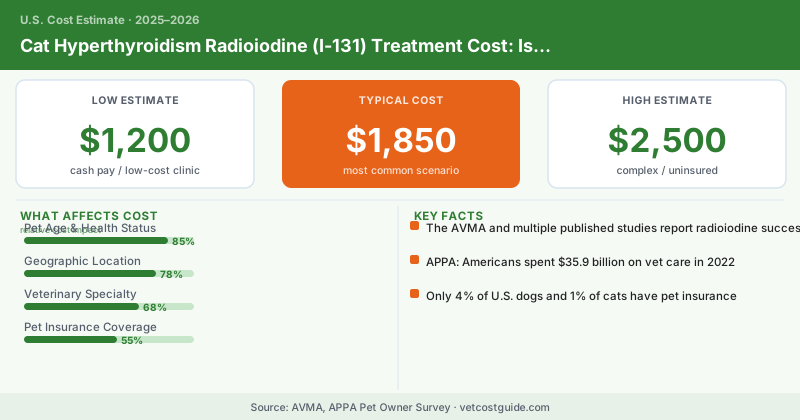
A one-time treatment with a 95% cure rate that eliminates the need for daily medication forever. That’s what radioiodine therapy offers for cats with hyperthyroidism — and it costs $1,200–$2,500. If your cat lives 3 more years after diagnosis, you’ll spend roughly $1,800–$3,600 on daily methimazole alone. Do the math and radioiodine starts looking like the smarter financial choice, not just the better medical one.
Here’s what radioiodine actually involves, what it costs, and how to decide if it’s right for your cat.
How Radioiodine Works
Radioactive iodine (I-131) is the same treatment used in humans with hyperthyroidism and thyroid cancer — it just requires a specialized facility with radiation safety protocols.
The thyroid gland is the only tissue in the body that absorbs iodine. When your cat receives an injection of I-131 (usually one subcutaneous injection), the radioactive iodine concentrates specifically in the overactive thyroid tissue. The radiation destroys the abnormal thyroid cells without affecting surrounding structures. Normal thyroid tissue is spared (it’s less metabolically active and absorbs less iodine). The rest of the body is unaffected.
Result: the cat’s thyroid returns to normal function in 95%+ of cases. No daily medication. No surgery. No ongoing monitoring for medication side effects.
The Cost of Radioiodine vs. Alternatives
| Treatment Option | Upfront Cost | Ongoing Monthly Cost | 5-Year Total Cost |
|---|---|---|---|
| Methimazole (twice daily) | $150–$400 (diagnosis) | $30–$60/month meds + monitoring | $2,150–$4,000 |
| Prescription iodine-restricted diet (Hill's y/d) | $150–$400 (diagnosis) | $60–$120/month food | $3,750–$7,600 |
| Thyroid surgery (thyroidectomy) | $2,000–$3,500 | Minimal ongoing cost | $2,000–$3,500 |
| Radioiodine (I-131) | $1,200–$2,500 (all-in) | Near zero ongoing | $1,200–$2,500 |
Over a 3–5 year horizon, radioiodine is the most cost-effective option for most cats. The break-even point compared to daily methimazole is typically 2–3 years after diagnosis — after which radioiodine has already paid for itself in avoided medication and monitoring costs.
What the Radioiodine Procedure Involves
Radioiodine isn’t performed at a regular vet clinic — it requires a licensed nuclear medicine facility. There are approximately 200–300 such facilities in the US, operated by specialty hospitals and veterinary schools.
The procedure itself is straightforward:
- Your cat is admitted to the facility
- A single injection of I-131 is administered (usually subcutaneous)
- Your cat stays in isolation at the facility for 3–7 days while radioactivity levels drop to safe levels for discharge
- Your cat returns home with some radiation safety precautions for another 1–2 weeks
The isolation period is the part that trips up many owners. Your cat is safe and comfortable during the stay — they’re just isolated to prevent radiation exposure to staff and other animals. This is routine and medically unremarkable for the cat.
What’s Included in the Cost
Most radioiodine facilities quote an all-in price that includes:
- Pre-treatment examination at the facility
- The I-131 dose itself
- Boarding during the isolation period (3–7 days)
- Post-treatment monitoring
- Discharge exam
What’s typically NOT included:
- Pre-treatment bloodwork at your regular vet ($150–$300) — required to confirm diagnosis and rule out complicating factors
- Travel to the facility if it’s distant
- Follow-up thyroid level checks 1 and 3 months post-treatment ($60–$120 each)
Ideal candidates for radioiodine:
- Cats who can’t tolerate methimazole (common side effects include facial itching, vomiting, low white blood cell counts)
- Cats whose owners struggle with daily medication administration
- Cats with ectopic thyroid tissue (outside the normal location) — surgery doesn’t reach it; radioiodine does
- Cats diagnosed relatively young (long life expectancy ahead)
- Owners who’ve calculated that methimazole costs exceed $1,500 over the cat’s remaining lifespan
When radioiodine may not be the first choice:
- Cats with significant concurrent kidney disease — hyperthyroidism can mask kidney disease, and cure can unmask it, sometimes causing a difficult situation
- Very elderly cats with limited life expectancy where long-term cost savings are smaller
- Owners who cannot manage the 1–2 week post-discharge radiation precautions
The Kidney Disease Complication
Here’s the important nuance that every cat owner considering radioiodine should know: hyperthyroidism increases blood flow to the kidneys, effectively masking underlying kidney disease by boosting the glomerular filtration rate. When hyperthyroidism is cured, that artificial boost disappears — and kidney disease that was hiding can become apparent.
About 20–40% of hyperthyroid cats have underlying chronic kidney disease that becomes clinically apparent after treatment. This isn’t caused by radioiodine — the kidney disease was already there. But the unmasking can be a significant event in some cats.
Before proceeding with any hyperthyroidism treatment, most internists recommend a methimazole trial for 4–6 weeks. This temporarily normalizes thyroid function and allows assessment of true kidney function without the masking effect. If kidney disease becomes evident during the trial, management changes significantly. This trial adds $150–$300 to upfront costs but provides critical information.
The Success Rate and What “Cure” Means
The AVMA and multiple published studies report radioiodine success rates of 95–98% — meaning thyroid levels normalize and remain normal long-term without additional treatment. A small percentage of cats have persistently elevated thyroid levels requiring a second treatment (additional cost: $800–$1,500 at most facilities for retreatment).
Roughly 2–5% of cats develop hypothyroidism (low thyroid) after treatment — usually transient, occasionally requiring short-term thyroid supplementation ($20–$40/month). This resolves in most cases as residual normal thyroid tissue recovers.
Do not skip the 1-month and 3-month post-treatment thyroid level checks. Most radioiodine facilities strongly recommend these follow-ups to confirm treatment success and catch the rare case of hypothyroidism developing post-treatment. The cost is $60–$120 per check — a small investment to confirm your cat is cured and not over-corrected in the other direction.
Finding a Radioiodine Facility
Radioiodine facilities are concentrated in larger cities and around veterinary schools. Options for finding one:
- Ask your regular vet for a referral — most have working relationships with the nearest facility
- Search the Veterinary Information Network (VIN) provider directory
- Major veterinary schools (Colorado State, UC Davis, Ohio State, Cornell, Tufts) all offer radioiodine services; their costs are often at the lower end ($1,200–$1,800)
The facility will want your cat’s recent bloodwork and a thyroid level from your regular vet before scheduling. This is standard — plan for a 2–4 week lead time from referral to treatment date at most facilities.
Frequently Asked Questions
Is radioiodine safe for cats? Yes. It’s been used in cats for over 40 years, making it one of the most established treatments in veterinary medicine. The procedure is well-tolerated, the isolation period is managed by trained staff, and the side effect profile is minimal. The 95%+ cure rate with minimal complications makes it the gold-standard treatment.
How do I manage my cat after they come home? For 1–2 weeks post-discharge, you’ll need to: minimize prolonged close contact (avoid holding your cat in your lap for hours), use gloves when handling waste, and flush cat litter down the toilet rather than putting it in household trash. These precautions sound significant but are manageable for most households. Pregnant women and children under 18 should minimize contact during this period.
Does pet insurance cover radioiodine? If your cat was diagnosed with hyperthyroidism after enrollment, yes — most illness plans cover radioiodine treatment. The pre-existing condition exclusion applies if hyperthyroidism was documented before your policy start date.
Frequently Asked Questions
Radioiodine treatment typically costs $1,200–$2,500 for the procedure itself. This is a one-time cost that eliminates the need for daily medication, unlike oral treatments like methimazole which cost $300–$1,200 per year over your cat's lifetime.
Most pet insurance plans do not cover radioiodine treatment because hyperthyroidism is classified as a pre-existing condition in cats over age 7, and many policies exclude endocrine disorders entirely. You'll likely pay the full $1,200–$2,500 out-of-pocket, though some veterinary clinics offer payment plans to ease the cost.
Most cats with hyperthyroidism are candidates for radioiodine, though your cat will need blood work to ensure kidney function is adequate beforehand. Recovery is minimal—your cat typically returns home after 5–7 days of hospitalization and can resume normal activity immediately, with a 95% cure rate requiring no additional treatment.