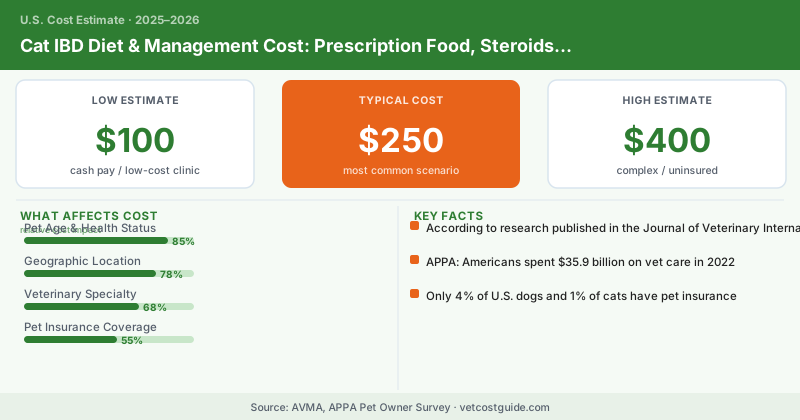
42% of cats with chronic vomiting have inflammatory bowel disease — that’s not a rare condition. IBD is one of the most common chronic gastrointestinal diseases in middle-aged and older cats, and once diagnosed, it becomes part of the financial reality of cat ownership. The question isn’t whether IBD is manageable. It is. The question is how much ongoing management costs — and what the biggest line items are.
Here’s a realistic breakdown of what cat IBD management runs month to month.
The Ongoing Cost Categories
Cat IBD management typically involves three to four distinct ongoing costs:
- Prescription diet — usually the first intervention tried
- Corticosteroids — the primary medical treatment when diet alone doesn’t control symptoms
- Vitamin B12 (cobalamin) supplementation — required in many cats because inflamed intestines can’t absorb it normally
- Monitoring visits and labs — bloodwork to track organ function on long-term steroids
| Ongoing Cost | Monthly Estimate | Notes |
|---|---|---|
| Prescription hydrolyzed diet (wet food) | $80–$180 | Hill's z/d, Purina HA, Royal Canin HP |
| Prescription novel protein diet (wet food) | $60–$140 | Duck, rabbit, venison single-protein |
| Prednisolone (compounded liquid) | $25–$60 | Most commonly prescribed steroid |
| Budesonide (compounded capsule) | $40–$90 | Alternative for cats sensitive to systemic steroids |
| Cobalamin injection (cyanocobalamin) | $15–$40 per injection | Every 1–2 weeks initially, then monthly |
| Chlorambucil (for lymphoplasmacytic IBD) | $30–$70 | Used when steroids alone are insufficient |
| Monitoring bloodwork (per visit) | $150–$300 (every 6 months) | Glucose, CBC, chemistry to track steroid effects |
Total realistic monthly cost for a cat on prednisolone + prescription diet + B12 injections: $120–$320/month. That’s the middle-of-the-road managed IBD cat.
Why Diet Is Always Tried First
Dietary therapy works in a meaningful subset of IBD cats — roughly 30–40% show significant improvement on a novel protein or hydrolyzed protein diet alone, without any medication. That’s a compelling reason to start there, because prescription food is cheaper than long-term steroids plus monitoring.
Novel protein diets work by eliminating the protein your cat’s immune system has learned to react to. If you’ve always fed chicken, you switch to rabbit or venison — a protein the immune system hasn’t encountered and therefore doesn’t overreact to. Hydrolyzed diets chop proteins into pieces too small for immune recognition.
The catch: you have to feed the prescription diet exclusively for 8–12 weeks to see the full benefit. No treats, no other food. That’s hard with cats.
According to research published in the Journal of Veterinary Internal Medicine, cats with food-responsive IBD who comply fully with the dietary trial show response rates around 40%. Many owners find the compliance difficult, which is part of why medication often ends up in the mix.
Steroid Costs — and Why Prednisolone Is Usually Cheaper
Prednisolone is the first-line drug for most cats with IBD that doesn’t respond adequately to diet. It’s a corticosteroid that suppresses the abnormal immune response in the gut lining.
The drug itself is inexpensive — $0.20–$0.40 per 5mg tablet. For a typical cat on 5–10mg every other day, that’s $3–$8/month in medication cost. The problem is that most cats don’t tolerate pills well. Compounded liquid prednisolone — mixed in a fish-flavored suspension your vet compounds from the bulk drug — runs $25–$60/month but is actually taken by the cat.
Some vets prescribe budesonide instead, particularly for cats who develop diabetes on prednisolone (steroids raise blood glucose). Budesonide acts more locally in the gut with less systemic effect. It costs more — $40–$90/month compounded — but can be worth it for cats prone to steroid-induced complications.
Cobalamin (vitamin B12) is absorbed in the distal small intestine — precisely where IBD inflammation often concentrates. Many IBD cats become B12 deficient not from poor diet but because their intestines can’t absorb it.
Signs of B12 deficiency include lethargy, weight loss, and poor appetite — symptoms that overlap with IBD itself and can be hard to distinguish without bloodwork.
Treatment: cyanocobalamin injections, typically given weekly for 6 weeks, then monthly for maintenance. You can learn to give these at home — it’s a tiny subcutaneous injection, similar to how diabetic owners give insulin. Cost: $15–$40 per injection at the vet clinic, or you can purchase injectable B12 ($30–$50 for a multi-dose vial) and administer it yourself.
Monitoring Costs You Can’t Skip
Long-term prednisolone use affects blood glucose, liver enzymes, and muscle mass. Cats on chronic steroids need glucose monitoring every 6 months at minimum — both because steroid-induced diabetes is real and because managing a diabetic IBD cat is significantly more complicated and expensive.
Annual or biannual blood panels for IBD cats on steroids: $150–$300 per panel. Add a urine sample to check for urinary tract infections (prednisolone can suppress immunity) and you’re at $180–$350.
Never abruptly stop prednisolone after more than a few weeks of use. Cats on chronic steroids need to taper off gradually because their adrenal glands have down-regulated cortisol production. Stopping suddenly can cause adrenal insufficiency — a serious and potentially life-threatening complication. Always follow your vet’s tapering schedule.
When IBD Becomes Lymphoma
Here’s the honest answer to a question many IBD cat owners eventually ask: IBD and intestinal lymphoma exist on a spectrum. Small-cell (low-grade) lymphoma in cats looks almost identical to IBD clinically, endoscopically, and even on biopsy. The distinction requires specific staining of biopsy tissue.
The treatment for small-cell lymphoma is actually quite similar to IBD — chlorambucil + prednisolone — and the prognosis is relatively good, with median survival times over a year. But if your cat’s diagnosis is uncertain and symptoms aren’t responding, ask about whether repeat biopsy and lymphoma-specific staining are warranted. The cost is $600–$1,500 for an endoscopic biopsy procedure, but the information changes how you approach management.
Frequently Asked Questions
Can cat IBD be cured? Not typically. IBD is a chronic condition managed rather than cured. Some cats achieve long-term remission on diet alone or with intermittent medication. Most cats require some form of ongoing management — whether dietary, medical, or both — for the rest of their lives.
What’s the cheapest way to manage cat IBD? Start with a dietary trial using a novel protein food from your regular vet rather than a referral to a specialist. If that controls symptoms, you may avoid medication costs entirely. If you do need steroids, compounded prednisolone liquid is significantly cheaper than budesonide. Learn to give B12 injections at home if your vet teaches you — it saves $15–$40 per injection over clinic administration.
Should I get pet insurance for a cat with IBD? If already diagnosed, IBD will be excluded as a pre-existing condition by all major insurers. Insurance doesn’t help with existing conditions. If you’re getting a new cat, enrolling early before any GI symptoms are documented gives you the best chance of coverage.
Frequently Asked Questions
Prescription diets for feline IBD typically cost $40–$120 per month, depending on the brand (Hill's, Royal Canin, Purina Pro Plan) and whether you buy through your vet or online retailers. Many cats require ongoing dietary management as a first-line treatment, making this one of the most consistent monthly expenses in IBD care.
Most pet insurance plans cover IBD-related diagnostics and medications like steroids and B12 injections at 70–90% after deductibles, but prescription food is rarely covered since it's classified as a dietary supplement rather than medication. You can expect to pay out-of-pocket for prescription diets while insurance covers injectable and oral medications, resulting in $100–$400 monthly total depending on treatment intensity.
Cats with IBD typically receive B12 injections every 1–2 weeks initially, then transition to monthly maintenance injections once symptoms stabilize, costing $30–$80 per injection at the vet clinic. Most cats show improvement within 4–8 weeks on this schedule, though long-term injections may be needed indefinitely depending on disease severity and response to diet and steroids.