Indoor cats live 12–15 years on average. Outdoor cats live 2–5 years. That single statistic from the American Pet Products Association’s 2023–2024 National Pet Owners Survey tells you almost everything you need to know about how cat lifestyle affects veterinary costs — but the year-over-year numbers tell a more nuanced story.
The gap in annual vet spending between indoor and outdoor cats isn’t just about lifespan. It’s about what happens during those years. Outdoor and indoor-outdoor cats face infectious diseases, parasites, injuries, and accidents at dramatically higher rates. Cornell University College of Veterinary Medicine reports that outdoor cats have approximately three times the rate of infectious disease and five times the trauma rate of their indoor counterparts. That’s not a marginal difference. It shows up directly in your vet bills.
Annual Vet Cost Comparison
| Cost Category | Indoor Cat | Outdoor/Indoor-Outdoor Cat |
|---|---|---|
| Wellness exam (1–2x/year) | $60–$150 | $60–$150 |
| Core vaccines (FVRCP + rabies) | $40–$80 | $40–$80 |
| FeLV/FIV testing | Rarely needed | $50–$100/year |
| Flea and tick prevention | $50–$100/year (optional) | $150–$250/year (essential) |
| Heartworm prevention | $25–$60/year (optional) | $50–$100/year (recommended) |
| Wound treatment (bites/lacerations) | Rare | $200–$800 per incident |
| Infectious disease treatment (URI, FIV) | Uncommon | Common; $200–$600 per episode |
| Road traffic accident (RTA) care | Rare | $500–$3,000+ per incident |
| Dental cleaning (adult cats) | $300–$700 every 1–3 years | $300–$700 every 1–3 years |
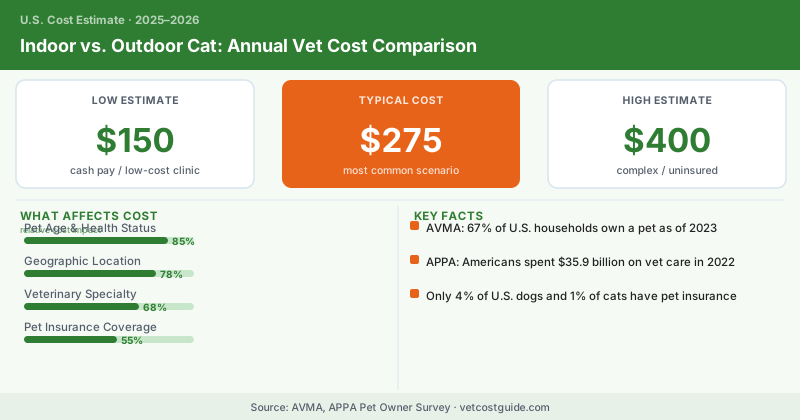
| **Annual estimated total** | **$150–$400** | **$300–$800+** |
What’s Driving the Indoor Cat Bill
For a healthy, adult indoor cat on a consistent schedule, annual vet costs are fairly predictable. You’re looking at one wellness exam ($60–$100), core vaccines if they’re due (FVRCP and rabies are the two required by most vets and, in most states, by law), and flea prevention if you choose to use it preventively.
Rabies vaccination is required by law in most US states for all cats — indoor or not — and runs $15–$35 per dose. The FVRCP (distemper combo) vaccine is typically given every 1–3 years in adult cats and costs $25–$50.
The biggest single expense for indoor cats is usually dental care. Periodontal disease affects the majority of cats over age three, and professional dental cleanings — which require general anesthesia — run $300–$700 depending on what’s found. Many indoor cat owners skip dental care for years, then face much larger bills when extractions are needed.
Even if your cat never sets foot outside, rabies vaccination is required by law in most US states and runs $15–$35 annually or every 3 years depending on the vaccine type used. A bat can get into a house. A cat can slip out a door. Beyond the legal requirement, a bite incident involving an unvaccinated cat can trigger quarantine protocols that cost far more than the vaccine ever would. Always keep rabies current.
What Adds Up for Outdoor Cats
The outdoor or indoor-outdoor cat’s budget has the same baseline wellness costs — but layered on top are several categories of spending that are rare for indoor cats and common for outdoor ones.
Parasite prevention becomes non-negotiable. Fleas, ticks, and intestinal parasites are a persistent reality for cats with outdoor access. Year-round flea and tick prevention runs $150–$250 annually. Annual fecal parasite screening ($40–$70) is also standard practice since outdoor cats regularly pick up roundworms and hookworms from hunting.
FeLV and FIV testing is part of routine care. Feline leukemia (FeLV) and feline immunodeficiency virus (FIV) are transmitted through cat-to-cat contact — biting, close grooming, shared food bowls. Outdoor cats encounter other cats regularly. Most vets recommend annual or biennial FeLV/FIV testing for outdoor cats ($50–$100), and the FeLV vaccine (an additional $25–$50/year) is strongly recommended for cats with outdoor access.
Wound treatment adds an unpredictable line item. Cat bites from other cats are the primary cause of abscesses, and outdoor cats get bitten frequently. A single cat bite abscess — drainage, antibiotics, follow-up — runs $200–$500. Deep wounds or injuries from dogs or wildlife can push well over $800. It’s not a question of whether an outdoor cat will sustain injuries; it’s a question of how often and how serious.
Road traffic accidents are the top killer of outdoor cats, and survivors face surgical repair costs that can easily hit $3,000–$5,000 for fractures or internal injuries. These incidents often can’t be anticipated, but they’re a real budget risk for any cat with unsupervised outdoor access.
| Outdoor Cat Extra Costs | Per Incident or Annual Cost | How Often |
|---|---|---|
| Cat bite abscess treatment | $200–$500 | Common; 1–3x/year in some cats |
| FeLV vaccine (outdoor cats) | $25–$50/year | Annual booster recommended |
| FeLV/FIV annual testing | $50–$100 | Annual for outdoor cats |
| Upper respiratory infection treatment | $150–$400 | More common in outdoor cats |
| Annual fecal parasite check | $40–$70 | Annual for outdoor cats |
| Road traffic accident surgery | $500–$5,000+ | Unpredictable but significant risk |
The Lifetime Cost Gap Is Wider Than It Looks
The annual cost difference — roughly $150–$400 extra per year for an outdoor cat — sounds manageable on its own. But it compounds across a lifetime that’s already significantly shorter.
An indoor cat living 14 years at $250/year averages $3,500 in lifetime vet costs for routine care. An outdoor cat living 4 years at $550/year averages $2,200 in routine costs — but that’s before any major injury, infectious disease treatment, or end-of-life emergency care.
The real financial risk of outdoor cat ownership isn’t the predictable recurring costs. It’s the unpredictable emergency spending: a single RTA, a severe FIV-related illness, a serious cat fight injury. Those events can hit $1,000–$5,000 in a single vet visit, and they happen to outdoor cats at far higher rates.
Pet Insurance Makes More Sense for Outdoor Cats
If your cat has outdoor access, pet insurance is worth a serious look. The higher baseline spending on an outdoor cat means the policy’s annual premium ($200–$400/year for a cat policy) is more likely to pay off — particularly for accident and illness coverage that would reimburse RTA injuries, bite wound treatment, and infectious disease care.
For indoor cats, the math is less clear. Their lower risk profile means the insurance premium is harder to recoup through claims in a typical year. A wellness-only add-on (usually $10–$20/month) may make more sense for owners who want predictable preventive care costs covered.
If you’re transitioning an outdoor cat to indoor-only living, don’t expect the vet bills to drop immediately. Cats that spent years outdoors often have dental disease, subclinical parasite loads, and stress-related issues (like urinary problems) that show up in the months after the transition. Budget for a thorough baseline exam — including bloodwork, a dental evaluation, and parasite screening — when making the switch.
Bottom Line
The choice between indoor and outdoor cat ownership carries a real financial component that most people don’t fully factor in. Routine annual vet costs are roughly double for outdoor cats, and emergency or illness spending is dramatically higher. If your cat goes outside — even just sometimes — build flea prevention, FeLV testing, and an emergency fund into your budget. Or seriously consider pet insurance. The risks that cost the most tend to be the ones that arrive without warning.
Frequently Asked Questions
Annual vet care for indoor cats typically ranges from $150–$400 per year, covering routine checkups, vaccinations, and preventive care. Outdoor and indoor-outdoor cats cost significantly more at $300–$800+ annually due to increased risk of injuries, parasites, and infections from environmental exposure.
Most standard pet insurance plans do not cover routine preventive care, vaccinations, or wellness exams; you'll pay out-of-pocket for these at $100–$300 yearly for indoor cats. However, some insurers offer optional wellness add-ons (typically $10–$25/month) that reimburse a portion of preventive services, though coverage limits and exclusions vary by plan.
Outdoor cats face higher risks of injuries, parasitic infections, feline leukemia, and infectious diseases from environmental exposure, requiring more frequent checkups and treatments throughout the year. Additionally, outdoor cats have a significantly shorter lifespan (2–5 years versus 12–15 years for indoor cats), meaning concentrated veterinary needs over a shorter lifetime and potentially costlier emergency care.