42% of cats with chronic GI signs — vomiting, weight loss, diarrhea lasting more than three weeks — turn out to have either inflammatory bowel disease or small cell lymphoma when properly worked up. Those two diseases are treated completely differently. Which one your cat has is something only a biopsy can tell you, and skipping that step is the most expensive mistake you can make. Here’s what a thorough workup costs, why it’s worth every dollar, and what long-term management looks like.
- IBD diagnosis requires a biopsy — endoscopy ($1,000–$2,000) or surgical biopsy ($1,200–$2,500). Bloodwork and ultrasound alone can’t confirm it.
- Biopsy also distinguishes IBD from small cell lymphoma — a critical distinction that changes treatment entirely.
- Ongoing treatment: prednisolone $15–$40/month, B12 injections $20–$60/month, hydrolyzed diet $50–$100/month.
- Most cats with IBD can be managed well long-term. Some achieve remission.
- ACVIM feline GI guidelines identify IBD as one of the three most common causes of chronic GI disease in cats alongside small cell lymphoma and pancreatitis.
What Feline IBD Actually Is
Inflammatory bowel disease in cats is a chronic condition where inflammatory cells — most often lymphocytes and plasmacytes — infiltrate the wall of the gastrointestinal tract. The stomach, small intestine, or large intestine (or all three) can be affected. This inflammation disrupts normal absorption and motility, causing the classic triad of chronic vomiting, weight loss, and intermittent diarrhea.
It’s not the same as IBS (irritable bowel syndrome), which is a functional disorder without actual tissue inflammation. IBD involves structural changes to the gut wall that only a microscope can confirm.
The cause isn’t fully understood. Current thinking points to an abnormal immune response to normal gut bacteria, dietary proteins, or both. Middle-aged to older cats are most commonly affected.
Why Biopsy Is Non-Negotiable
A 2016 JAVMA study evaluating cats with chronic GI signs found that small cell lymphoma and IBD are often clinically indistinguishable — same symptoms, same ultrasound findings, even similar endoscopic appearance in many cases. The only reliable way to tell them apart is histopathology: looking at actual tissue under a microscope.
This matters enormously because the treatments differ:
- IBD: prednisolone (a steroid) + dietary change
- Small cell lymphoma: chlorambucil (a chemotherapy drug) + prednisolone
Using steroids alone for lymphoma may cause initial improvement (steroids do have some anti-tumor effect) while the lymphoma progresses. Catching the distinction early — while the lymphoma is still low-grade — gives cats the best prognosis.
Diagnostic Workup and Costs
| Diagnostic Step | Cost Range | Purpose |
|---|---|---|
| Physical exam + weight history | $50–$100 | Baseline assessment |
| CBC + chemistry panel | $150–$300 | Rules out kidney disease, diabetes, hyperthyroidism |
| Serum B12 (cobalamin) + folate | $80–$150 | Low B12 suggests small intestinal disease |
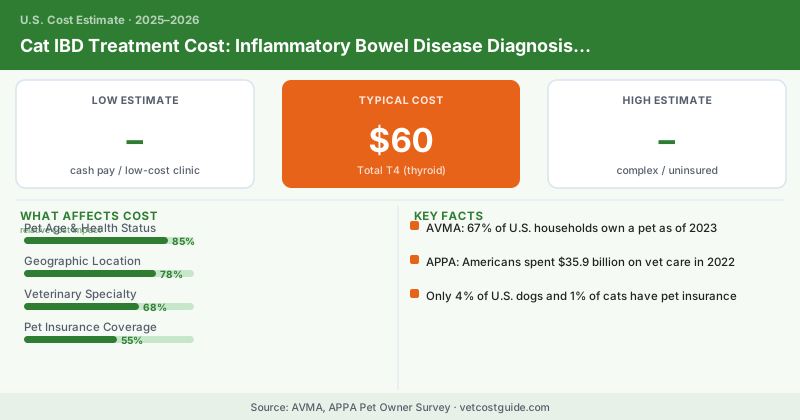
| Total T4 (thyroid) | $60–$120 | Hyperthyroidism causes identical symptoms in older cats |
| Abdominal ultrasound | $300–$500 | Assesses intestinal wall thickening, lymph nodes |
| Endoscopy + biopsies | $1,000–$2,000 | Mucosal biopsies; less invasive; can miss mural disease |
| Surgical full-thickness biopsy | $1,200–$2,500 | Gold standard; samples full intestinal wall depth |
A typical complete workup runs $1,500–$2,800. The biggest cost decision is endoscopy vs. surgical biopsy.
Endoscopy is less invasive — your cat goes under anesthesia, a scope goes down the throat or up from below, and mucosal biopsies are taken. Recovery is same-day. The limitation: endoscopy only samples the mucosal layer. Some disease processes — and lymphoma in particular — live in deeper layers that the endoscope can’t reach.
Surgical full-thickness biopsy samples the full depth of the intestinal wall and is considered the gold standard. It’s more invasive, with a few days of recovery, but it’s the test that catches what endoscopy can miss.
Your internist will guide this decision based on ultrasound findings. If the ultrasound shows a thickened muscular layer, surgical biopsy is usually the right call.
Treatment Costs Month-to-Month
Once you have a confirmed IBD diagnosis, treatment is actually quite affordable compared to the diagnostic phase.
Prednisolone is the primary treatment. It suppresses the abnormal immune response in the gut wall. Most cats start at a higher dose and taper down to the lowest effective maintenance dose over weeks to months. Cost: $15–$40/month. Note: prednisolone is preferred over prednisone in cats because cats convert prednisone to prednisolone less efficiently.
B12 (cobalamin) supplementation. The inflamed small intestine can’t absorb B12 normally. Chronically low B12 causes further GI symptoms and impairs recovery. B12 injections given at home (your vet will train you) or at the vet office run $20–$60/month. Oral cyanocobalamin is an alternative for cats that won’t tolerate injections.
Dietary management. A hydrolyzed protein or novel protein diet reduces the dietary antigen load on the inflamed gut. Hill’s z/d, Royal Canin Hydrolyzed Protein, and Purina HA are common choices. Expect to spend $50–$100/month on prescription-grade food. This isn’t optional — dietary change alone sometimes achieves partial remission, and it absolutely improves response to medication.
Chlorambucil for refractory cases. If prednisolone and diet aren’t controlling symptoms adequately, chlorambucil is added. Cost: $30–$80/month. Interestingly, this is also the standard protocol for small cell lymphoma — which is why the biopsy distinction matters even if the initial treatment seems similar.
Chronic vomiting in cats is never “normal” or just behavioral. Cats who vomit more than once or twice a week or who have lost more than 10% of body weight need a full GI workup — not just a bland diet trial. Delaying diagnosis while small cell lymphoma progresses from low-grade to high-grade is the worst possible outcome, and it’s preventable with proper early testing.
Monitoring and Long-Term Follow-Up
Once stable on treatment, most IBD cats need follow-up every 3–6 months. This includes a weight check, physical exam, and repeat B12 level. Cost: $100–$250 per visit. Annual bloodwork to monitor for prednisolone side effects (diabetes, elevated liver enzymes) runs $150–$300.
Some cats achieve remission and can be slowly weaned off prednisolone. This is most common in cats with mild disease caught early and treated aggressively from the start. Others remain on low-dose maintenance indefinitely with excellent quality of life.
Annual Cost Summary
| Phase | Estimated Annual Cost |
|---|---|
| Year 1 (with full diagnostic workup) | $2,500–$5,000 |
| Ongoing (stable, medicated) | $700–$1,800/year |
| Ongoing (in remission, food only) | $600–$1,200/year |
Pet Insurance and Feline IBD
Pet insurance that covers GI conditions will typically cover IBD diagnosis and treatment if the diagnosis occurs after enrollment. The diagnostic workup alone — often $1,500–$2,500 — makes a single claim that exceeds most annual premiums.
For ongoing management, insurance that covers prescriptions and monitoring visits provides real ongoing value. Check whether your policy covers prescription food separately (most don’t) and whether it applies a per-condition deductible each year.
Frequently Asked Questions
How much does it cost to diagnose IBD in cats? A full diagnostic workup including bloodwork, B12/folate, abdominal ultrasound, and endoscopy or surgical biopsy typically runs $800–$2,500. Biopsy is the only way to definitively diagnose IBD and distinguish it from small cell lymphoma, which requires different treatment. Skipping biopsy risks treating the wrong disease.
What is the difference between cat IBD and lymphoma? This distinction is critical and often missed. IBD is inflammatory; small cell (low-grade) lymphoma is cancerous. Both cause chronic vomiting, weight loss, and diarrhea in older cats, and both can appear identical on ultrasound. Only biopsy — either via endoscopy or surgical full-thickness biopsy — can tell them apart. The treatment and prognosis differ significantly: IBD responds to steroids and diet; small cell lymphoma requires chemotherapy (chlorambucil + prednisolone).
Can cat IBD be managed long-term? Yes. Many cats with IBD live comfortably for years with the right combination of prednisolone, dietary management, and B12 supplementation. Some cats achieve remission and can be slowly weaned off medication. Refractory cases that don’t respond to steroids alone may need chlorambucil added, which is also the treatment for small cell lymphoma — another reason accurate diagnosis matters.
Frequently Asked Questions
A full diagnostic workup including bloodwork, B12/folate, abdominal ultrasound, and endoscopy or surgical biopsy typically runs $800–$2,500. Biopsy is the only way to definitively diagnose IBD and distinguish it from small cell lymphoma, which requires different treatment. Skipping biopsy risks treating the wrong disease.
This distinction is critical and often missed. IBD is inflammatory; small cell (low-grade) lymphoma is cancerous. Both cause chronic vomiting, weight loss, and diarrhea in older cats, and both can appear identical on ultrasound. Only biopsy — either via endoscopy or surgical full-thickness biopsy — can tell them apart. The treatment and prognosis differ significantly: IBD responds to steroids and diet; small cell lymphoma requires chemotherapy (chlorambucil + prednisolone).
Yes. Many cats with IBD live comfortably for years with the right combination of prednisolone, dietary management, and B12 supplementation. Some cats achieve remission and can be slowly weaned off medication. Refractory cases that don't respond to steroids alone may need chlorambucil added, which is also the treatment for small cell lymphoma — another reason accurate diagnosis matters.