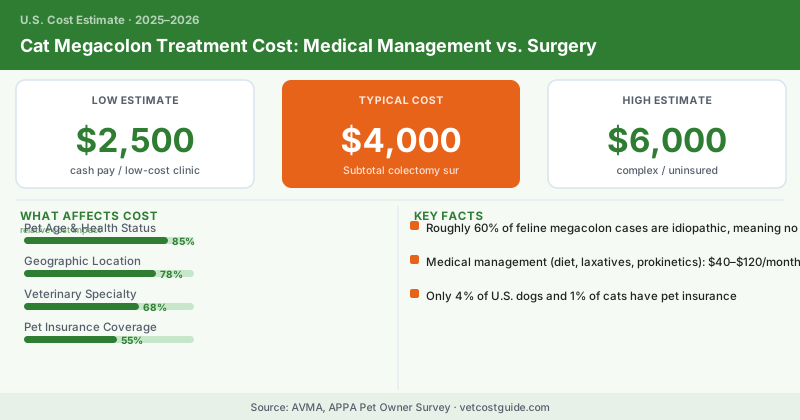
The $4,500 quote for a subtotal colectomy is normal — and here’s why it stings less once you understand what megacolon actually does to a cat. Megacolon is a colon that’s stretched so badly it can no longer push stool out on its own. By the time most owners hear the word, their cat has been straining in the litter box for weeks, and the bill reflects how far things have progressed.
Megacolon isn’t rare. Roughly 60% of feline megacolon cases are idiopathic, meaning no underlying cause is ever found, according to clinical reviews published in the Journal of Feline Medicine and Surgery. The rest trace back to old pelvic fractures, nerve damage, or chronic untreated constipation that permanently damaged the colon wall.
- Medical management (diet, laxatives, prokinetics): $40–$120/month
- An obstructed cat needing hospitalization and deobstipation: $600–$2,000
- Subtotal colectomy surgery: $2,500–$6,000
- The AVMA reported the average household spent $1,480 on cat veterinary care in 2022 — a colectomy alone blows past that several times over.
- Surgery has a strong long-term success rate, but many cats have softer stool permanently afterward.
Cat Megacolon Cost Breakdown
| Item | Low | High | Typical |
|---|---|---|---|
| Exam + abdominal X-ray | $150 | $450 | $280 |
| Bloodwork panel | $120 | $280 | $190 |
| Manual deobstipation under sedation | $400 | $1200 | $750 |
| Hospitalization (2-3 days) | $600 | $1800 | $1100 |
| Medical management meds (monthly) | $40 | $120 | $70 |
| Subtotal colectomy surgery | $2500 | $6000 | $4000 |
Medical Management Comes First
Most vets try medical management before surgery, and for early cases it works. You’re looking at a prescription high-fiber or low-residue diet, a stool softener like lactulose, and often a prokinetic drug such as cisapride that helps the colon contract. None of this is expensive on its own — figure $40 to $120 a month — but it’s a lifelong commitment, and it requires you to actually monitor litter box output.
The catch? Medical management buys time, it doesn’t cure the underlying stretch. A colon that’s already lost its muscle tone won’t get it back. So you may be spending $1,000 a year for a few years before the cat ends up needing surgery anyway. Plan for diagnostics along the way, including periodic cat X-rays to track how dilated the colon is getting.
When Surgery Becomes the Answer
A subtotal colectomy removes the dead, dilated section of colon. It sounds drastic, and it is — but it’s often the kindest option for cats whose colons no longer function. The surgery itself, plus anesthesia, hospitalization, and follow-up, lands between $2,500 and $6,000 depending on whether you’re at a general practice or a board-certified surgeon.
The good news: long-term outcomes are genuinely good. Most cats live comfortable lives afterward, though many pass softer stool permanently because the colon’s water-absorbing capacity is reduced. That’s a fair trade for a cat that was otherwise headed toward chronic suffering.
Never let constipation drag on hoping it resolves. A one-time constipated cat is a $200 fix. The same cat, ignored for months, can develop irreversible megacolon and end up needing $5,000 surgery. If your cat strains repeatedly or produces dry, hard stool over several days, that’s a vet visit this week — not next month.
Why the Workup Matters
Before anyone touches a scalpel, your vet needs to know whether this is true megacolon or a treatable obstruction. That means an abdominal X-ray, bloodwork to rule out dehydration and electrolyte problems, and sometimes a cat ultrasound to check for masses. This workup runs $400 to $900 and isn’t optional — operating on the wrong problem is how bills double.
If an old pelvic fracture narrowed the pelvic canal, surgery to widen it may be needed instead of or alongside a colectomy. Your vet will catch that on imaging.
Can Pet Insurance Help?
Yes, as long as the policy predates the diagnosis and any waiting period has cleared. Megacolon is treated as an illness, so a comprehensive plan covering 80–90% after the deductible can knock thousands off a colectomy. NAPHIA reported the average accident-and-illness premium for cats was about $32 a month in 2023 — a reasonable hedge against a five-figure surgical bill. If you’re weighing coverage, our breakdown of whether pet insurance is worth it and how pet insurance works will help you decide before a crisis hits.
For owners facing surgery without insurance, CareCredit for vet bills lets you spread the cost over monthly payments — useful when $4,000 lands all at once.
The Bottom Line
Megacolon costs $40 to $120 a month to manage medically and $2,500 to $6,000 to fix surgically. The cheapest version of this disease is the one you catch early, while it’s still plain old constipation. Watch the litter box, act on repeated straining, and you may never see the surgical quote at all.
Frequently Asked Questions
A subtotal colectomy, the most common surgical fix for megacolon, typically costs $4,000–$6,000 at US veterinary hospitals, though prices vary by region and facility. Medical management (enemas, stool softeners, dietary changes) runs $400–$1,500 initially, but requires ongoing monthly costs of $50–$200 for medications and repeat visits.
Most pet insurance plans cover megacolon surgery if diagnosed after your policy starts, though you'll typically pay 10–30% coinsurance after meeting your deductible ($250–$1,000). Some insurers exclude chronic digestive conditions or pre-existing megacolon, so check your specific policy before treatment.
Vets recommend starting with medical management (enemas, laxatives, high-fiber diet) for 2–4 weeks to see if your cat responds; this costs far less and avoids surgery risks if effective. However, if your cat shows no improvement after 4 weeks or has severe obstruction, surgery becomes necessary because the colon loses function permanently over time.