Most cats with pancreatitis don’t vomit dramatically or curl up howling. They just stop eating, get a little quiet, and lose some weight. By the time many owners notice something is genuinely wrong, the inflammation has been smoldering for days. That’s the thing about feline pancreatitis — it’s sneaky, and the treatment bill arrives as a surprise on top of an already-stressful diagnosis.
- Mild pancreatitis managed outpatient: $300–$800
- Moderate-to-severe pancreatitis requiring hospitalization: $1,200–$3,500
- Chronic pancreatitis (ongoing management): $100–$300/month
- A 2023 study in the Journal of Feline Medicine and Surgery estimates that up to 67% of cats show signs of pancreatic inflammation at necropsy — meaning it’s far more common than diagnosed.
- Pancreatitis in cats frequently occurs alongside IBD and cholangitis — a condition called “triaditis” that increases complexity and cost.
Cat Pancreatitis Cost Breakdown
| Service | Low | Average | High |
|---|---|---|---|
| Exam + bloodwork (spec fPL test) | $150 | $280 | $450 |
| Abdominal ultrasound | $200 | $350 | $600 |
| IV fluids + anti-nausea meds (outpatient) | $100 | $200 | $350 |
| Hospitalization per day (fluids, monitoring) | $300 | $500 | $800 |
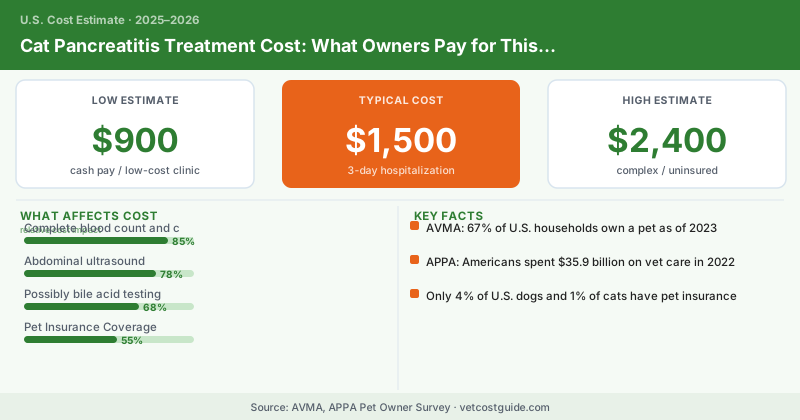
| 3-day hospitalization total | $900 | $1,500 | $2,400 |
| Pain management (buprenorphine) | $40 | $80 | $150 |
| Appetite stimulants + nutritional support | $60 | $120 | $200 |
| Discharge medications (2 weeks) | $80 | $150 | $250 |
| Total mild case (outpatient) | $300 | $700 | $1,200 |
| Total moderate/severe (hospitalized) | $1,200 | $2,500 | $3,500 |
Why Diagnosing Pancreatitis in Cats Is Expensive
Feline pancreatitis is harder to diagnose than the canine version. The Spec fPL (feline pancreatic lipase immunoreactivity) test is the most sensitive tool available — running $80–$180 — but it’s not perfect. A normal result doesn’t rule out pancreatitis, and an elevated result needs clinical context. Most vets also recommend:
- Complete blood count and chemistry panel: $120–$250
- Abdominal ultrasound: $200–$600 (sometimes inconclusive)
- Possibly bile acid testing to rule out concurrent liver disease
That diagnostic workup alone — before any treatment — often lands at $500–$900. It’s necessary, not excessive. Missing a concurrent condition like IBD or cholangitis drives worse outcomes.
The Triaditis Problem
About 50–65% of cats with pancreatitis also have concurrent inflammatory bowel disease and/or cholangitis (liver/bile duct inflammation). This triad — pancreatitis + IBD + cholangitis — requires treating all three simultaneously and significantly complicates the picture. Expect additional costs for:
- Liver enzyme monitoring
- Ursodiol (liver support medication): $30–$60/month
- Cobalamin (B12) supplementation if IBD is confirmed: $20–$50/month
- Possible intestinal biopsy ($800–$1,800) to confirm IBD
If your cat has triaditis, your first-year management cost can exceed $4,000.
How Severity Determines What You Spend
Mild pancreatitis: Cat is eating a little, not vomiting much, stable vitals. This can often be managed with a day or two of fluid support, anti-nausea meds (maropitant), and pain management. Some cats do fine as outpatients. Total: $300–$800.
Moderate pancreatitis: Cat stopped eating entirely, mildly dehydrated, uncomfortable. Hospitalization for 2–3 days of IV fluids, buprenorphine for pain, anti-nausea medication, and nutritional support via appetite stimulants or a nasoesophageal (NE) tube. Total: $1,200–$2,500.
Severe pancreatitis: High lipase levels, systemic inflammation, possible concurrent organ involvement. Intensive care with 24-hour monitoring, possible feeding tube placement, longer hospitalization. Total: $2,500–$4,500+.
Chronic Pancreatitis: The Ongoing Cost
Many cats have chronic low-grade pancreatitis rather than discrete acute flares. These cats need:
- Low-fat, easily digestible diet (prescription food): $60–$100/month
- Cobalamin injections (B12 deficiency common): $20–$40/month
- Periodic recheck bloodwork every 3–6 months: $150–$300 per visit
- Flare management when symptoms return: $300–$1,200 per episode
A chronically affected cat easily accumulates $1,500–$3,500 in annual management costs.
Can Pet Insurance Help?
Yes — provided the policy was in place before the diagnosis. Pancreatitis is an illness, not a hereditary condition, so most comprehensive policies cover it once any waiting period clears. A plan covering 80–90% after your deductible can save you $1,000–$2,500 on a moderate hospitalization. The catch: many owners discover their cats have pancreatitis during middle age, when some insurers start declining new applications or increasing premiums significantly.
Never fast a cat with pancreatitis. Unlike dogs, cats that stop eating for more than 48–72 hours risk developing hepatic lipidosis (fatty liver disease) — a life-threatening condition that stacks on top of the pancreatitis bill. If your cat won’t eat, contact your vet immediately about appetite stimulants or assisted feeding. Hepatic lipidosis treatment costs $1,500–$4,000 on its own.
What You Can Do to Manage Costs
Don’t delay. A cat presenting early with mild pancreatitis is a $500 problem. The same cat presenting after 3 days of not eating is a $2,500 problem. Vague symptoms — lethargy, reduced appetite, hiding — warrant a vet call within 24 hours, not a “wait and see” week.
Ask about outpatient fluids. For mild cases, some vets will teach you to give subcutaneous fluids at home: $50–$80 in supplies plus instruction, versus $300–$500 for in-clinic fluids daily.
Look into veterinary school clinics. Internal medicine departments at teaching hospitals see a high volume of complex feline GI cases. Costs often run 30–50% lower than private specialty practices.
The Bottom Line
Cat pancreatitis treatment costs $300–$3,500 for most cases, with chronic management adding $1,500–$3,500 annually if the condition is recurrent. The earlier it’s caught, the lower the bill — and the better the prognosis. A cat that “just seems off” deserves a call to the vet, not a week of monitoring.
Frequently Asked Questions
Cat pancreatitis treatment typically costs $500–$3,500 depending on severity and whether your cat needs outpatient or hospitalized care. Mild cases managed at home with medication and dietary changes run $300–$800, while moderate to severe pancreatitis requiring hospitalization, bloodwork, and IV fluids can reach $1,500–$3,500 or higher.
Many pet insurance plans do cover pancreatitis diagnosis and treatment, but coverage varies by policy and carrier; you should expect to pay a deductible ($250–$1,000) plus a copay or coinsurance percentage. Some insurers classify pancreatitis as a chronic condition after the first diagnosis, which may affect future coverage or increase premiums.
Mild to moderate pancreatitis can often be managed outpatient with prescription medication, dietary changes (typically a low-fat diet), and close monitoring over 1–2 weeks of follow-up visits. Severe cases requiring hospitalization usually need 2–5 days of IV support, antibiotics, and pain management before cats can transition to at-home care.