Here’s something most Persian cat owners don’t know before they bring one home: a study published in the Journal of Veterinary Internal Medicine found PKD affects an estimated 36–49% of Persians in some breeding populations. Polycystic kidney disease is genetic, progressive, and permanent. The good news is it’s manageable — many affected cats live comfortably for years. The realistic part is that management isn’t free: expect $500–$1,500 per year in stable disease, rising to $2,500+ when cysts enlarge and kidney function drops.
- Ultrasound diagnosis: $200–$500
- Genetic test (PDK1 mutation): $45–$80
- Baseline bloodwork + urinalysis: $150–$300
- Prescription kidney diet (monthly): $40–$100
- Phosphorus binder medication (monthly): $20–$60
- IV fluid therapy (when needed): $300–$800 per episode
- Annual stable management: $500–$1,500
- Advanced kidney disease annual cost: $2,000–$4,000+
PKD Management Cost Breakdown
| Service | Low | Average | High |
|---|---|---|---|
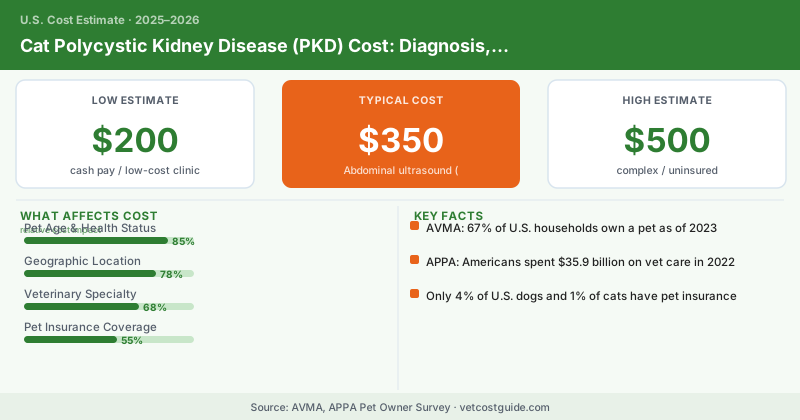
| Abdominal ultrasound (diagnosis) | $200 | $350 | $500 |
| Genetic test (PKD1 mutation) | $45 | $60 | $80 |
| Chemistry panel + urinalysis | $150 | $225 | $300 |
| SDMA/creatinine monitoring (every 6 months) | $80 | $130 | $200 |
| Prescription kidney diet (annual) | $480 | $720 | $1,200 |
| Phosphorus binder (annual) | $240 | $420 | $720 |
| Anti-nausea/appetite medications (if needed) | $30 | $60 | $120 |
| Subcutaneous fluids at home (annual supplies) | $100 | $200 | $400 |
| Annual cost (early/stable disease) | $500 | $900 | $1,500 |
| Annual cost (advanced CKD) | $1,800 | $2,800 | $4,200 |
How PKD Is Diagnosed
PKD is caused by a mutation in the PKD1 gene that causes fluid-filled cysts to form in the kidneys (and sometimes liver) from birth. Cysts grow slowly over years — most cats don’t show symptoms until middle age, typically 7–10 years old, though cysts are detectable much earlier.
Ultrasound is the standard diagnostic tool. A skilled veterinary sonographer can detect cysts in kittens as young as 8–10 weeks with high accuracy. Adult cats with an ultrasound confirming cysts in both kidneys have PKD — no other test is needed for diagnosis.
Genetic testing (the PDK1 mutation test) uses a cheek swab or blood sample and costs $45–$80 through university genetics labs. It’s most useful for breeding decisions — confirming a cat is PKD-positive before showing kidney function changes, or clearing a breeding cat as PKD-negative. For cats already showing clinical signs, the ultrasound is more informative.
Bloodwork and urinalysis establish baseline kidney function. The SDMA biomarker detects reduced kidney function earlier than creatinine — it can flag problems when 25–40% of kidney function is lost, versus 75% lost by the time creatinine rises. AAHA recommends SDMA be included in all senior cat wellness panels.
What You’re Managing Over Time
PKD progresses to chronic kidney disease (CKD) in most affected cats, though the timeline varies. Some cats reach IRIS Stage 2 CKD (mild) by age 8–9; others stay stable until 12+. The management plan tracks kidney function — not just the cysts — because that’s what predicts quality of life.
Prescription kidney diets (Hill’s k/d, Royal Canin Renal) are the most evidence-supported intervention for slowing CKD progression. They’re low in phosphorus and protein, reducing workload on damaged kidneys. Most cats accept them, though transitions need to be gradual. The annual cost ($480–$1,200) is the biggest recurring expense in uncomplicated PKD management.
Phosphorus binders (aluminum hydroxide gel, sevelamer, lanthanum carbonate) reduce the phosphorus absorbed from food, further protecting kidney tissue. They’re mixed into food daily.
Subcutaneous fluids become necessary as CKD advances. Many owners learn to give fluids at home — 100–150 mL under the skin daily or every other day. Once you’re set up, the ongoing cost is primarily supplies ($100–$400/year) rather than vet visits. Your vet will teach you the technique, and most cats tolerate it well.
Don’t skip the twice-yearly bloodwork once a PKD diagnosis is confirmed. Kidney function can change rapidly during certain periods — infections, stress, dehydration, or dietary changes can all trigger acute-on-chronic episodes. Catching a spike in creatinine or phosphorus early allows you to intervene before a crisis. Waiting until symptoms appear means the crisis is already happening.
The Insurance Question for PKD Cats
This is complicated. PKD is a genetic condition, and most pet insurance policies exclude pre-existing hereditary conditions if the cat already has a diagnosis or has shown symptoms before the policy start date. However, if you insure a kitten from a PKD-positive line before any cysts are detected or symptoms develop, some policies will cover subsequent treatment as a newly diagnosed condition.
Read the fine print carefully. Look for policies that don’t automatically exclude “hereditary conditions” as a blanket category — some cover them as long as they weren’t diagnosed before enrollment. Pet insurance cost per month for cats typically runs $20–$50, making it worthwhile for breeds with known PKD prevalence.
Frequently Asked Questions
Which cat breeds are most affected by PKD? Persians and Persian-derived breeds (Exotic Shorthair, British Shorthair, Himalayan, Birman, Ragdoll) are most commonly affected. The PKD1 mutation originated in Persian cats and spread through crossbreeding. Responsible breeders test breeding stock and only use PKD-negative (N/N) cats.
Can cats with PKD live a normal lifespan? Many can. Cats with small cysts, stable kidney function, and good dietary management can live 12–15+ years with excellent quality of life. The progression varies enormously — some cats never reach advanced CKD. The cats that struggle most are those diagnosed late (when significant function is already lost) or those with multiple complicating conditions like hypertension or urinary tract infections.
Does PKD cause pain? Generally not from the cysts themselves unless they become very large or rupture. The discomfort associated with PKD is usually from uremia (waste product buildup) when kidney function significantly declines — nausea, reduced appetite, lethargy. Managing kidney disease appropriately controls these symptoms in most cats.
Frequently Asked Questions
Diagnostic testing for feline PKD typically ranges from $300–$800 and includes ultrasound imaging (the primary diagnostic tool at $200–$500), bloodwork to assess kidney function ($75–$150), and urinalysis ($50–$150). Some veterinarians may recommend genetic testing through UC Davis or similar labs, which adds $100–$200 to the total initial diagnosis cost.
Most pet insurance plans classify PKD as a pre-existing condition if diagnosed before enrollment, making it ineligible for coverage. However, if your cat enrolls before diagnosis, routine monitoring visits and medications for kidney management may be partially covered (typically 70–90% after deductible), though coverage limits and exclusions vary by provider and policy type.
Cats with diagnosed PKD require ultrasound recheck exams every 6–12 months to monitor cyst progression, along with bloodwork (kidney panels) every 6 months to track creatinine and BUN levels; annual monitoring costs $400–$600 depending on your veterinarian's fees. Early-stage asymptomatic cats may need less frequent monitoring, while those showing clinical signs of kidney disease require visits every 3–4 months.