Here’s a statistic that should make every cat owner pause: the American Association of Feline Practitioners estimates cats receive veterinary care at roughly half the rate of dogs. Half. Mostly because healthy-looking indoor cats seem like they don’t need regular checkups.
They do. Cats are expert stoics — they hide illness, mask pain, and seem fine right up until they’re not. By the time a cat shows obvious symptoms of kidney disease, hyperthyroidism, or diabetes, the disease has often been progressing silently for months. That’s not bad luck. That’s biology. And it’s the central reason preventive care matters more for cats than most owners realize.
Here’s the complete roadmap — from kitten vaccines through senior wellness.
Annual Wellness Exam: The Foundation
Every cat, indoor or outdoor, young or old, needs a physical exam at least once a year. Twice yearly once they hit age 10.
What your vet checks: Body weight and condition score, heart rate and rhythm, lymph node size, eye and ear health, mouth and teeth, coat and skin condition, abdominal palpation for enlarged organs or masses, and a conversation about any behavioral changes you’ve noticed.
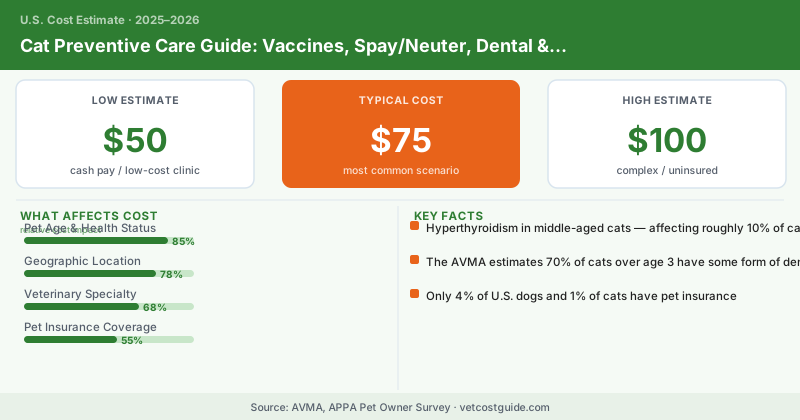
Plenty of serious conditions get caught at routine exams before symptoms appear. Hyperthyroidism in middle-aged cats — affecting roughly 10% of cats over 10 according to the AVMA — is often found by palpating an enlarged thyroid during a neck exam. Heart murmurs are discovered by stethoscope. Early kidney disease shows up on bloodwork.
Cost: $50–$100 for the exam at most general practice clinics. Add bloodwork and urinalysis after age 7 for a complete picture.
Core Vaccines: What Every Cat Needs
FVRCP (Feline Viral Rhinotracheitis, Calicivirus, Panleukopenia)
This triple combination vaccine is the feline equivalent of DHPP in dogs. The kitten series:
- 6–8 weeks: First FVRCP
- 10–12 weeks: Second FVRCP
- 14–16 weeks: Third FVRCP
- 12–16 months: First adult booster
- Every 1–3 years thereafter: Based on risk and product labeling
Panleukopenia (feline distemper) is the most serious disease in this combination — highly contagious, often fatal in unvaccinated kittens. Rhinotracheitis (herpesvirus) and calicivirus cause upper respiratory infections that can become chronic. Most indoor cats do fine with 3-year boosters after the initial series; outdoor or multi-cat household cats may need more frequent vaccination.
Rabies
Required by law in most states — including for indoor-only cats. (Indoor cats escape. Windows get left open.) Given at 12–16 weeks, boosted at 12 months, then annually or every 3 years depending on your state and vaccine type.
Non-Core Vaccines: For Higher-Risk Cats
FeLV (Feline Leukemia Virus)
Recommended for any cat who goes outdoors, lives with cats of unknown FeLV status, or is a new addition to a multi-cat household. FeLV spreads through close contact — mutual grooming, shared food bowls, bite wounds. It suppresses the immune system and can cause lymphoma and leukemia.
AAFP guidelines recommend FeLV vaccine for all kittens, with continued vaccination for cats who have ongoing exposure risk. Test new cats for FeLV and FIV before introducing them to resident cats.
FIV (Feline Immunodeficiency Virus): An FIV vaccine existed in the US but was discontinued. Currently, the strategies are testing and management — keeping FIV-positive cats indoors and separated from uninfected ones.
The most common serious cat illnesses — chronic kidney disease, hyperthyroidism, diabetes mellitus, and hypertension — develop slowly with no visible symptoms. By the time a cat is obviously ill, these conditions are often advanced. Annual exams with bloodwork after age 7 catch them years earlier, when treatment is both more effective and less expensive.
Spay and Neuter
Spaying a female cat before her first heat cycle dramatically reduces the risk of mammary cancer (the third most common cancer in cats) and eliminates the risk of pyometra entirely — a life-threatening uterine infection that affects up to 25% of intact females by age 10 and requires emergency surgery.
Neutering male cats reduces roaming, spraying, and aggression, and removes the risk of testicular cancer.
Timing: Traditionally 4–6 months. Many shelters perform early spay/neuter at 8 weeks, which is safe and effective. There’s far less debate about timing for cats than for large-breed dogs.
Cost: Spay $200–$500 at a general practice vet; $50–$150 at a low-cost clinic or humane society. Neuter $150–$300 at a general practice vet; $35–$100 at a low-cost clinic. Prices run higher in urban areas and coastal cities.
Dental Care: The Most Overlooked Preventive Measure
The AVMA estimates 70% of cats over age 3 have some form of dental disease — periodontal disease, tooth resorption (a painful condition where the tooth structure breaks down from the inside), or gingivitis. Most cats show zero obvious discomfort until it’s severe.
Professional dental cleaning under anesthesia: This is what actual treatment requires. Anesthesia allows a full-mouth examination, dental X-rays (critical — 40–60% of feline dental disease is invisible without them), and proper scaling. If resorptive lesions or severe periodontal disease are found, extractions follow.
Cost: $300–$600 for a cleaning without extractions; $600–$1,200+ when extractions are needed. Pre-anesthetic bloodwork adds $80–$150 but is strongly recommended.
Frequency: Every 1–3 years for most adult cats; more often for breeds with known dental issues (Persians and other brachycephalic breeds have crowded teeth).
At home: Daily brushing with cat-safe toothpaste is the gold standard. Dental treats and water additives help but aren’t as effective.
Parasite Prevention
Fleas: Even indoor-only cats get fleas — they hitch rides on clothing, shoes, or other pets. Monthly topical prevention or oral options run $10–$20/month.
Heartworm: Cats are atypical hosts, but infection does occur and can be fatal — there’s no approved treatment for heartworm disease in cats (unlike dogs). Prevention is recommended in heartworm-endemic areas. A topical product like Revolution covers heartworm, fleas, and ear mites simultaneously for $15–$25/month.
Intestinal parasites: Annual fecal test ($25–$45); deworming as needed.
Microchipping
At $25–$75, microchipping is one of the highest-value preventive measures you can take. Cats who slip out of collars or slip through open doors have a dramatically better shot at coming home if they’re chipped and registered. The American Humane Association estimates that only about 2% of lost cats without microchips are reunited with their owners — compared to far higher rates for chipped cats.
| Preventive Service | Indoor Cat (Annual) | Outdoor/Multi-Cat (Annual) |
|---|---|---|
| Wellness exam | $50–$100 | $50–$100 |
| Core vaccines (FVRCP + Rabies) | $75–$150 | $75–$150 |
| FeLV vaccine | Not required | $25–$45 |
| Flea prevention | $60–$120 | $120–$240 |
| Heartworm prevention | Optional | $120–$200 |
| Dental cleaning (amortized) | $100–$200 | $100–$200 |
| Bloodwork (after age 7) | $100–$200 | $100–$200 |
| Annual total estimate | $385–$770 | $590–$1,135 |
A Note on Kitten vs. Adult Cat Costs
The first year with a kitten costs more than every year after — the vaccine series, spay/neuter, microchip, first dental, and establishing baseline records all happen in year one. Budget $500–$1,000 for a kitten’s first year of preventive care at a full-service vet, or $200–$400 if you use low-cost clinics for vaccines and a humane society for spay/neuter.
After that, a healthy indoor cat’s preventive care runs $300–$600/year. Low enough that most cat owners can manage it. High enough that skipping it means missing detection windows that compound over a decade.
Frequently Asked Questions
A routine annual wellness exam for cats typically costs $50–$100 at most US veterinary clinics. This baseline exam is your first line of defense for catching hidden illness, since cats often hide symptoms until problems become serious.
Most standard pet insurance plans do not cover preventive care like vaccines, annual exams, or dental cleanings—these are considered routine maintenance. You'll need a specific wellness rider or preventive care add-on (usually $10–$25/month extra) to get partial reimbursement on these costs.
Most veterinarians recommend dental cleanings every 1–3 years for indoor cats, with costs ranging from $300–$700 per procedure. Recovery is typically same-day; your cat may feel groggy from anesthesia for a few hours but can usually eat soft food within 24 hours.