A cat that was fine an hour ago is suddenly screaming, dragging its back legs, and those legs feel cold and hard. That’s a saddle thrombus, and it’s one of the most heartbreaking emergencies in feline medicine. The clot lodges where the aorta splits to the hind legs, cuts off blood flow, and causes excruciating pain. The cost question and the prognosis question are tangled together here, so let’s be straight about both.
Feline aortic thromboembolism (FATE) is most often a complication of underlying heart disease — specifically hypertrophic cardiomyopathy, which studies estimate affects roughly 15% of all cats. Many owners never knew their cat had a heart problem until this moment.
- Emergency stabilization and pain control: $500–$1,500
- Hospitalization with monitoring (2–4 days): $1,500–$4,000
- Full treatment attempt: $1,500–$5,000+
- Roughly 15% of cats have hypertrophic cardiomyopathy, the disease behind most saddle thrombus cases.
- Prognosis is guarded; survival to discharge is far from guaranteed, and this drives many owners’ decisions.
Cat Saddle Thrombus Cost Breakdown
| Item | Low | High | Typical |
|---|---|---|---|
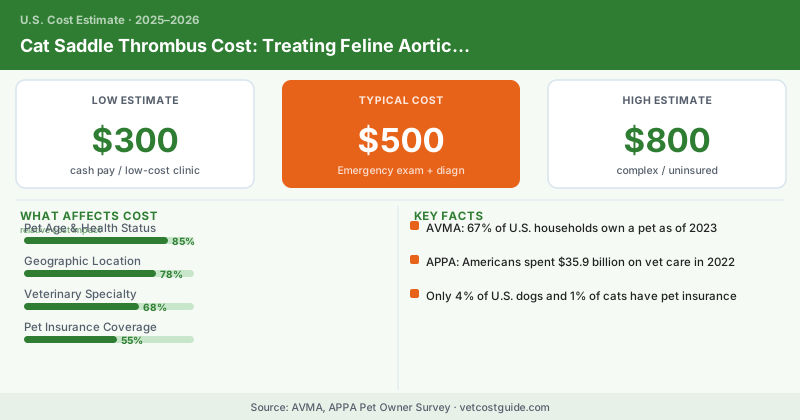
| Emergency exam + diagnostics | $300 | $800 | $500 |
| Aggressive pain management | $200 | $600 | $350 |
| Echocardiogram (heart ultrasound) | $300 | $700 | $450 |
| Hospitalization (2-4 days) | $1500 | $4000 | $2500 |
| Clot-related and heart meds | $150 | $500 | $300 |
| Ongoing cardiac meds (monthly) | $30 | $90 | $55 |
The Hardest Part Is the Pain and the Prognosis
Let’s not sugarcoat it. A saddle thrombus is intensely painful, and survival rates to hospital discharge are sobering — many cats don’t make it, and even those that do may have lasting deficits. This is one of the few emergencies where humane euthanasia is a completely reasonable, compassionate choice, and no good vet will judge you for it.
For owners who choose to treat, the path is aggressive pain control first — opioids, because this hurts as much as anything in veterinary medicine — followed by supportive care while the body tries to break down the clot on its own. There’s no quick “remove the clot” surgery for most cats; treatment is supportive and patient.
Why an Echocardiogram Is Central
Because FATE almost always stems from heart disease, an echocardiogram (a specialized cat ultrasound of the heart) tells your vet what they’re really dealing with. It runs $300 to $700 and shapes both the immediate plan and the long-term medication. Cats that survive the clot still have the underlying heart disease to manage for life.
Sudden hind-leg paralysis plus crying plus cold paws is a true emergency — get to a vet immediately. Do not give human pain relievers like ibuprofen or acetaminophen. Acetaminophen is lethal to cats even in tiny doses, and you’ll turn one emergency into two. Pain this severe needs prescription opioids under veterinary care.
The Recurrence Reality
Even with the best care, clots can recur, sometimes within months. Cats that survive go home on lifelong heart medication and often a blood-thinner like clopidogrel. That’s an ongoing $30 to $90 a month, plus periodic recheck echocardiograms. It’s worth knowing this upfront so the long-term commitment isn’t a surprise on top of the initial $2,500-plus bill.
Can Pet Insurance Help?
If you bought a policy before any heart disease was diagnosed and the waiting period cleared, FATE is covered as an illness-related emergency, and a plan paying 80–90% can dramatically cut the hospitalization bill. The trouble is that many cats are diagnosed with heart disease during a routine vet visit before owners think about insurance — and once it’s on record, it’s a pre-existing condition. Our guides on whether pet insurance is worth it and pet insurance cost per month explain why earlier is cheaper.
Facing the bill without coverage, many families use CareCredit for vet bills to manage the emergency hospitalization.
The Bottom Line
A cat saddle thrombus costs $1,500 to $5,000 to treat, but the harder truth is the guarded prognosis. This is a moment to talk frankly with your emergency vet about your cat’s specific odds and your goals. Whatever you decide — aggressive treatment or a peaceful goodbye — it’s a valid choice made with love.
Frequently Asked Questions
Emergency hospitalization and care for feline aortic thromboembolism typically costs $1,500–$5,000, depending on the hospital, location, and length of stay. This includes diagnostic imaging (ultrasound or CT), medications, oxygen therapy, pain management, and 24-hour intensive care monitoring, often for 3–5 days.
Most pet insurance plans will cover saddle thrombus treatment if your policy includes emergency care and does not exclude pre-existing conditions, though coverage typically ranges from 70–90% after your deductible. However, many policies exclude or limit coverage for conditions related to underlying heart disease, which is the most common cause of saddle thrombus in cats, so review your policy terms carefully before emergency strikes.
Even with aggressive treatment, the in-hospital survival rate is only 30–50%, and long-term survival beyond 3 months is poor due to the underlying heart disease that caused the clot. Many cats that survive the acute phase face recurrent clots, limb complications, or kidney damage, making this one of the most serious feline emergencies with a guarded to grave prognosis.