Why does a cat having a seizure often mean a more extensive (and more expensive) workup than a dog having the same symptom? It comes down to statistics that most owners have never heard: seizures in cats are meaningfully more likely to have a specific, identifiable underlying cause than seizures in dogs — which changes how your vet approaches diagnosis from the very first visit.
While idiopathic epilepsy (no identifiable structural cause) is the most common diagnosis in dogs with seizures, cats present differently. Veterinary neurology literature indicates cats with new-onset seizures more frequently have an identifiable cause — a brain tumor, an infectious or inflammatory process, or a metabolic condition like liver disease — which is exactly why a thorough diagnostic workup, often including advanced imaging, is recommended more readily in cats than in young dogs presenting with similar symptoms.
- Initial exam and bloodwork: $200–$500
- Advanced imaging (MRI), recommended more readily than in dogs: $1,500–$4,000
- Anti-seizure medication (monthly): $30–$90
- Periodic monitoring bloodwork: $80–$180 (every 6-12 months)
- Emergency treatment for a prolonged seizure: $500–$2,000
Full Cost Breakdown
| Component | Low End | High End | When Needed |
|---|---|---|---|
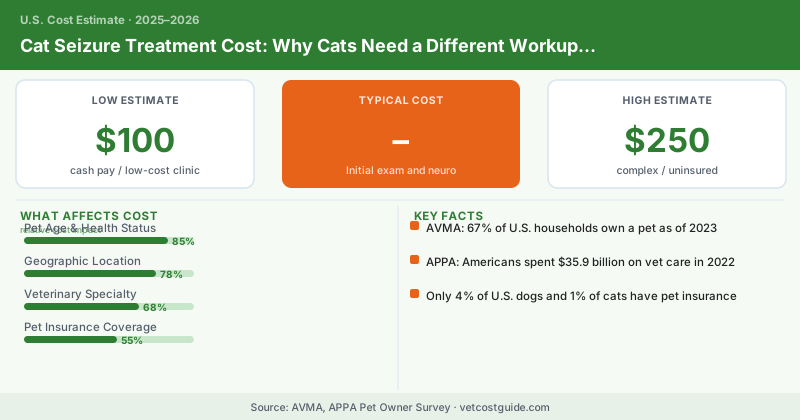
| Initial exam and neurological assessment | $100 | $250 | Every case |
| Baseline bloodwork (liver, kidney, glucose) | $100 | $250 | Every case |
| MRI (recommended more readily than for dogs) | $1,500 | $4,000 | Most cats with new-onset seizures |
| Anti-seizure medication (monthly) | $30 | $90 | Ongoing, most cases |
| Drug level/liver monitoring bloodwork | $80 | $180 | Every 6-12 months |
| Emergency visit for cluster seizures | $300 | $800 | As needed |
| Hospitalization for prolonged seizure | $800 | $2,200 | Life-threatening emergency |
Why Cats Get a More Thorough Workup
Because an identifiable cause is statistically more likely in feline seizures than canine ones, many veterinary neurologists recommend advanced imaging (MRI) relatively early in the diagnostic process for cats — rather than the “wait and see if it’s idiopathic” approach sometimes taken with young dogs. This isn’t overtesting; it reflects genuine differences in what actually causes seizures across the two species. Common findings in cats with seizures include meningioma (a relatively common brain tumor in older cats, often surgically treatable), feline infectious peritonitis affecting the nervous system, and hepatic encephalopathy from liver shunts or disease.
This more thorough approach does mean cat seizure workups often land toward the higher end of the diagnostic cost range compared to a young dog with a “textbook” epilepsy presentation, but identifying a treatable underlying cause — like a surgically removable meningioma — can dramatically change both the treatment plan and prognosis.
Treatment Once a Cause Is Identified (or Ruled Out)
If imaging and bloodwork don’t reveal a specific cause, cats are managed similarly to dogs with idiopathic epilepsy: long-term anti-seizure medication, most commonly phenobarbital, with periodic bloodwork to monitor liver function and drug levels. If a specific cause is found — like a meningioma — treatment shifts to address that directly, which may include surgery, a path with its own separate cost but potentially a more complete resolution than lifelong medication alone.
Meningioma: A Common and Often Treatable Finding
Meningiomas are relatively common brain tumors in older cats and, unlike many brain tumors, are often surgically accessible and treatable with a generally favorable prognosis when caught and addressed. This is one of the strongest arguments for pursuing advanced imaging in an older cat with new-onset seizures rather than defaulting straight to lifelong medication — a $1,500-$4,000 MRI that identifies a treatable meningioma can change the entire trajectory of your cat’s prognosis.
- Any seizure lasting longer than 5 minutes is a medical emergency
- Multiple seizures within 24 hours (cluster seizures) require urgent evaluation even if each is brief
- New-onset seizures in an older cat warrant prompt, thorough workup given the higher likelihood of an identifiable, sometimes treatable cause
- Keep a log of seizure frequency, duration, and any preceding behavior changes to share with your vet
Managing the Cost
Given the stronger case for early imaging in cats, ask your vet directly about the reasoning behind their recommended workup sequence for your specific cat’s age and presentation. Pet insurance enrolled before any seizure activity begins typically covers both the diagnostic workup and ongoing treatment, and given how much a single MRI can cost relative to medication alone, this is a meaningful consideration for cat owners weighing whether to insure a healthy, seizure-free cat now versus waiting.
Frequently Asked Questions
Yes — unlike dogs, where idiopathic epilepsy (no identifiable cause) is the most common diagnosis, cats that seizure are statistically more likely to have an identifiable underlying cause, such as a brain tumor, infection, or metabolic disease. This is why veterinary neurologists generally recommend more thorough diagnostic workup, including advanced imaging, for cats with new-onset seizures compared to the more conservative approach often taken in young dogs.
Long-term anti-seizure medication for cats typically costs $30–$90 per month, with phenobarbital being a common first-line choice, requiring periodic bloodwork ($80–$180 every 6-12 months) to monitor liver function and drug levels.