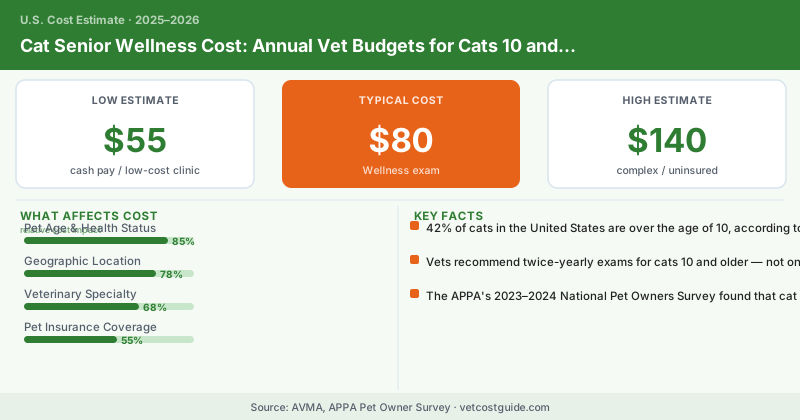
42% of cats in the United States are over the age of 10, according to the American Veterinary Medical Association — and that senior population has very different healthcare needs than the kitten you brought home years ago. Twice-yearly exams replace annual ones. Blood panels become essential rather than optional. And conditions that were invisible at 7 are detectable — and treatable — at 11 if you’re testing for them.
Here’s what senior cat wellness actually costs, what you’re paying for, and how to keep it manageable.
- Vets recommend twice-yearly exams for cats 10 and older — not once a year
- Comprehensive senior bloodwork (CBC + chemistry panel + thyroid + urinalysis) runs $180–$420 per panel
- Kidney disease, hyperthyroidism, and dental disease are the top three conditions in senior cats — all detectable early with routine screening
- AAHA’s Senior Care Guidelines classify cats 10–14 as “senior” and 15+ as “super-senior,” with escalating monitoring recommendations
- Total annual wellness cost for a healthy senior cat: $600–$1,200; for a cat with one managed condition: $1,200–$2,500+
Annual Cost Breakdown for Senior Cats
What you’re budgeting isn’t just exam fees. It’s the accumulation of preventive screening, condition monitoring, dental care, and medications — all of which increase in frequency once your cat crosses 10.
| Service | Frequency | Low | Average | High |
|---|---|---|---|---|
| Wellness exam | 2x/year | $55 | $80 | $140 |
| Senior bloodwork (CBC + chem + T4 + UA) | 2x/year | $180 | $290 | $420 |
| Blood pressure screening | 2x/year | $35 | $55 | $90 |
| Dental cleaning (anesthesia incl.) | Every 1–2 yrs | $350 | $600 | $1,000 |
| Core vaccines (rabies + FVRCP) | Per schedule | $40 | $75 | $130 |
| Flea/parasite prevention | Annual | $60 | $100 | $175 |
| Prescription diet (if needed) | Annual | $400 | $650 | $950 |
| Chronic medication (e.g. methimazole for HT) | Annual | $200 | $360 | $600 |
| Unexpected illness visit | Per occurrence | $120 | $280 | $600 |
For a genuinely healthy 11-year-old cat with no active conditions, budgeting $700–$1,000 per year covers exams, twice-annual bloodwork, and vaccines. If your cat is already managing hyperthyroidism, kidney disease, or arthritis, plan for $1,500–$2,500+ annually once you factor in medications and more frequent rechecks.
The Three Conditions That Change Senior Cat Costs
Hyperthyroidism is the most common hormonal disorder in senior cats, affecting roughly 10% of cats over age 10. Daily oral medication (methimazole) costs $15–$50/month. A one-time radioactive iodine treatment cures it permanently for $1,200–$1,800 but requires a few days of hospitalization. The Hill’s y/d prescription diet is a third option at $50–$80/month.
Chronic kidney disease (CKD) affects an estimated 30–40% of cats over 12. There’s no cure, but management slows progression significantly. Expect costs for prescription renal diet ($50–$80/month), subcutaneous fluids at home ($30–$60/month for supplies), phosphorus binders, and regular kidney panels every 3–6 months. Annual management for stage 2–3 CKD often runs $900–$1,800.
Dental disease is present in over 70% of cats by age 3 — and in senior cats it’s almost universal without consistent dental care. A professional cleaning under anesthesia every 1–2 years costs $350–$1,000. If extractions are needed (common in cats 10+), add $150–$400 for the first tooth, $50–$200 for each additional. Senior cats don’t tolerate anesthesia poorly as a rule — a current bloodwork panel and experienced anesthesia monitoring make these procedures safe.
Why Twice-Yearly Exams Are Worth the Cost
Your vet can’t see your cat’s T4 level, blood pressure, or kidney values with a stethoscope. A cat with early hyperthyroidism looks healthy — until suddenly she doesn’t. The 6-month checkup cadence exists because disease progression in cats can be rapid, and catching it at stage 1 versus stage 3 isn’t just a health difference, it’s a $3,000–$8,000 cost difference over the cat’s remaining lifetime.
The APPA’s 2023–2024 National Pet Owners Survey found that cat owners spend an average of $454 per year on veterinary care — but that average is heavily skewed by younger, healthier cats. Owners of senior cats with active conditions report annual costs two to five times that figure.
What You Can Reasonably Skip (and What You Can’t)
Don’t skip: Senior bloodwork panels. Blood pressure screening (hypertension is common and silent in senior cats). Dental evaluations. These are the core of preventive senior care — they catch the big three conditions while they’re still manageable.
Reasonable to adjust: Vaccine frequency. Once your cat is fully vaccinated and living strictly indoors with no exposure risk, your vet may recommend extending certain vaccine intervals based on titer testing ($60–$100) rather than automatic annual boosters. Have this conversation with your vet — it’s clinically appropriate and saves money.
Often overlooked: Arthritis screening. According to a study published in the Journal of Feline Medicine and Surgery, over 90% of cats over age 12 show radiographic evidence of arthritis — but most owners don’t recognize the behavioral signs. A mobility assessment adds nothing to your exam cost, but identifying arthritis early enables treatment that meaningfully improves quality of life.
Weight loss in a senior cat is not normal aging. It’s the most common sign of hyperthyroidism, kidney disease, diabetes, and cancer — all of which are treatable when caught early. If your cat has lost 10% or more of her body weight over 6–12 months, don’t assume it’s old age. Get bloodwork. The $250 panel cost is substantially less than treating an advanced condition that an earlier diagnosis would have caught.
Keeping Senior Cat Care Affordable
Pet wellness plans through your veterinary practice bundle exams, vaccines, and routine diagnostics into monthly payments ($40–$80/month). They don’t cover illness or emergencies, but they make the predictable costs genuinely manageable.
Pet insurance for senior cats gets more expensive as the cat ages, but policies purchased before new conditions develop can cover diagnostic workups and treatment costs. A $300/year policy with 80% reimbursement pays for itself in one significant diagnostic episode.
Ask about bundled pricing. Many practices discount the second annual exam or offer combined pricing on bloodwork panels. The twice-yearly cadence is often less expensive than you’d expect — ask explicitly rather than assuming it doubles your bill.
Frequently Asked Questions
At what age does a cat become “senior”? The American Association of Feline Practitioners (AAFP) classifies cats 11–14 as senior and 15+ as geriatric. Many practices begin twice-yearly monitoring and expanded bloodwork at 10, which is a reasonable proactive approach.
Does my indoor senior cat still need vaccines? Core vaccines (rabies, FVRCP) remain recommended even for indoor cats, though your vet may adjust frequency based on your cat’s lifestyle and antibody titers. Discuss the schedule at your senior wellness visits rather than automatically continuing annual boosters.
My senior cat hates the carrier. Is that a reason to skip vet visits? No — but it’s worth investing in carrier training and veterinary-grade calming products (Feliway, gabapentin pre-visit) rather than letting carrier anxiety delay important screenings. Many practices also offer cat-friendly handling protocols that make the experience significantly less stressful.
Frequently Asked Questions
Annual blood work and urinalysis for senior cats typically costs $150–$400 per panel, and since most vets recommend twice-yearly exams for cats 10 and older, you should budget $300–$800 annually just for these screenings. Additional diagnostic tests like thyroid panels or ultrasounds can add $200–$600 depending on what your vet recommends based on exam findings.
Most pet insurance plans do not cover routine wellness visits or preventive screenings, meaning you'll typically pay the full cost out-of-pocket for exams and blood panels. However, if bloodwork reveals a covered condition like hyperthyroidism or chronic kidney disease, treatment costs may be reimbursed at 70–90% depending on your plan, so insurance becomes valuable for managing diagnosed illnesses rather than prevention.
Senior cats develop age-related conditions rapidly—diseases like kidney disease, diabetes, and hyperthyroidism can progress significantly in 6 months—so twice-yearly exams catch problems earlier when they're more treatable and less expensive to manage. Moving from annual to biannual visits means scheduling one extra exam per year at roughly $75–$150, a small cost compared to treating advanced disease.