Most cat spays go exactly as planned. Your cat goes in, surgery takes 20–45 minutes, she’s home the same day and back to normal within a week. But complications happen — and when they do, costs escalate fast. Understanding what can go wrong, how often it actually occurs, and what it costs to fix gives you realistic expectations before your cat ever goes under anesthesia.
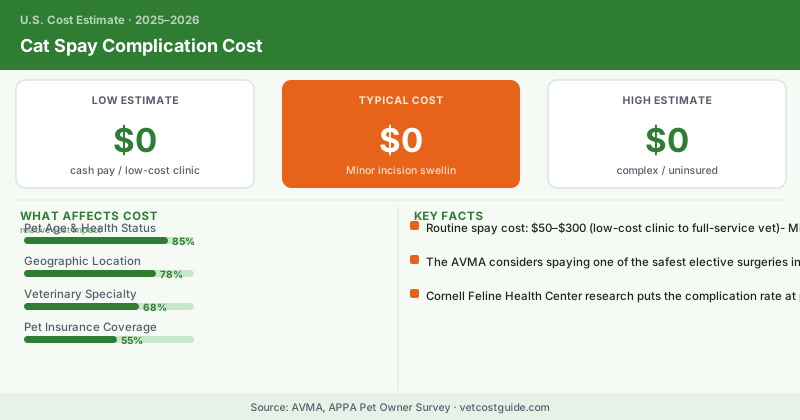
- Routine spay cost: $50–$300 (low-cost clinic to full-service vet)
- Minor infection (antibiotics): $50–$150 on top of the spay
- Wound dehiscence (re-suturing): $200–$600
- Internal hemorrhage: $500–$2,000
- Anesthetic complication requiring ICU: $500–$3,000
- Ovarian remnant syndrome (ORS) surgery: $500–$2,500
- AVMA data: complication rate at accredited facilities is less than 1%
- Cornell Feline Health Center: serious complications are rare but risk is slightly higher at high-volume clinics (1–3%) than at private practices (<0.5%)
Cat Spay Complication Cost Breakdown
| Complication | Low | Average | High |
|---|---|---|---|
| Minor incision swelling (no treatment needed) | $0 | $0 | $0 |
| Post-op infection — antibiotics only | $50 | $90 | $150 |
| Incision infection — cleaning + antibiotics | $100 | $175 | $300 |
| Wound dehiscence (re-suturing, sedation) | $200 | $350 | $600 |
| Seroma (fluid pocket, aspiration) | $100 | $200 | $400 |
| Internal hemorrhage — surgery | $500 | $1,000 | $2,000 |
| Anesthetic complications — ICU/monitoring | $500 | $1,500 | $3,000 |
| Ovarian remnant syndrome (ORS) — surgery | $500 | $1,200 | $2,500 |
| Urinary complications (UTI, urethral) | $100 | $250 | $600 |
The Complication Rate: What the Numbers Actually Say
Here’s the reassuring part: most cats come through spay surgery without a single issue. The AVMA considers spaying one of the safest elective surgeries in veterinary medicine, with serious complication rates below 1% at accredited facilities. Cornell Feline Health Center research puts the complication rate at private practices below 0.5% and at high-volume low-cost clinics in the 1–3% range — both acceptable, both significantly influenced by whether the facility is accredited and the surgeon is experienced.
Minor complications — a little incision swelling, some redness at the suture line — are more common and usually resolve on their own or with a short course of antibiotics. It’s the rare serious cases that this article is really about.
The Most Common Complication: Incision Problems
The most likely issue you’ll actually encounter is something happening at the incision site. That might be:
Swelling or bruising: Completely normal in the first 24–48 hours. No treatment needed; just monitor. Cost: $0.
Seroma: A pocket of fluid that accumulates under the skin near the incision. Feels like a soft, fluid-filled bump. Seromas are benign but sometimes need to be drained — your vet uses a needle to aspirate the fluid at a follow-up visit. Cost: $100–$400.
Infection: The incision becomes red, warm, swollen, or begins discharging pus. This requires antibiotics (oral or injectable) and sometimes wound cleaning. A cat who licks her incision is at significantly higher infection risk — the e-collar your vet sent home matters. Cost: $50–$300 depending on severity.
Dehiscence: The sutures pull apart and the wound opens. This is more serious. It requires sedation and re-suturing, and in some cases the abdominal wall needs to be inspected to confirm internal sutures are holding. Cost: $200–$600.
Internal Hemorrhage: Rare and Serious
Internal bleeding is uncommon, but it’s the complication that can turn life-threatening quickly. It typically presents within the first 24–48 hours post-surgery — your cat becomes pale, weak, cold, and collapses. This is a same-day emergency.
Treatment depends on severity. Mild cases may stabilize with monitoring and fluid support. Significant hemorrhage requires surgical re-exploration to find and ligate the bleeding vessel — the same general area as the original surgery, but now complicated by adhesions and urgency. Cost: $500–$2,000. This is where pet insurance earns its keep.
Watch your cat closely for the first 48 hours after spay surgery. Call your vet immediately if she seems extremely weak or lethargic, has pale or white gums, is breathing rapidly, or collapses. Internal hemorrhage is rare, but it’s a genuine emergency with a narrow treatment window.
Anesthetic Complications
Anesthesia carries a small but real risk in any patient. For healthy young cats, that risk is very low. For cats with undetected heart conditions, respiratory issues, or unusual drug sensitivities, anesthetic complications range from prolonged recovery to cardiac events.
Pre-anesthetic bloodwork ($60–$150) helps identify underlying organ issues before surgery. Many vets recommend it for cats over 7 — some recommend it for all patients. It’s not required, but for older cats or those with unknown health history, it’s genuinely useful.
If a cat has a serious anesthetic reaction and requires intensive monitoring, oxygen support, or ICU care, costs escalate to $500–$3,000 depending on how long stabilization takes.
Ovarian Remnant Syndrome: The Long-Tail Complication
Here’s the one that surprises owners most: ovarian remnant syndrome (ORS). This happens when a small piece of ovarian tissue is left behind during the original spay — often unintentionally. The remnant continues producing hormones, and months or even years later, the supposedly-spayed cat begins showing heat behavior.
ORS diagnosis involves hormone testing and sometimes ultrasound ($100–$300). Definitive treatment is surgical removal of the remnant, which is more complex than the original spay because scar tissue from the first surgery obscures anatomy. Cost: $500–$2,500.
ORS is more likely after complicated spays or in cats with aberrant anatomy. It’s not a reflection of negligence in most cases — ovarian tissue can be extremely small and located in unexpected places.
Reducing Complication Risk Before Surgery
You can’t eliminate risk, but you can minimize it:
- Choose an accredited facility — AAHA-accredited practices are held to higher standards for monitoring, sterilization, and emergency protocols
- Keep the e-collar on for the full 10–14 days — incision licking is the most preventable cause of wound infection
- Restrict activity as instructed — no jumping, running, or rough play for 7–10 days post-surgery
- Attend the follow-up exam — many problems are caught at the 7–14 day suture check before they escalate
- Consider pre-anesthetic bloodwork for cats over 5, overweight cats, or any cat with an unknown health history
Does Pet Insurance Cover Spay Complications?
It depends on your policy timing. If you purchased insurance before the spay and there’s a complication, treatment costs are almost certainly covered as an injury/illness — typically 80–90% reimbursement after deductible. If you buy insurance after the spay, the complication may be excluded as a pre-existing condition.
The routine spay itself is not covered by most standard plans (it’s a wellness procedure), but complications from that procedure are treated as new illnesses by most insurers. Read the fine print on your specific policy.
The Bottom Line
The spay procedure itself is one of the safest surgeries in veterinary medicine — complications happen in fewer than 1% of cases at accredited clinics. Minor issues like incision swelling or a small infection add $50–$300 to your total. Serious complications — hemorrhage, anesthetic events, ORS — are rare but can run $500–$3,000. If you’re budgeting for your cat’s spay, build in a modest buffer: $100–$200 above the quoted spay cost covers most minor complications. For genuine peace of mind against rare but expensive scenarios, pet insurance purchased before the surgery is the most practical financial protection.
Frequently Asked Questions
Minor complications like infections typically cost $50–$500 to treat, while serious complications such as hemorrhage or ligature slippage can range from $1,500–$3,000 or more depending on severity and required hospitalization. Emergency afterhours treatment can double these costs, so budget an additional 50–100% if complications occur nights or weekends.
Most pet insurance plans cover post-operative complications if the original spay surgery was performed by a covered provider, though you typically pay 10–30% out-of-pocket after meeting your deductible ($250–$1,000). However, many plans exclude coverage if the complication results from negligence or if pre-existing conditions contributed to the problem.
Normal recovery takes 7–10 days, with most cats returning to regular activity within a week; however, watch for complications during the first 2 weeks, including excessive bleeding, wound opening, vomiting, or lethargy. Contact your vet immediately if you notice these signs, as early treatment of complications costs significantly less than waiting for a full-blown emergency.