Luna, a 4-year-old tabby, jumped from the top of the refrigerator on a Tuesday afternoon, landed wrong, and came up limping. Her owner watched for a day — “cats bounce back from these things, right?” — then watched for another day. By Thursday, Luna wasn’t putting any weight on the leg and had stopped eating.
That two-day wait turned a likely soft-tissue sprain into a more complicated (and more expensive) vet visit, because the muscle inflammation had worsened and pain management became the priority before anything else could be assessed.
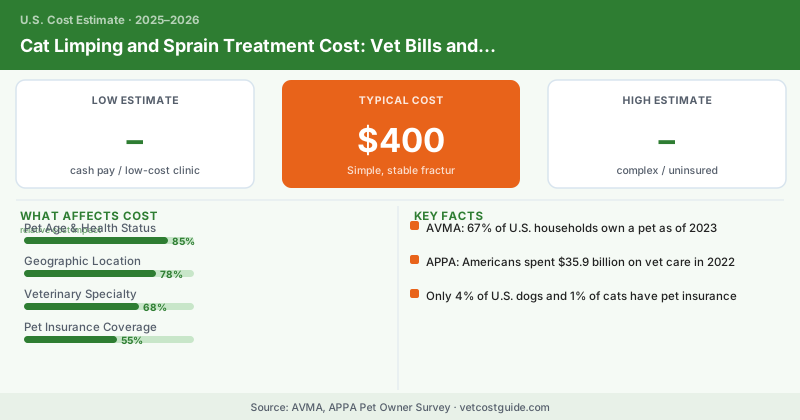
Cat limping is common, and it runs the full cost spectrum from near-free to several thousand dollars depending on the cause. A minor sprain with rest and pain medication might cost $100–$300. A fracture, torn ligament, or joint injury requiring surgery can easily hit $1,500–$4,000.
Why Is My Cat Limping?
Limping in cats doesn’t always mean a sprain. The list of causes is long:
- Soft tissue injury (sprain, strain, bruise) — most common after falls or rough play
- Fracture — broken bones from falls, trauma, or car accidents
- Joint disease — feline osteoarthritis is more common than most owners realize; the International Cat Care organization estimates over 90% of cats over age 12 show radiographic signs of arthritis
- Paw pad injury — cuts, punctures, thorns, hot pavement burns, or abscess from a cat bite
- Nail issue — a broken, overgrown, or ingrown nail that’s painful to walk on
- Bite wound abscess — cat bites from outdoor fights that become infected and swollen
- Bone infection (osteomyelitis) — usually following an open wound or bite
- Bone cancer (osteosarcoma) — less common than in dogs, but does occur, especially in older cats
The cause matters enormously for both treatment and cost. A clipped nail costs a few dollars. Osteosarcoma treatment costs thousands.
- Vet exam: $75–$200
- X-rays (2–4 views): $150–$400
- Pain medication (short course): $30–$80
- Splinting or bandaging: $100–$300
- Fracture repair (surgical pinning/plating): $1,000–$3,500
- Amputation (as alternative to fracture repair): $1,000–$2,000
- Arthritis management (long-term): $30–$100/month
- Abscess treatment: $150–$500
What Happens at the Vet
The exam starts with watching your cat walk. The vet assesses which leg is affected, how much weight (if any) is being put on it, and whether the cat reacts to pain when specific joints or bones are palpated. This gives a good first impression of whether you’re looking at soft tissue, bone, or joint involvement.
X-rays are almost always recommended for any significant limping — they’re essential for ruling out fractures and assessing joint disease. A series of views typically runs $150–$400 depending on how many angles are needed and your region’s pricing.
If a bite wound or abscess is suspected, the vet may clip and drain the wound. Culture and sensitivity testing (to identify the bacteria and guide antibiotic choice) adds $80–$150 but helps ensure the right antibiotic is used.
Soft-Tissue Sprains: The Best-Case Scenario
A true sprain — stretched or mildly torn ligaments without bone involvement — is the most manageable outcome. Treatment is straightforward:
- Short-term anti-inflammatory medication: NSAIDs like meloxicam are commonly prescribed. A 2-week course costs $30–$60. (Note: cats are far more sensitive to NSAIDs than dogs — only use medications specifically prescribed and dosed for cats.)
- Strict rest confinement: keeping the cat in a small room or carrier to prevent jumping for 2–4 weeks. Cost: essentially free, but cats hate it.
- Follow-up exam at 2–4 weeks: $60–$100
Total for a straightforward sprain: $150–$400.
Never give cats ibuprofen, naproxen, acetaminophen (Tylenol), or aspirin. These are toxic to cats — even small doses can cause liver failure or gastrointestinal bleeding. If your cat is in pain, call your vet for a safe prescription. Do not reach for your own medicine cabinet.
Fractures: When It’s More Serious
| Fracture Type | Treatment Option | Estimated Cost |
|---|---|---|
| Simple, stable fracture | External splint/cast | $400–$900 |
| Displaced or unstable fracture | Surgical pinning or plating | $1,500–$3,500 |
| Complex or comminuted fracture | Specialist referral + surgery | $2,500–$5,000 |
| Fracture (low-cost alternative) | Amputation | $1,000–$2,000 |
Cats are actually remarkably good at recovering from limb amputation. A 2019 study published in the Journal of Feline Medicine and Surgery found that the majority of cats with amputations resumed normal activity within weeks and reported high owner satisfaction scores for quality of life. If fracture repair is cost-prohibitive, amputation is a legitimate — not a last-resort — option that vets will often recommend for certain fracture types.
Paw Injuries: Often Overlooked
Before assuming a joint or bone injury, check the paw. Cats hide foot pain well, and something as simple as a broken nail or cut pad can cause significant limping.
- Broken or torn nail: Removal under mild sedation costs $50–$150
- Paw pad laceration: Cleaning, closure, and bandaging costs $100–$300
- Foreign body (thorn, glass) in the paw: Removal costs $75–$200
These are some of the quickest and most satisfying vet visits — the problem is solved in the same appointment.
Arthritis: The Chronic Limping Cat
If your cat is over 8 years old and has been limping intermittently without a clear injury history, arthritis is high on the differential list. According to the Cornell Feline Health Center, degenerative joint disease is significantly underdiagnosed in cats because they mask pain so effectively.
Diagnosis typically requires x-rays ($150–$300) and a physical exam. Long-term management options include:
- Solensia (frunevetmab) — a monthly injectable antibody treatment that reduces joint pain signaling. First approved by the FDA in 2022, it costs $50–$100 per monthly injection
- Meloxicam (oral liquid): $30–$60/month — requires periodic bloodwork to monitor kidneys
- Joint supplements (omega-3s, glucosamine/chondroitin): $20–$50/month, evidence is mixed but low risk
- Environmental modifications: ramps, low-sided litter boxes, heated beds — one-time costs of $50–$200
Total Cost Scenarios
- Minor soft-tissue sprain, single healthy cat: $150–$400
- Moderate sprain + x-rays + 2-week follow-up: $350–$700
- Fracture requiring surgical repair: $1,500–$4,000
- Bite wound abscess: $200–$600
- Arthritis diagnosis + first year of management: $500–$1,400
Frequently Asked Questions
A soft tissue sprain typically costs $100–$600 at a vet clinic, including examination, X-rays, and pain medication. If your cat has a fracture or torn ligament, expect costs to rise to $1,000–$4,000, especially if surgery is needed.
Most pet insurance plans cover sprains and soft tissue injuries after you meet your deductible (typically $250–$500), though you may pay 10–20% coinsurance out-of-pocket. Pre-existing conditions and certain breeds may be excluded, so check your policy details before filing a claim.
Mild sprains may improve in 2–3 weeks with rest and medication, but you should contact a vet within 24–48 hours if your cat is limping, not eating, or putting no weight on the leg. Delaying care—as Luna's owner did—can turn a simple sprain into a more serious injury requiring expensive surgery and longer recovery.