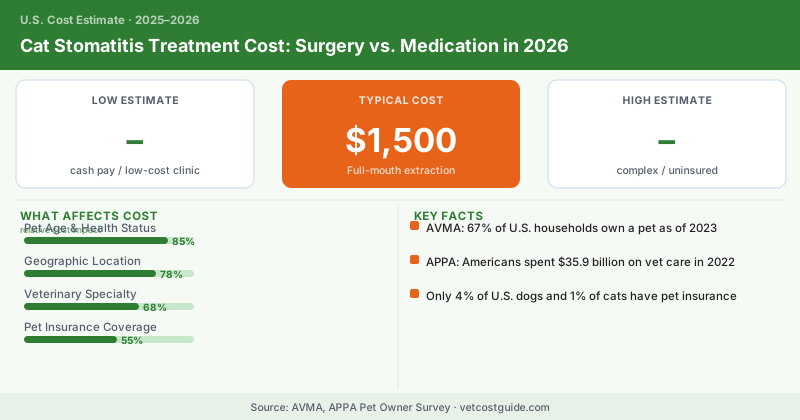
In 2015, treating feline stomatitis usually meant a lifetime of steroid shots and antibiotics that never quite worked. Today, the standard of care has flipped entirely: full-mouth tooth extraction, once considered a last resort, is now the first-line treatment most veterinary dentists recommend — and it costs $1,500–$3,500, compared to $30–$100 a month indefinitely for medication that only manages symptoms without ever fixing them.
Feline chronic gingivostomatitis, commonly just called stomatitis, is a severe and painful inflammation of the gums and mouth tissue, believed to be caused by an abnormal immune reaction to the bacterial plaque that naturally forms on teeth. Cats with stomatitis often drool, paw at their mouths, lose weight, and stop grooming because opening their mouth hurts.
Why extraction beats medication long-term
| Approach | Cost | Outcome | Ongoing Cost |
|---|---|---|---|
| Full-mouth extraction | $1,500–$3,500 | 60–80% resolve or greatly improve | Minimal after healing |
| Partial extraction | $1,000–$2,000 | Moderate improvement | Some cats need follow-up meds |
| Medication only (steroids/immunosuppressants) | $100–$300 initial | Temporary symptom control | $30–$100/month indefinitely |
The American Veterinary Dental College has increasingly pointed to full or near-full mouth extraction as the treatment with the best long-term outcomes, with a majority of cats showing significant improvement or complete resolution. Medication-only management, by contrast, tends to require escalating doses over time as cats build tolerance, and long-term steroid use carries its own health risks like diabetes and immune suppression.
- Full-mouth extraction costs $1,500–$3,500 but resolves symptoms in roughly 60–80% of cats.
- Medication-only management costs less upfront but runs $30–$100/month forever without curing the condition.
- Cats adapt well to eating without teeth, often within days to weeks.
- Diagnostics like bloodwork and dental X-rays typically add $300–$600 to the surgical cost.
What’s included in the surgical cost
The $1,500–$3,500 range for full-mouth extraction typically covers pre-anesthetic bloodwork, general anesthesia (stomatitis surgeries take longer than routine dental cleanings, sometimes 2–4 hours), dental X-rays to check for retained root fragments, the extractions themselves, and pain medication for recovery. Cats with more advanced disease or retained roots from previous partial extractions sometimes need additional imaging or a referral to a veterinary dental specialist, which can push costs toward the higher end or beyond.
Retained tooth root fragments are one of the most common reasons stomatitis symptoms persist after extraction surgery. Dental X-rays before and after extraction are essential, not optional — insist on full-mouth radiographs, since a fragment invisible to the naked eye can keep the immune reaction going indefinitely and mean paying for a second surgery later.
Managing costs before surgery
Not every cat owner can pay $1,500–$3,500 upfront, and that’s a legitimate financial hurdle. Many veterinary dental specialists and general practices offer payment plans through third-party services like CareCredit or Scratchpay. In the meantime, short-term medical management with pain control and anti-inflammatory medication can keep a cat comfortable while you save or arrange financing — just go in understanding it’s a bridge, not a permanent fix.
Pet insurance purchased before a stomatitis diagnosis can also make a significant dent in the bill, since dental disease and oral surgery are commonly covered under accident-and-illness plans, though pre-existing conditions won’t be covered if diagnosed before your policy started.
Bottom line
If your cat has been diagnosed with stomatitis, the math strongly favors extraction over long-term medication. Spending $1,500–$3,500 once, versus $30–$100 every month indefinitely with a treatment that doesn’t actually resolve the underlying problem, usually pays for itself within two to three years — and your cat gets to stop living with chronic mouth pain in the meantime.
Frequently Asked Questions
Yes, and often better than before. Cats with severe stomatitis are usually in so much oral pain that they eat less, drop weight, or only manage soft food. Most cats adjust to eating without teeth within days to a couple of weeks and go back to eating dry kibble, sometimes softened at first, once the painful inflammation is gone.
Stomatitis is believed to be an abnormal immune response to the bacteria in dental plaque, meaning as long as teeth and the plaque that coats them are present, the immune system keeps overreacting. Steroids and immunosuppressants calm that reaction temporarily, but they don't remove the trigger, which is why symptoms typically return once medication stops or loses effectiveness over time.
Veterinary dental studies and data referenced by the American Veterinary Dental College suggest that roughly 60–80% of cats show substantial improvement or complete resolution of symptoms after full-mouth extraction, while a smaller portion of cats need continued medical management for residual inflammation even after all teeth are removed.