In 2010, a cat dental cleaning might’ve cost you $150. Today, that same cleaning runs $300–$800, and if your vet finds rotten teeth that need pulling, the bill can sail past $1,500. Prices have climbed, but so has the standard of care, and your cat’s mouth is one place that quietly costs owners a fortune when ignored.
Dental disease is sneaky common. The American Veterinary Dental College estimates that most cats show signs of dental disease by age three, and the AVMA flags oral disease as one of the most frequently diagnosed problems in cats. Yet because cats hide pain so well, owners often don’t realize anything’s wrong until their cat stops eating.
- Routine cleaning (no extractions): $300–$800
- Cleaning + dental X-rays: add $100–$300
- Cleaning + 1–3 extractions: $700–$1,200
- Complex extractions / advanced disease: $1,200–$1,800+
- Pre-anesthetic bloodwork: $80–$200 (usually included or required)
Where the Money Actually Goes
A cat dental isn’t a quick scrape. It’s a full anesthetic procedure, and that’s where the cost lives. Your cat goes under general anesthesia so the vet can clean below the gumline, take X-rays, and probe each tooth safely. A technician monitors heart rate, oxygen, and blood pressure the entire time.
| Line Item | Low | Typical | High |
|---|---|---|---|
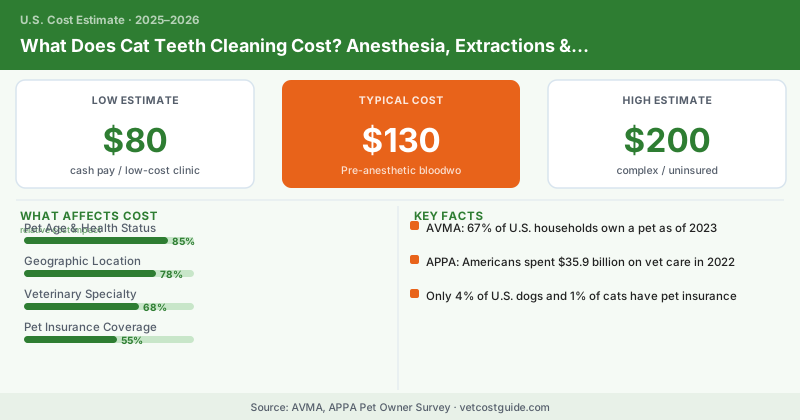
| Pre-anesthetic bloodwork | $80 | $130 | $200 |
| General anesthesia + monitoring | $150 | $250 | $400 |
| Scaling & polishing | $100 | $175 | $300 |
| Dental X-rays | $100 | $200 | $300 |
| Per-tooth extraction | $50 | $100 | $300 |
| IV fluids & meds | $50 | $100 | $200 |
That breakdown is why two cats can leave the same clinic with wildly different bills. A young cat with mild tartar gets the basic package. A senior with stomatitis or resorptive lesions needing six extractions is a different story entirely.
The Anesthesia-Free Temptation
You’ve probably seen ads for anesthesia-free dental cleanings, often at groomers or pet stores, for $75–$150. It sounds great. It mostly isn’t.
These cleanings only scrape visible tartar off the crown of the tooth. They can’t clean below the gumline, which is exactly where periodontal disease destroys the tooth and jaw. The American Veterinary Dental College specifically recommends against them as a substitute for real dental care. Your cat’s teeth look shinier; the disease keeps progressing underneath.
A cat that suddenly drools, paws at its mouth, drops food, or stops eating may be in serious dental pain. Cats are masters at hiding it, so by the time symptoms show, disease is often advanced. Don’t wait for a crisis. A $500 cleaning today is far cheaper, and far kinder, than emergency extractions and infection treatment later.
How to Bring the Cost Down
You have levers to pull. Call a few clinics for dental cleaning estimates, since prices swing a lot by location. Many vets run discounts during February’s Pet Dental Health Month. Low-cost and nonprofit clinics offer cleanings at reduced rates. And the cheapest move of all? Brushing your cat’s teeth at home slows tartar buildup and can stretch the gap between professional cleanings.
For a complete preventive routine, our pet dental care guide covers brushing, dental diets, and what actually works on cats.
Frequently Asked Questions
How much does a cat teeth cleaning cost? Typically $300–$800 before extractions, covering bloodwork, anesthesia, scaling, and polishing. With extractions, the total often reaches $1,000–$1,500 or more.
Why is cat teeth cleaning so expensive? Cats need general anesthesia to be cleaned safely, which drives most of the cost. The bill includes bloodwork, anesthesia, IV fluids, X-rays, scaling, polishing, and constant monitoring.
Does my cat really need anesthesia for a dental cleaning? For a thorough, safe cleaning, yes. Anesthesia-free cleanings only scrape the visible crown and can’t reach below the gumline. The American Veterinary Dental College advises against them as a substitute.
How often should a cat get its teeth cleaned? Most cats benefit every 1–3 years, though some need annual cleanings. By age 3, most cats already show dental disease, so don’t wait for symptoms.
How can I lower the cost of my cat’s dental cleaning? Get estimates from several clinics, watch for February dental promotions, check low-cost clinics, and brush at home to space out cleanings.
What happens if I skip dental care for my cat? Untreated disease causes pain, tooth loss, and infection that can spread to organs. Advanced cases with multiple extractions can exceed $1,500, far more than prevention.
Is pet insurance any help with dental cleanings? Routine cleanings usually fall under optional wellness add-ons, not core coverage, while dental disease treatment may be covered by accident-and-illness plans if it isn’t pre-existing. Check your policy wording, and see our guide on pet dental cleaning costs for how coverage typically breaks down.
Are dental X-rays worth the extra cost? Often yes. Up to 60% of feline dental disease hides below the gumline where it’s invisible without X-rays. They catch resorptive lesions and root problems early, when treatment is simpler and cheaper, so the $100–$300 add-on frequently saves money long term.
Frequently Asked Questions
A professional dental cleaning for a cat typically costs $300–$800, and that's before any extractions. The price covers pre-anesthetic bloodwork, general anesthesia, scaling and polishing, and monitoring. If your cat needs teeth removed, which is common in cats, the total often climbs to $1,000–$1,500 or more.
Unlike a human cleaning, cats must be placed under general anesthesia to hold still safely, and that drives most of the cost. The bill includes pre-anesthetic bloodwork, the anesthesia itself, IV fluids, dental X-rays, scaling and polishing, and a technician monitoring vitals the whole time. You're paying for a full surgical-grade procedure, not just a quick brush.
For a thorough, safe cleaning, yes. Anesthesia-free cleanings only scrape visible tartar off the crown and can't clean below the gumline, where dental disease actually does its damage. The American Veterinary Dental College recommends against anesthesia-free dentistry as a substitute. It may look nicer but leaves the real problem untouched.
Most cats benefit from a professional cleaning every 1–3 years, though it varies a lot by individual. Some cats with rapid tartar buildup or conditions like stomatitis need annual cleanings, while others go longer. By age 3, the majority of cats already show signs of dental disease, so don't wait until there's obvious trouble to start.
Get pre-treatment estimates from a few clinics, since prices vary widely. Ask about dental month promotions (often February, Pet Dental Health Month), check low-cost and nonprofit clinics, and consider a pet insurance wellness add-on if you'll use it. Most importantly, brushing your cat's teeth at home slows tartar and can space out professional cleanings.
Untreated dental disease leads to pain, tooth loss, and infection that can spread to the heart, liver, and kidneys. A cat that stops eating or drools may already be in serious pain. Preventive cleanings are far cheaper than treating advanced disease, where multiple extractions and treatment can run well over $1,500.