Full-mouth extraction. Those two words sound extreme the first time a vet says them about your cat — until you understand feline stomatitis and tooth resorption, and why removing every tooth is sometimes genuinely the kindest, most effective treatment available.
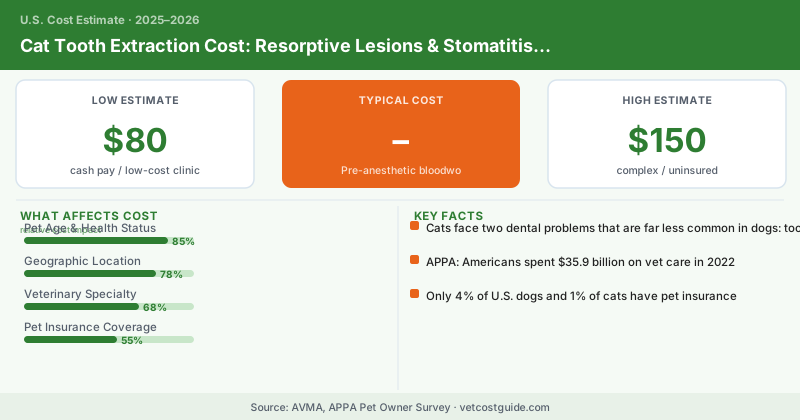
Cats face two dental problems that are far less common in dogs: tooth resorption, where the tooth structure itself progressively erodes from the inside (affecting an estimated 60-75% of cats over age 5 according to some veterinary dental studies), and stomatitis, a severe, painful inflammatory condition where a cat’s immune system essentially reacts against its own teeth. Both conditions frequently require extraction as the primary treatment, sometimes affecting most or all of the teeth in the mouth.
- Single tooth extraction (resorptive lesion): $150–$400
- Multiple extractions during one dental cleaning: $500–$1,200
- Full-mouth extraction (severe stomatitis): $1,200–$3,000
- Dental X-rays (essential for finding resorptive lesions): $150–$300
- Tooth resorption affects an estimated 60-75% of cats over age 5
Full Cost Breakdown
| Component | Low End | High End | Notes |
|---|---|---|---|
| Pre-anesthetic bloodwork | $80 | $150 | Required before general anesthesia |
| Anesthesia and monitoring | $150 | $400 | Longer for full-mouth extraction |
| Dental X-rays (full mouth) | $150 | $300 | Critical for finding resorptive lesions |
| Single tooth extraction | $50 | $150 | Straightforward resorptive lesion |
| Multiple extractions (several teeth) | $500 | $1,200 | Common with widespread resorption |
| Full-mouth extraction | $1,200 | $3,000 | Severe stomatitis cases |
| Pain medication and antibiotics | $40 | $100 | Standard aftercare |
Tooth Resorption: A Uniquely Feline Problem
Tooth resorption is a condition where a cat’s own body begins breaking down the tooth structure from within, starting often at the root and sometimes progressing to affect the crown. It’s extremely common — some studies suggest well over half of cats over age 5 have at least one affected tooth — and it’s often painful even before it’s visually obvious, since the damage frequently starts below the gumline where only a dental X-ray can detect it.
Unlike periodontal disease, resorptive lesions can’t be treated with a filling or crown the way a cavity might be in a human; once resorption has significantly damaged a tooth, extraction is typically the only effective treatment. This is why full dental X-rays are considered essential, not optional, for any cat dental procedure — visual exam alone misses a substantial share of resorptive lesions.
Stomatitis: When Extraction Becomes the Best Treatment
Feline chronic gingivostomatitis is a severe, painful inflammatory condition where a cat’s immune system reacts intensely to the presence of teeth and plaque, causing widespread inflammation throughout the mouth — well beyond what’s typical with ordinary dental disease. Affected cats often struggle to eat, drool excessively, and lose weight from chronic pain.
Counterintuitively, veterinary dental specialists have found that full-mouth extraction — rather than repeated cleanings and medication — offers the best long-term outcome for many cats with stomatitis, since removing all the teeth eliminates the surface the immune system is reacting against. According to veterinary dental literature, a substantial majority of cats show significant improvement or full resolution of symptoms after full-mouth extraction. It sounds drastic, but cats adapt remarkably well to eating without teeth, and owners frequently report their cat is dramatically more comfortable and active within weeks.
- Drooling, dropping food, or reluctance to eat hard kibble can indicate dental pain
- Bad breath beyond normal is often a sign of significant dental disease, not just something to tolerate
- Pawing at the mouth or reduced grooming (leading to a scruffy coat) can indicate oral pain
- Visible redness or swelling of the gums, especially near the back of the mouth, warrants prompt evaluation for possible stomatitis
Why the Upfront Number Can Feel Shocking
A full-mouth extraction quote of $1,200-$3,000 understandably sounds significant for a cat, especially compared to a routine annual cleaning. But for a cat suffering from advanced stomatitis or extensive tooth resorption, this is typically a one-time definitive treatment rather than an ongoing recurring cost — compare that to years of repeated cleanings, medications, and pain management that may not resolve the underlying problem as effectively.
Managing the Cost
Ask your vet whether staged extractions (removing the worst-affected teeth first, then reassessing) is a reasonable option if full-mouth extraction in one session isn’t financially feasible right away, understanding this may mean a longer overall treatment timeline with more total anesthesia events. Pet insurance enrolled before any dental symptoms appear typically covers extraction costs, and given how common and often unavoidable tooth resorption is in cats, this is a meaningful consideration when weighing whether to insure a young, currently healthy cat.
Frequently Asked Questions
Cats are prone to a condition called tooth resorption, affecting up to 60-75% of cats over age 5 according to some veterinary dental studies, where the tooth structure itself progressively breaks down and often can't be saved. Cats with severe stomatitis (widespread mouth inflammation) sometimes require full-mouth extraction as the only effective long-term treatment, since the inflammatory response is directed at the teeth themselves.
Full-mouth extraction for a cat with severe stomatitis typically costs $1,200–$3,000, covering anesthesia, dental X-rays for all teeth, and the extraction of every remaining tooth. While it sounds drastic, cats generally eat and feel dramatically better within days of full recovery, since the source of chronic pain and inflammation is removed.