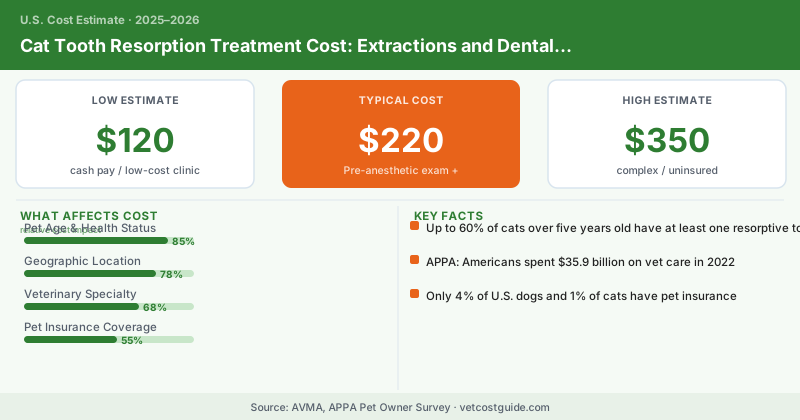
Up to 60% of cats over five years old have at least one resorptive tooth lesion, according to feline dental research — making it one of the most common, and most painful, conditions your cat will likely face. Tooth resorption is exactly what it sounds like: the body slowly dissolves its own tooth structure from the inside out. It hurts. And the only real fix is extraction under anesthesia, which is where the $400-to-$1,800 range comes from.
Here’s the cruel part — cats are masters at hiding oral pain. A cat with a resorptive lesion will often keep eating, just more carefully, while quietly suffering. That’s why owners are stunned to learn their “fine” cat needs multiple extractions.
- Single tooth extraction with dental X-rays: $400–$900
- Multiple extractions under one anesthesia: $700–$1,800
- Dental X-rays alone (essential for diagnosis): $100–$300
- Up to 60% of cats over age 5 have at least one resorptive lesion.
- The condition is progressive and painful; there’s no medication that reverses it — extraction is the treatment.
Cat Tooth Resorption Cost Breakdown
| Item | Low | High | Typical |
|---|---|---|---|
| Pre-anesthetic exam + bloodwork | $120 | $350 | $220 |
| Anesthesia + monitoring | $200 | $600 | $380 |
| Full-mouth dental X-rays | $100 | $300 | $180 |
| Single extraction | $80 | $300 | $170 |
| Multiple extractions (3-5 teeth) | $400 | $1200 | $700 |
| Pain meds + recheck | $60 | $200 | $120 |
Why Dental X-Rays Are Non-Negotiable
Resorptive lesions often start below the gumline where no one can see them. A tooth can look fine on the surface while its root is being dissolved beneath. That’s why full-mouth dental X-rays aren’t an upsell — they’re the only way to find every affected tooth and decide whether a full extraction or a crown amputation is appropriate for each one. Skipping the X-rays risks leaving painful roots behind. Our cat dental X-ray and X-ray cost guide explains the imaging side.
A proper dental also includes a cat teeth cleaning under the same anesthesia, since you’re already there — cleaning the healthy teeth while extracting the bad ones is efficient and avoids a second anesthetic event.
Why It Has to Be Done Under Anesthesia
There’s no way to probe, X-ray, and extract teeth in an awake cat — it’s painful and impossible to do safely. General anesthesia is what allows a thorough, humane procedure, and it’s also why the bill includes pre-anesthetic bloodwork and monitoring. That anesthesia component, $200 to $600, is a fixed cost whether you extract one tooth or five, which is why doing all the needed extractions in one visit saves money versus repeat procedures.
Don’t assume a cat that’s still eating is pain-free. Cats instinctively hide pain, and a resorptive lesion is genuinely painful — comparable to an exposed nerve in a human cavity. Signs are subtle: chewing on one side, dropping food, drooling, or a sudden preference for soft food. Waiting until your cat stops eating means it’s been hurting for a long time. Annual dental exams catch it early.
Can the Number Be Lower?
The honest answer: the anesthesia and X-rays are fixed, so the variable is how many teeth are affected. A single early lesion caught at an annual exam might be a $400-to-$600 procedure. A mouth that’s been neglected for years, with five or six lesions, lands at $1,500 to $1,800. Regular dental checkups during a routine vet visit catch lesions while they’re few, keeping the bill down.
Can Pet Insurance Help?
Dental disease coverage varies more than other categories — some comprehensive policies cover tooth resorption extractions as illness-related, while others exclude or limit dental unless you add a rider. Read the fine print before assuming you’re covered. Where it applies, a plan paying 80–90% meaningfully cuts a multi-extraction bill. Our how pet insurance works and is pet insurance worth it guides explain what to look for in dental terms.
If dental isn’t covered, CareCredit for vet bills is commonly used to finance the procedure.
The Bottom Line
Cat tooth resorption treatment costs $400 to $1,800, driven mostly by how many teeth need extraction. Since up to 60% of cats over five develop it and they hide the pain well, annual dental exams with X-rays are the smartest cost-control move — catching one lesion early beats discovering six at once.
Frequently Asked Questions
Cat tooth resorption treatment typically costs $400–$1,800, depending on the number of teeth requiring extraction and whether dental X-rays are needed. The procedure requires general anesthesia and professional extraction, which accounts for the majority of the expense.
Most pet insurance plans exclude or severely limit coverage for tooth resorption since it's considered a pre-existing condition or dental disease, leaving most owners responsible for the full $400–$1,800 cost out-of-pocket. Some comprehensive plans may cover a percentage if the condition develops after the policy start date, so reviewing your specific plan details is essential.
No—extraction under anesthesia is currently the only effective treatment for tooth resorption, as the body's dissolution of tooth structure cannot be reversed or halted with medication. Early detection through regular dental X-rays can help identify affected teeth before severe pain develops, potentially reducing the number of extractions needed.