Your cat is sneezing, has watery eyes, and won’t eat. Is this a vet visit — or a wait-and-watch situation? The answer depends on a few specific signs.
Upper respiratory infections are among the most common conditions in cats — and most of the time, they’re caused by feline herpesvirus type 1 (FHV-1). The Cornell Feline Health Center estimates that FHV-1 accounts for 80–90% of feline upper respiratory disease. Nearly every cat has been exposed. Many are lifelong carriers who experience periodic flare-ups under stress.
The critical distinction: mild URI symptoms in a cat that’s still eating and alert can often be managed at home. A cat that’s stopped eating, is breathing with its mouth open, or has eye ulcers needs a vet today.
- Mild URI home management: $0–$50 (humidifier, saline drops, L-lysine)
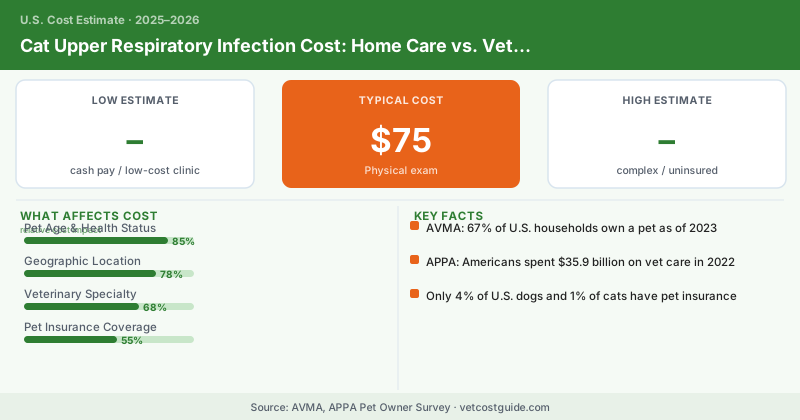
- Vet exam for URI: $75–$150
- Nasal/ocular culture (optional): $80–$150
- Antiviral eye drops (famciclovir or idoxuridine): $20–$60
- Oral antiviral (famciclovir pills): $30–$80 per course
- Appetite stimulants: $20–$50
- Hospitalization for severe cases: $300–$800 for 2–4 days
- L-lysine supplement (ongoing): $15–$30/month
What’s Actually Causing the Infection
Not all cat URIs are the same virus. The main culprits:
Feline herpesvirus type 1 (FHV-1): Responsible for 80–90% of cases per Cornell CVM data. Causes sneezing, nasal discharge, conjunctivitis, and — importantly — can cause corneal ulcers in severe cases. Lifelong carrier status after infection.
Feline calicivirus (FCV): The second most common cause. Also causes oral ulcers (look for drooling or pawing at the mouth) and occasionally limping — the “limping kitten syndrome” from calicivirus is well-documented in kittens. Some FCV strains are highly virulent and cause severe systemic disease.
Chlamydophila felis: Primarily causes conjunctivitis with relatively mild respiratory signs. More commonly seen in kittens and multicat households. Responds well to doxycycline.
Bordetella bronchiseptica: A bacterial cause, more common in shelter environments. Responds to antibiotics.
The AAFP (American Association of Feline Practitioners) vaccination guidelines categorize FVRCP — which covers herpesvirus, calicivirus, and panleukopenia — as a core vaccine given to every cat. It significantly reduces severity but doesn’t prevent infection in every cat.
When to Watch at Home vs. When to Go to the Vet
This table is worth printing out:
| Sign | Home Care OK | See Vet |
|---|---|---|
| Sneezing + clear nasal discharge | Yes | — |
| Watery eyes (clear discharge) | Yes | — |
| Mild congestion, still eating | Yes | — |
| Eating less but still some food | Monitor closely | — |
| Not eating for 24+ hours | — | Yes — today |
| Open-mouth breathing | — | Emergency |
| Thick yellow/green nasal discharge | — | Yes |
| Eye swelling or cloudiness | — | Yes |
| Squinting or rubbing at eye | — | Yes (corneal ulcer risk) |
| Fever (rectal temp >103.5°F) | — | Yes |
| Lethargy + any of the above | — | Yes |
Home Care: What Actually Helps
For a cat with mild symptoms who’s still eating and alert, home supportive care can shorten the course of illness and reduce discomfort:
Steam humidification: Running a warm-mist humidifier near where your cat sleeps, or bringing the cat into a steamy bathroom for 10–15 minutes twice daily, helps loosen congestion so the cat can breathe more easily through the nose. Cost: free if you have a humidifier, or $30–$50 to buy one.
Nasal discharge cleaning: Use a soft, warm, damp cloth to gently wipe away dried discharge from the nostrils. Crusted discharge sealing the nostrils shuts off smell — and cats won’t eat what they can’t smell. This alone can help restart appetite.
Warming food: Heat canned food to slightly above room temperature to enhance the aroma. Strong-smelling foods (sardines, tuna, rotisserie chicken) can penetrate congestion better than bland kibble.
Separate space from other pets: Keep the sick cat away from housemates. FHV-1 and calicivirus spread through respiratory secretions, eye discharge, and shared surfaces.
Vet Visit Cost Breakdown
| Service | Cost | Notes |
|---|---|---|
| Physical exam | $75–$150 | Assess hydration, temp, eye/nasal involvement |
| Nasal or ocular culture | $80–$150 | Optional; identifies specific pathogen |
| Antiviral eye drops (topical) | $20–$60 | Idoxuridine or trifluridine for corneal involvement |
| Oral famciclovir (antiviral) | $30–$80 | For FHV-1; most useful for corneal herpes |
| Antibiotics (doxycycline or azithromycin) | $25–$60 | Bacterial co-infection or secondary infection |
| Appetite stimulant (mirtazapine) | $20–$40 | For cats who've stopped eating |
| Subcutaneous fluids at clinic | $30–$60 | If mildly dehydrated but not hospitalized |
L-Lysine: Mixed Evidence, Widespread Use
L-lysine is an amino acid supplement widely marketed for FHV-1 management. The theory: lysine competes with arginine (which herpesvirus needs to replicate), potentially reducing viral replication.
The practice: a 2015 systematic review raised serious doubts about effectiveness, finding insufficient evidence that lysine supplementation actually reduces FHV-1 shedding or clinical signs in cats. However, many vets continue to recommend it, and some cats do seem to benefit. It’s low-risk and inexpensive — $15–$30/month as a chewable supplement.
Bottom line: it’s not harmful, it might help, and the cost is low. But don’t expect it to replace proper treatment for active illness.
Corneal Ulcers: The Most Expensive Complication
Feline herpesvirus has a particular affinity for corneal tissue. Active FHV-1 infection can cause dendritic (branching) corneal ulcers — painful erosions of the corneal surface that can progress to serious eye damage if untreated.
Signs: squinting, pawing at the eye, cloudiness, excessive tearing. This is a vet-today situation.
Treatment: topical antiviral drops (idoxuridine or trifluridine — $20–$60/bottle), sometimes combined with oral famciclovir ($30–$80 for a course). Severely affected eyes may require referral to a veterinary ophthalmologist.
Cost of corneal ulcer management: $200–$600 depending on severity.
Hospitalization for Severe URI
Cats who’ve stopped eating, are severely dehydrated, or have a fever that isn’t responding to outpatient care may need hospitalization. Hospitalization goals:
- IV fluid therapy to correct dehydration
- Nutritional support (appetite stimulants, esophagostomy tube if needed)
- Systemic antibiotics for secondary bacterial infection
- Monitoring and supportive care
Cost: $300–$800 for a 2–4 day hospital stay. Longer stays or severe complications push costs higher.
A particular concern: cats who stop eating long enough develop hepatic lipidosis (fatty liver disease), where fat mobilized from body stores overwhelms the liver’s processing capacity. This is a serious condition that costs $800–$2,500 to treat and has significant mortality risk. Getting food into a sick cat — even if you have to hand-feed or use an appetite stimulant — is always the priority.
Shelter Cats: Why They’re So Vulnerable
The Cornell Feline Health Center notes that FHV-1 is endemic in most shelter populations — the virus spreads so readily in group housing environments that most cats entering a high-intake shelter will be exposed. The stress of the shelter environment triggers reactivation in carrier cats, creating a cycle of shedding and new infections.
Shelters vaccinate on intake, but the FVRCP vaccine takes 7–10 days to develop protection. A cat exposed before the vaccine takes effect, or exposed as a latent carrier being stressed into reactivation, can still develop URI.
If you adopt a sneezing cat, start with isolation in one room, vet evaluation within 48 hours, and the home care measures above. Most adopted cats with mild URI symptoms recover completely within 10–14 days once they’re in a low-stress home environment.
Never give a cat human cold or flu medications. Acetaminophen (Tylenol) is rapidly fatal in cats — even a small dose causes red blood cell destruction and liver failure. Pseudoephedrine and phenylephrine (common decongestants) are highly toxic. Ibuprofen and naproxen cause acute kidney failure. If your cat is congested and miserable, call your vet for feline-safe options. The only “human” product with any reasonable track record in cats is plain saline nasal drops — and even those, ask your vet first.
Vaccination: The Best Investment
The FVRCP vaccine (feline viral rhinotracheitis/calicivirus/panleukopenia) protects against both herpesvirus and calicivirus. Per AAFP vaccination guidelines, it’s core for all cats — given as a kitten series (3 doses starting at 6–8 weeks) then every 1–3 years in adults based on risk assessment.
Cost: $20–$30 as part of a wellness visit. It doesn’t prevent infection in every cat, but it dramatically reduces severity and mortality. A vaccinated cat who catches URI typically has a much milder course than an unvaccinated cat exposed to the same virus.
That’s worth $25 a year.
Frequently Asked Questions
Mild cases caused by feline herpesvirus often do resolve in 7–14 days with supportive home care — steam humidification, a warm quiet environment, and gentle cleaning of discharge from the eyes and nose. But 'mild' means sneezing and minor congestion in a cat that's still eating, drinking, and alert. If your cat stops eating for more than 24 hours, develops open-mouth breathing or labored breathing, has swollen or ulcerated eyes, or runs a fever, don't wait. Cats who stop eating long enough can develop hepatic lipidosis (fatty liver disease) — a serious secondary complication that costs far more to treat than the URI itself.
Shelters are high-density, high-stress environments — exactly the conditions that trigger herpesvirus reactivation in carriers and spread infection to naive cats. Herpesvirus is extraordinarily contagious via respiratory secretions, shared bowls, and fomites (shared surfaces). Even with aggressive vaccination programs, shelters see frequent URI outbreaks because the FVRCP vaccine reduces severity and mortality but doesn't completely prevent infection. Shelter cats are also typically stressed, which suppresses immune function and makes them more susceptible. A cat you adopt from a shelter with a snuffly nose isn't unusual — it's one of the most common post-adoption presentations.
Yes. Like herpesvirus in humans, FHV-1 establishes latent infection in the trigeminal ganglia (nerve tissue near the eye) and persists lifelong. Most cats live perfectly normal lives with minimal flare-ups — the virus reactivates during periods of stress: a move, a new pet in the household, a vet visit, illness from another cause, or any significant disruption to routine. Some cats have frequent flares; others go years without one. L-lysine supplementation ($15–$30/month) has been widely used but the current evidence for efficacy is mixed — discuss it with your vet. Minimizing stress and keeping up with the FVRCP booster schedule reduces flare frequency.