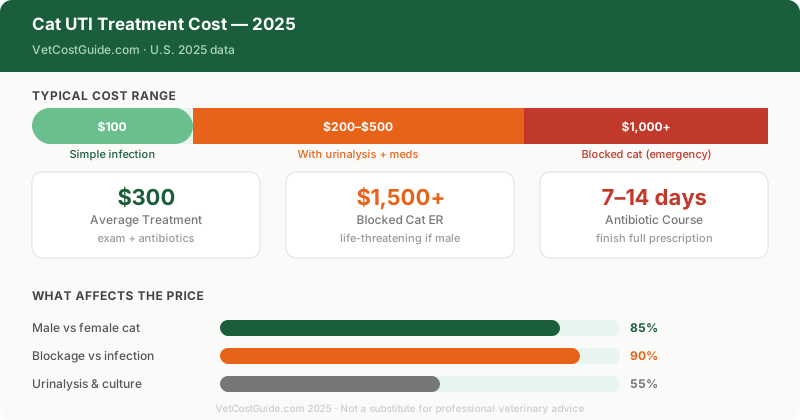
Picture two scenarios. In the first, your cat is squatting in the litter box more than usual, producing a few drops of bloody urine. Exam, urinalysis, a short course of antibiotics: $150–$400, resolved in a week. In the second scenario, your male cat starts straining and producing nothing. By midnight he’s restless, crying, possibly collapsed. That’s a urethral blockage — and it’s a $1,500–$3,000 emergency that can kill within 24–48 hours if untreated.
Most people searching for “cat UTI cost” are in scenario one. But here’s what complicates that: true bacterial UTIs affect only about 1–2% of cats under age 10 showing urinary symptoms. The far more common diagnosis is feline idiopathic cystitis (FIC) — inflammation with no bacterial cause at all, requiring no antibiotics. And the blockage risk, while less common, is the reason you never wait to see if a male cat’s “straining” resolves on its own. Knowing which situation you’re in determines everything — including how much you’ll spend.
- A simple bacterial UTI (exam + urinalysis + antibiotics) costs $150–$400 at most vet clinics in 2025.
- A culture and sensitivity test to identify the exact bacteria adds $80–$150 and is essential for recurrent infections.
- A urinary blockage (male cat emergency) costs $1,500–$3,000 for catheterization and 2–3 days of hospitalization.
- Prescription urinary food for prevention costs $60–$80/month and reduces recurrence rates significantly.
What Each Scenario Costs
| Condition / Service | Low | Average | High |
|---|---|---|---|
| Exam + Urinalysis + Antibiotics (simple UTI) | $150 | $275 | $400 |
| Urine Culture & Sensitivity Test | $80 | $115 | $150 |
| Urethral Catheter Placement (blocked cat) | $500 | $650 | $800 |
| Hospitalization 2–3 Days (blocked cat) | $800 | $1,200 | $2,000 |
| Blocked Cat Total (ER treatment) | $1,500 | $2,200 | $3,000 |
| FIC Episode Management (per episode) | $100 | $200 | $300 |
| Prescription Urinary Food (monthly) | $60 | $70 | $80 |
| Perineal Urethrostomy Surgery (recurrent blocks) | $1,500 | $2,500 | $4,000 |
Blocked cats frequently present after hours since symptoms often progress through the evening. Emergency clinic fees run 30–60% above daytime rates — a $2,200 case during regular hours becomes $3,000–$4,000 at a midnight emergency hospital.
What You’re Paying For
The initial workup. Every urinary case starts with a physical exam and a urinalysis. The urinalysis checks pH, specific gravity, red and white blood cells, bacteria, and crystals. Gold-standard collection is via cystocentesis — a small needle directly into the bladder — which gives an uncontaminated sample. Expect to pay $40–$80 for the urinalysis alone.
Urine culture and sensitivity. If bacteria show up, a culture identifies the exact organism and which antibiotics will work against it. This takes 3–5 days and costs $80–$150. For a first uncomplicated infection, most vets prescribe a broad-spectrum antibiotic empirically while the culture runs. For recurrent infections, skipping the culture is false economy — resistance patterns vary, and the wrong antibiotic wastes money while your cat stays sick.
FIC management. Feline idiopathic cystitis is the most common diagnosis in cats under 10 showing urinary symptoms — and it has no bacterial cause. Antibiotics don’t help it. Treatment focuses on stress reduction, environmental enrichment (more litter boxes, vertical space, consistent routines), increased water intake through wet food or fountains, and sometimes medications like gabapentin for pain or amitriptyline for stress modulation. A single FIC episode typically runs $100–$300 in vet costs, but recurrences are common without addressing the underlying stress factors.
Urethral blockage treatment. This is the emergency scenario. Male cats can develop complete urethral obstruction from mucus plugs, crystals, or urethral spasm. Signs include straining with zero urine output, crying out, restlessness, and eventually weakness or collapse. Within 24–48 hours, potassium toxicity and potential bladder rupture become life-threatening. Treatment: IV fluids, sedation or anesthesia, urethral catheterization to clear the obstruction, 2–3 days of hospitalization with the catheter in place, pain management, and close monitoring of kidney values. Total: $1,500–$3,000 at a daytime clinic.
Perineal urethrostomy (PU surgery). Males who block repeatedly may be candidates for this procedure, which permanently widens the urethral opening. It doesn’t prevent FIC flare-ups, but it dramatically reduces re-blocking risk. Cost: $1,500–$4,000 depending on the surgeon and location.
What Makes Costs Higher or Lower
Male vs. female. Female cats rarely block — their urethra is shorter and wider. When females have recurrent UTIs, you’re dealing with a different diagnostic puzzle. Male cats face the life-threatening obstruction scenario that’s far more expensive to manage. The anatomy determines the risk level.
Whether bacteria are actually present. Treating FIC with antibiotics is both ineffective and a waste of money. A proper urinalysis before prescribing is the financially smart move. If your vet wants to prescribe antibiotics without running a urinalysis, ask why.
History of recurrence. A first episode is the cheapest to work up. Cats with repeated urinary symptoms need deeper diagnostics — abdominal ultrasound ($200–$400), cystoscopy at specialty centers — to rule out bladder stones, polyps, or anatomic issues.
Crystal type. Struvite crystals can often be dissolved with prescription diet over weeks. Calcium oxalate crystals can’t be dissolved and may need surgical removal (cystotomy, $1,000–$2,000). The crystal type shapes the entire treatment plan.
Time of presentation. Recognizing a blockage on a weekday morning versus at midnight is a real cost variable. Emergency surcharges and extended overnight hospitalization can add $500–$1,000 to an identical medical case.
- Straining in the litter box — know the difference. A cat straining to urinate with no output is a potential blockage (emergency). A cat straining but producing small amounts of urine is more likely FIC (urgent but not immediately life-threatening). When in doubt, call your vet — the risk of mistaking a blockage for constipation or FIC is too high to wait and see.
- Re-blocking after treatment. About 30–40% of cats who block once will block again within 6–12 months. Prescription urinary diet, increased water intake (water fountain, wet food), stress reduction, and environmental enrichment are all evidence-based strategies to reduce re-blocking risk. A second hospitalization costs just as much as the first.
- Antibiotics for FIC. Because FIC and bacterial cystitis are clinically indistinguishable without a urinalysis, some owners request — or some vets reflexively prescribe — antibiotics for all urinary symptoms. This is ineffective for FIC, creates antibiotic resistance, and wastes your money. Insist on a urinalysis first.
Is Pet Insurance Worth It Here?
Urinary disease in cats is common enough that insurers pay close attention to it. One thing to watch for: after a first FIC episode, subsequent claims for the same issue may be classified under a chronic condition clause, which some policies handle differently. Read the fine print on “related condition” language before selecting a policy.
That said, a single urinary blockage costing $2,000–$3,000 easily exceeds a full year of premiums plus deductible. Male cats, overweight cats, and indoor-only cats — all higher-risk categories — are particularly strong candidates for comprehensive coverage. The NAPHIA (North American Pet Health Insurance Association) reports urinary conditions as one of the top five most-claimed diagnoses in cat insurance policies, which tells you something about how common and expensive these events are.
Look for policies that don’t categorically exclude urinary conditions and that cover prescription food when therapeutically prescribed.
Practical Prevention and Cost Reduction
Wet food is your cheapest long-term preventive tool. High moisture intake — through canned food primarily — reduces crystal formation and FIC flare-up frequency. The cost difference between wet and dry food per month is often smaller than people assume, and it’s far cheaper than a recurrence hospitalization.
Add a water fountain. Cats preferentially drink from moving water. A pet fountain at $25–$50 pays for itself if it prevents even one recurrence.
Reduce environmental stress. FIC is strongly stress-driven. Consistent schedules, adequate litter boxes (one per cat plus one extra), vertical escape routes, and minimizing household disruptions all reduce FIC frequency. These changes cost nothing.
Buy prescription urinary food online. With a valid prescription, Hill’s c/d and Royal Canin Urinary SO are available through Chewy Pharmacy and 1-800-PetMeds at 15–25% below clinic pricing. Same products, less expensive source.
Catch a blockage early. A cat presenting at 8 AM during regular hours costs hundreds less than the same cat arriving at midnight at an emergency clinic. Knowing the signs — straining with no urine output, crying, repeated litter box visits without results — and acting on them quickly is one of the most cost-effective things a cat owner can do.
Frequently Asked Questions
How do I know if my cat has a UTI or FIC? You can’t tell without a urinalysis. Both cause straining, frequent litter box trips, vocalization during urination, and bloody urine. FIC is far more common in cats under 10; bacterial UTIs are more common in older cats, cats with diabetes or CKD, or cats on steroid medications. The urinalysis tells your vet which you’re dealing with.
How long does a blocked cat stay in the hospital? Typically 2–3 days. The urinary catheter stays in for 24–48 hours to let the urethra recover and confirm the blockage doesn’t immediately recur. The cat is monitored for potassium normalization, bladder function, and consistent urine output before discharge.
Can I prevent urinary crystals with diet? Partially. Struvite crystals — the most common type — are strongly diet-responsive. A prescription urinary diet managing urine pH and mineral content can prevent and sometimes dissolve struvite crystals. Calcium oxalate crystals are less diet-responsive; hydration and urine dilution are the main preventive levers.
Are some cats more prone to urinary problems? Yes. Overweight cats, indoor-only cats, male cats with narrow urethras, cats on predominantly dry food diets, and cats in high-stress or multi-pet households all have elevated risk for both FIC and urinary disease. Persian and Himalayan breeds have higher rates of calcium oxalate stones specifically. Addressing modifiable risk factors — weight, diet, hydration, stress — makes a measurable difference in recurrence rates.
Frequently Asked Questions
A straightforward urinary tract infection typically costs $150–$400 in 2025, including the veterinary exam, urinalysis, and a short course of antibiotics. Most cases resolve within a week with this basic treatment plan.
Most pet insurance plans cover UTI treatment as an illness claim after you meet your deductible, though you'll typically pay 10–30% coinsurance out-of-pocket. However, many policies exclude pre-existing urinary conditions, so check your plan details before enrolling.
A UTI is an infection causing frequent urination and discomfort, treatable with antibiotics for $150–$400. A urinary blockage is a life-threatening emergency where the urethra is physically obstructed, requiring immediate hospitalization, catheterization, and monitoring at a cost of $1,500–$3,000+; without treatment within 24–48 hours, it can be fatal.