A decade ago, cat owners were routinely told that vomiting a couple of times a month was “just what cats do.” The science has shifted. The American Association of Feline Practitioners (AAFP) now recognizes that chronic intermittent vomiting in cats is not normal — it’s a symptom that almost always has an identifiable, treatable underlying cause.
That reframing matters for costs. A cat that vomits occasionally and seems fine otherwise might need nothing more than a $150 vet visit and a diet switch. A cat with chronic vomiting that’s been ignored for months might need endoscopy, biopsies, and a specialist — a workup that can run $1,500–$3,000.
The earlier you investigate, the less it typically costs.
When Is Vomiting a Problem?
A single vomiting episode after eating too fast, or occasional hairballs in a long-haired cat, isn’t urgent. But any of the following should prompt a vet call within 24 hours:
- Vomiting more than 2–3 times in a single day
- Blood in the vomit (bright red, or dark “coffee grounds”)
- Vomiting combined with lethargy, not eating, or hiding
- Straining to vomit without producing anything (can indicate a blockage)
- Vomiting in a cat that’s already thin, older, or has known health conditions
- Chronic pattern: even once a week over months is not normal
Common Causes — and What They Cost to Treat
Vomiting is a symptom, not a diagnosis. The underlying cause determines the treatment plan and cost.
| Cause | Estimated Treatment Cost | Notes |
|---|---|---|
| Hairballs | $0–$50 | Laxatone or diet change; often self-managed |
| Dietary indiscretion | $75–$200 | Exam + anti-nausea medication |
| Food sensitivity or intolerance | $150–$400 | Elimination diet trial + exam |
| Parasites (roundworms, etc.) | $100–$200 | Fecal test + deworming |
| Pancreatitis | $300–$1,200 | IV fluids, anti-nausea meds, hospitalization |
| Inflammatory bowel disease (IBD) | $500–$2,500 | Endoscopy + biopsy to confirm |
| Hyperthyroidism | $300–$600 | Bloodwork + medication or radioiodine treatment |
| Kidney disease | $300–$1,000+ | Bloodwork + ongoing management |
| Foreign body ingestion | $800–$4,000 | Surgery or endoscopic removal |
| Lymphoma | $500–$5,000+ | Diagnosis + chemotherapy |
What Happens at the First Vet Visit
For a first vomiting visit, your vet will want a thorough history: how often, what does it look like, when during the day, any relationship to meals, any recent dietary changes, outdoor access, and access to plants or household chemicals.
The exam includes palpating the abdomen to check for pain, masses, or abnormal organ size. In a cat with hyperthyroidism (which frequently causes vomiting), the thyroid gland may be enlarged and palpable in the neck.
Basic vet exam: $75–$200
Anti-nausea medication (maropitant/Cerenia, ondansetron): A short course costs $30–$80 and is often prescribed as a first-line measure while further diagnostics are pending or while a diet trial is in progress.
Bloodwork: The Essential Next Step
For any cat that’s vomiting regularly, basic bloodwork is almost always recommended. A complete blood count (CBC) and chemistry panel screens for kidney disease, liver disease, hyperthyroidism, diabetes, and electrolyte abnormalities — all of which can present with vomiting as the primary symptom.
- CBC + chemistry panel: $100–$250
- Thyroid T4 level (added on): $50–$80
- Fecal exam (to rule out parasites): $40–$70
A cat with acute vomiting that’s otherwise healthy may skip some of this. A cat with chronic or recurring vomiting almost certainly shouldn’t.
- Vet exam: $75–$200
- Anti-nausea medication (maropitant/Cerenia): $30–$80
- CBC + chemistry panel: $100–$250
- T4 thyroid test: $50–$80
- Abdominal x-rays: $150–$350
- Abdominal ultrasound: $250–$600
- Endoscopy + biopsy: $800–$2,000
- IV fluids (per day): $150–$350
- Hospitalization (per day): $300–$800
Imaging: X-rays and Ultrasound
If the physical exam or history suggests a possible foreign body, obstruction, or abdominal mass, imaging is the next step.
Abdominal x-rays ($150–$350) can identify obvious foreign objects (though many soft materials won’t show), gas patterns consistent with obstruction, and significantly enlarged or irregular organs.
Abdominal ultrasound ($250–$600) gives far more detail — it can evaluate intestinal wall thickness (important for diagnosing IBD or lymphoma), examine lymph nodes, and assess organ architecture. It’s the preferred imaging tool for chronic vomiting cases and is often performed by an internal medicine specialist or a radiologist via telemedicine interpretation.
Chronic Vomiting: The Expensive Workup
A cat that has been vomiting for months with no clear cause identified from bloodwork and x-rays is likely going to need a definitive tissue diagnosis. The two main conditions that chronic vomiting cats are eventually found to have are inflammatory bowel disease (IBD) and small cell (low-grade) lymphoma — and critically, these two conditions look identical on ultrasound. The only way to tell them apart is a biopsy.
Biopsy options:
- Endoscopic biopsy — a camera is passed through the mouth into the stomach and small intestine, and small tissue samples are taken. Cost: $800–$1,500 at a general practice, $1,500–$2,500 at a specialty center. This is done under anesthesia and is same-day.
- Surgical (full-thickness) biopsy — more invasive, requires general anesthesia and abdominal surgery, but provides thicker samples that can be more diagnostic. Cost: $1,200–$2,500.
Why does the distinction matter? Because IBD is managed with immunosuppressive medications (steroids, often chlorambucil) while low-grade lymphoma is treated with a specific chemotherapy protocol (chlorambucil + prednisolone). The protocols overlap enough that some cats do well on the same treatment regardless — but proper diagnosis guides expectations and long-term planning.
Linear foreign bodies — thread, string, tinsel, or hair ties swallowed by cats — cause a specific type of dangerous obstruction where one end anchors in the stomach while the rest saws through the intestine. If you ever see string hanging from your cat’s mouth or anus, don’t pull it. Cut it flush if it’s safely accessible and go to the vet immediately. This is a surgical emergency that costs $1,500–$4,000 to repair, and delays significantly worsen the prognosis.
Hospitalization for Severe Vomiting
A cat that’s vomiting repeatedly, can’t keep water down, or is dehydrated needs inpatient care with IV fluids.
- IV fluid therapy: $150–$350 per day
- Hospitalization (ward care): $300–$800 per day
- Anti-nausea IV medications: $50–$150 per day
Most acute hospitalization for vomiting lasts 1–2 days. A severely ill cat might need 3–5 days. Budget $500–$2,000 for a typical hospitalization episode.
Total Cost Scenarios
- Single acute episode, mild, exam + anti-nausea meds: $150–$300
- Recurring vomiting, bloodwork + imaging + 2–3 visits: $500–$1,200
- Chronic IBD/lymphoma workup including endoscopy: $1,000–$2,500
- Foreign body surgery: $1,500–$4,000
- Hospitalization for severe dehydration: $600–$2,000
Keeping Costs Down
- Don’t wait months before investigating chronic vomiting — earlier diagnosis prevents disease progression and avoids more expensive interventions later
- Ask whether a hydrolyzed or novel protein diet trial ($50–$100/month) makes sense before jumping to imaging for suspected food-responsive disease
- Check whether your vet offers bundled wellness bloodwork that includes the thyroid panel — it’s often cheaper than ordering tests individually
- Consider pet insurance before a chronic condition is diagnosed — most policies won’t cover pre-existing conditions, so insuring while your cat is still young and healthy pays off if something like IBD develops later
Frequently Asked Questions
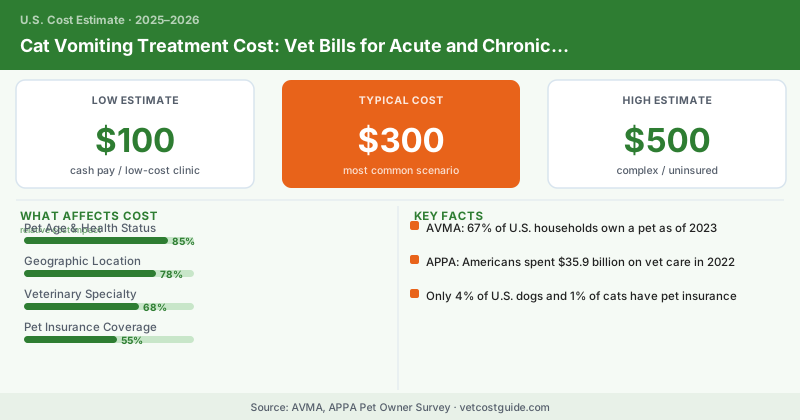
A routine vet visit to diagnose vomiting typically costs $100–$500, which includes the exam and basic bloodwork. If your cat requires hospitalization, advanced imaging, or a comprehensive chronic vomiting workup, expect $500–$2,500 depending on the underlying cause and treatment needed.
Most pet insurance plans cover vomiting diagnosis and treatment if it's caused by an illness or injury, but chronic conditions may have waiting periods of 10–14 days before coverage begins. Pre-existing vomiting issues are typically excluded, so reviewing your policy's definition of chronic versus acute conditions is essential before filing a claim.
Your vet may recommend bloodwork ($75–$200), urinalysis ($25–$75), and abdominal imaging like ultrasound ($300–$600) to identify the cause; these tests usually take 1–3 days for results. If initial tests are inconclusive, advanced diagnostics like endoscopy or CT scans ($800–$1,500) may be needed to pinpoint conditions like food sensitivities, pancreatitis, or intestinal disease.