Outdoor cats fight. Indoor cats catch claws on furniture, door hinges, or the family dog. Even the most pampered house cat can end up with a gash that needs more than a quick wipe and a prayer.
The question most owners have: when does a wound need a vet, and how much is this going to cost?
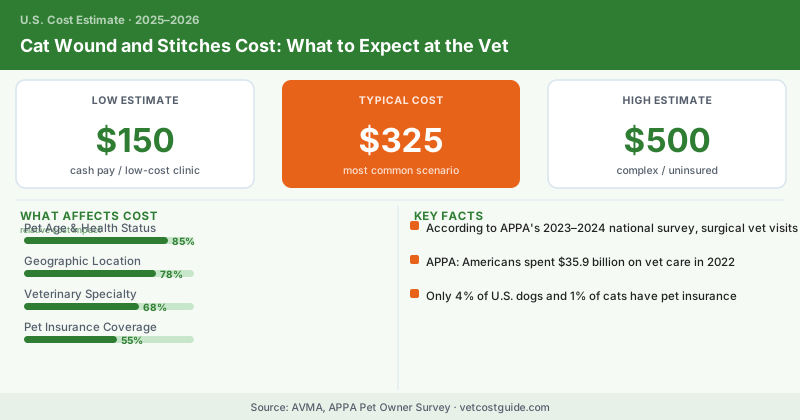
Short answer on cost: minor lacerations run $150–$500. Infected bite wounds, deep punctures, or wounds requiring general anesthesia and surgery can reach $500–$2,500. What you pay depends almost entirely on the wound’s depth, contamination, and how quickly you bring the cat in.
When a Wound Actually Needs a Vet
Not every scratch warrants a clinic visit. But these signs mean go today, not tomorrow:
- The wound is longer than half an inch, gaping open, or won’t stop bleeding
- You can see tissue below the skin surface
- It was caused by another animal (bite wound — see below)
- The area around it is swelling or feels warm
- Your cat is limping, hiding, or refusing to eat
- Any sign of infection: pus, odor, increased redness more than 24 hours post-injury
According to AVMA data, cat bite wounds are among the most frequently presented emergency injuries in feline patients. Cats’ needle-sharp teeth create puncture wounds that seal over quickly on the surface — trapping bacteria deep in the tissue, where a classic abscess develops 3–5 days later. What looked minor on day one becomes a swollen, painful mass by day four.
- Exam + wound assessment: $60–$130
- Wound cleaning and irrigation: $50–$150
- Sutures (stitches): $150–$400 depending on wound size and sedation needed
- General anesthesia: $200–$500
- Antibiotics (oral): $25–$75
- E-collar (cone): $15–$35
- Wound culture: $60–$150
- Abscess lancing and flush: $200–$600
- Drain placement: $100–$200 (plus placement fee)
Cost Breakdown: Laceration vs. Bite Wound
| Wound Type | Typical Cost Range | What's Included |
|---|---|---|
| Minor laceration (surface, no infection) | $150–$350 | Exam, clean, possibly glue or 1–3 sutures, antibiotics |
| Moderate laceration (requires sutures + sedation) | $350–$700 | Exam, sedation or short anesthesia, suturing, collar, recheck |
| Deep or gaping wound | $600–$1,500 | Full anesthesia, multi-layer closure, drain possible, antibiotics |
| Fresh bite wound (no abscess yet) | $200–$500 | Exam, wound flush, antibiotics, collar |
| Abscess (bite wound 3–5 days old) | $300–$800 | Lancing, flushing, possibly drain, antibiotics, pain meds |
| Infected wound requiring surgery | $800–$2,500 | Debridement, tissue removal, flap repair, multi-day antibiotics |
Sutures vs. Surgical Glue vs. Staples
Not all wound closures require stitches. Your vet will choose based on the wound’s characteristics:
- Tissue glue (cyanoacrylate): Used for small, superficial wounds with clean edges and no tension. Faster, often cheaper — no sedation needed in calm patients. Cost: minimal add-on to exam ($20–$50 extra).
- Sutures (absorbable or non-absorbable): For deeper or longer wounds. Absorbable sutures dissolve internally. External sutures require a recheck for removal in 10–14 days. Cost: $150–$400 for the suturing component alone.
- Staples: Less common in cats, sometimes used for linear wounds in thick-skinned areas. Similar cost to sutures.
The key factor that drives cost up is anesthesia. A cooperative cat with a small wound might be closed under light sedation or even without sedation. An anxious cat, a deep wound, or complex closure requires full general anesthesia — adding $200–$500 to the bill.
Bite Wounds: Why They’re in a Category of Their Own
A cat bite is not a puncture with a cat-shaped foreign body. It’s a delivery mechanism for a high concentration of bacteria — particularly Pasteurella multocida, a species that thrives in cat saliva and causes rapid, serious infection in soft tissue.
The ASPCA Animal Poison Control and emergency vet data consistently show cat bite abscesses as one of the top five reasons cats require urgent veterinary care. The infection timeline is predictable: bite on day one, sealed puncture on day two, swelling and pain by day four, fully formed abscess by day five or six.
Abscess treatment costs $300–$800 and involves:
- Lancing (opening) the abscess under sedation
- Flushing the cavity with sterile saline
- Placing a drain if the cavity is large (allows continued drainage for 3–5 days)
- Oral antibiotics for 7–14 days
- E-collar to prevent the cat from removing the drain or licking the wound
Bringing a bite wound to the vet before the abscess forms (day 1–2, when you can still see the puncture) is almost always cheaper. A pre-abscess bite wound treated with flushing and antibiotics costs $200–$500 versus $400–$800 once the abscess requires surgical drainage.
Drains: What They Are and Why Vets Use Them
For large abscesses or deep wounds with “dead space” (tissue pockets where fluid can accumulate), your vet may place a Penrose drain — a small rubber tube that exits through the skin and allows drainage over several days.
Cost of drain placement: $100–$200 on top of the wound procedure. The drain requires daily gentle cleaning by you at home and must be removed at a recheck (additional $50–$100 visit).
Skipping the drain when one is indicated often leads to re-accumulation of fluid and a second procedure.
Cat wounds — especially bite wounds — should never be treated at home with hydrogen peroxide, rubbing alcohol, or povidone-iodine (Betadine) at full strength. These products are toxic to healing tissue and can slow recovery significantly. Clean fresh wounds gently with sterile saline only, and get to a vet the same day. Infected wounds left untreated can become systemic, requiring hospitalization for IV antibiotics at a cost of $600–$1,500 per day.
Wound Care After You Get Home
Your vet will give specific instructions, but typical post-wound care includes:
- E-collar: Non-negotiable. Cats lick wounds compulsively and can remove sutures or introduce new bacteria within hours of coming home.
- Oral antibiotics: 7–14 day course, given with food to reduce stomach upset.
- Recheck visit: Required for suture removal (10–14 days) and to confirm healing. Cost: $50–$100.
- Activity restriction: No jumping, rough play, or outdoor access until healed.
Keeping Costs Down
Bring the cat in immediately after any animal bite — pre-abscess treatment consistently costs less than abscess treatment.
Keep outdoor cats current on rabies and FVRCP vaccines — your vet may require documentation before treating bite wounds, and vaccines cost less than a rabies quarantine situation.
Ask about payment plans. Many vet practices offer CareCredit or in-house payment plans for unexpected injury costs, particularly for procedures above $500.
According to APPA’s 2023–2024 national survey, surgical vet visits for cats average $400–$700 out of pocket after any insurance reimbursements — consistent with the mid-range wound care figures above. Planning for at least $500 in savings for a cat that goes outdoors is prudent.
Frequently Asked Questions
Minor lacerations typically cost $150–$500, while deep wounds, infected bites, or injuries requiring surgery can range from $500–$2,500 or more. The final cost depends on wound severity, whether stitches or surgical repair is needed, and if antibiotics or pain medication are prescribed.
Most pet insurance plans cover wound treatment as an accident or injury claim, though you'll typically pay out-of-pocket first and be reimbursed 70–90% depending on your policy. Pre-existing wounds and certain breeds may have exclusions, so review your specific plan details with your insurer.
Most cat wounds heal within 10–14 days, at which point stitches are removed during a follow-up vet visit (usually a lower-cost exam). During recovery, keep the wound clean and dry, prevent your cat from licking it, and watch for signs of infection like swelling or discharge.