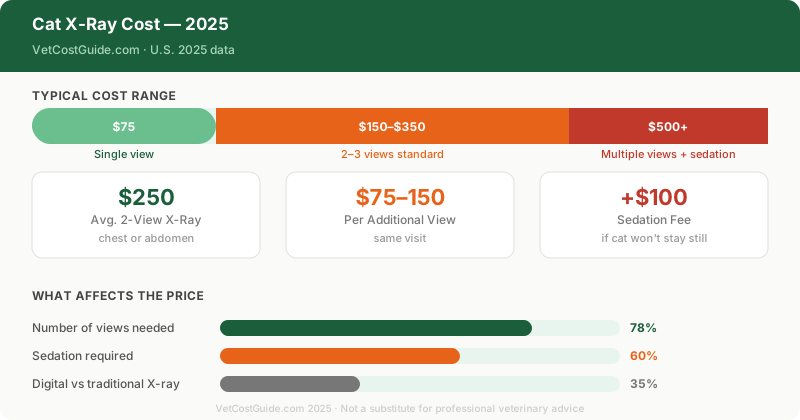
“We need to take some X-rays” — four words that, without context, leave most pet owners wondering whether they’re looking at a $200 bill or a $600 one. The answer depends almost entirely on how many views your vet orders, and that number is driven by what they’re actually trying to see. Single views run $75–$250 at most US clinics in 2025. A complete chest or abdominal series typically requires two to three views, bringing most diagnostic workups to $150–$500 total.
- A single radiographic view costs $75–$200 at most general practice clinics in 2025.
- A full chest or abdominal series (2–3 views) typically runs $200–$450.
- Orthopedic studies of limbs or spine often require 4–6 views, costing $300–$600 total.
- Sedation for an uncooperative cat adds $50–$150 and may be necessary for diagnostic-quality images.
Cat X-Ray Cost by Study Type
Pricing is almost always per-view, not per body region. If your vet images both the chest and abdomen in the same visit, expect to be billed for four to six individual views.
| Study Type | Views | Low | Average | High |
|---|---|---|---|---|
| Single View | 1 | $75 | $125 | $200 |
| Chest Series | 2-3 | $150 | $275 | $450 |
| Abdominal Series | 2-3 | $150 | $275 | $450 |
| Orthopedic (limb) | 2-4 | $150 | $300 | $500 |
| Spine Series | 4-6 | $250 | $400 | $600 |
| Skull/Dental Radiographs | 6-12 | $150 | $250 | $350 |
| Sedation Add-On | — | $50 | $100 | $150 |
Emergency clinic X-rays typically run 30–50% higher than daytime general practice rates — the cost of 24/7 staffing passed directly to the client.
What the Fee Includes
Image acquisition. The X-ray exposure itself — positioning your cat, setting exposure parameters, capturing the digital image. Modern digital radiography (standard at nearly all practices now) produces results on screen within seconds rather than the film-development wait of older systems.
Veterinarian interpretation. Your vet reads the images and documents findings in your cat’s record. General practitioners are trained to interpret standard radiographs. Complex cases may be forwarded to a board-certified radiologist for remote consultation (teleradiology).
Teleradiology, if applicable. Many clinics now send complex or ambiguous studies to board-certified radiologists who review images remotely and return a written report within a few hours. This service adds $30–$80 per study and is often the right call when the GP wants specialist-level interpretation without a specialist referral.
Positioning and restraint. Each view requires your cat to be positioned precisely — lateral recumbent, dorsal recumbent, specific angles for orthopedic studies. Vet techs handle this manually. Some cats cooperate; others really don’t.
What Drives the Final Number
Number of views. This is the biggest variable. A single lateral chest view tells you something. A proper three-view chest series — right lateral, left lateral, and ventrodorsal — gives you full diagnostic confidence for cancer staging, heart size assessment, or evaluating a suspected mass. More views equals more cost, and there’s usually a clinical reason behind each one.
Body region being studied. Chest and abdominal surveys are the most common at 2–3 views each. Orthopedic limb studies may include comparison views of both limbs. A spine survey for suspected intervertebral disc disease involves many views across multiple regions.
Sedation. A fractious, painful, or anxious cat that won’t hold still produces blurry, diagnostically useless images. Sedation improves image quality dramatically, reduces your cat’s stress, and is often cheaper in total than the alternative: six poor-quality views that need to be repeated anyway. If sedation is used, anesthetic monitoring costs and drug fees get added to the bill.
Time of day. There’s a meaningful price difference between imaging at your regular clinic during business hours versus an emergency hospital at 2 AM. The same radiographic series can cost 30–50% more overnight.
Whether specialist interpretation is included. Some clinics automatically send complex studies for teleradiology review; others do it only on request. Ask what’s included in the quoted price.
- Paying for views that won’t change treatment. A single view of a clearly fractured limb in an otherwise stable cat is clinically sufficient before emergency stabilization. Pushing for a full orthopedic series in that moment adds cost without changing the immediate management plan.
- Inadequate views that miss the diagnosis. Conversely, a single lateral chest view can miss significant pathology visible only on a ventrodorsal view. If your vet suggests additional views, there’s usually a clinical reason.
- Repeat X-rays due to poor positioning. Motion blur from an unsedated anxious cat produces non-diagnostic images that need to be repeated. Sedating a fractious cat upfront is often more cost-efficient than taking 6 poor-quality views trying to avoid it.
Pet Insurance and Radiology Coverage
X-rays are covered under the diagnostics benefit of virtually every comprehensive accident-and-illness pet insurance policy. If your cat’s been in an accident, shows sudden lameness, has a suspected mass, or stops eating — radiographs are typically among the first tests ordered.
With a policy carrying a $250 deductible and 80% reimbursement, a $400 radiograph series costs you effectively $20 out of pocket once the deductible is met for the year. For cats prone to respiratory issues, orthopedic problems, or any chronic condition requiring imaging follow-up, insurance frequently recoups its annual premium in imaging fees alone.
Wellness-only coverage doesn’t apply here. Diagnostic X-rays fall under illness or accident benefits, not preventive care plans.
How to Reduce the Bill
Ask which views are clinically necessary. This isn’t questioning your vet’s judgment — it’s being an informed participant. A good vet can explain the diagnostic value of each view they’re ordering. If a view wouldn’t change the treatment plan, it might be deferrable.
Request teleradiology for ambiguous findings. If your GP vet isn’t certain about an interpretation, a teleradiology consult ($30–$80) gives you a board-certified read the same day. That’s a fraction of what a specialist referral and emergency visit would cost.
For stable fractures, image after stabilization. Comprehensive orthopedic series are more productive once your cat is out of acute pain and able to be positioned properly. Emergency stabilization first, detailed imaging when the cat is more comfortable — sometimes at lower cost during a scheduled follow-up.
Schedule non-urgent imaging during regular hours. Checking on a known lung mass, monitoring arthritis progression, or following up a stable finding — these don’t need emergency timing. Regular business hours at your established clinic is always cheaper than an emergency or specialty facility.
Ask about bundling discounts. Radiographs taken as part of a comprehensive visit sometimes come with a small discount compared to a stand-alone X-ray appointment. It’s worth asking directly rather than assuming.
Frequently Asked Questions
Does my cat need sedation for X-rays? Not always. Calm cats tolerate digital radiographs without sedation, particularly for straightforward chest or abdominal views. Cats that are painful, fractious, or need precise positioning for orthopedic or spinal studies often produce better diagnostic images — and have less stressful experiences — with light sedation. Your vet will assess this when your cat arrives.
How do cat X-rays compare to CT scans? X-rays are 2D images — quick, inexpensive, excellent for bones, lungs, and organ size. CT scans produce 3D cross-sectional images with far more detail, used when you need to evaluate complex anatomy around the brain, nasal cavity, chest masses, or bone tumors. CT costs $1,000–$2,500 and requires general anesthesia. Your vet picks the tool that matches the clinical question.
Can I see the X-rays? Yes — ask your vet to walk you through the images during the appointment. Most practices can also provide digital copies on a USB drive or through an online patient portal. Keep copies if you’re seeking a second opinion or planning a specialist referral.
Are veterinary X-rays safe? Modern digital veterinary radiography uses very low radiation doses. The exposure from a three-view chest series is negligible relative to the medical benefit. Vet staff step out during exposures to protect themselves from cumulative occupational exposure over years of work — not because the radiation poses any meaningful risk to your cat from a single session.
Frequently Asked Questions
A single X-ray view costs $75–$250 at most US veterinary clinics in 2025. Most diagnostic workups require 2–3 views, bringing the total bill to $150–$500 for a complete chest or abdominal series.
Most pet insurance plans cover diagnostic imaging like X-rays as part of accident and illness coverage, typically reimbursing 70–90% after you meet your deductible ($250–$1,000). However, pre-existing conditions and some wellness-only plans may exclude imaging, so review your policy details with your insurer.
Different views (such as lateral, dorsoventral, and oblique angles) allow your vet to see different structures and rule out problems that might be hidden in a single image. Your vet will order only the views necessary to answer their diagnostic question, which typically means 2–3 views take 10–15 minutes total.