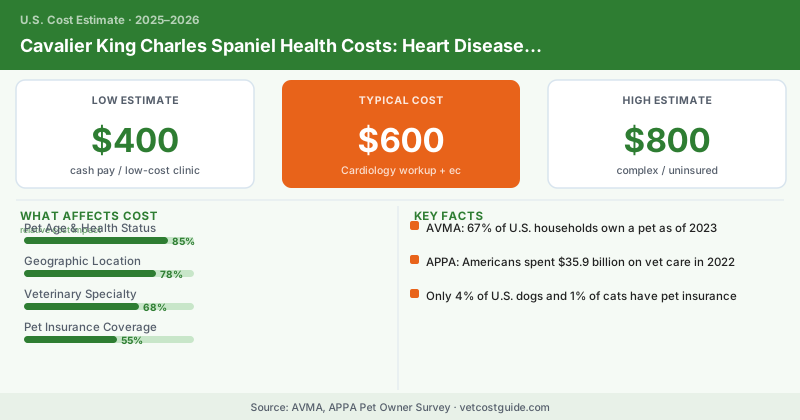
Here’s the statistic every Cavalier owner should know: the majority of Cavalier King Charles Spaniels develop mitral valve disease by age 10, and a large share much earlier — it’s the breed’s near-universal heart problem. Veterinary cardiology studies have documented this for years. The Cavalier is sweet, gentle, and devoted, and it’s also one of the most genetically burdened small breeds when it comes to the heart and the brain.
This is a breed where understanding the medical reality upfront is essential.
- Mitral valve disease affects most Cavaliers — lifelong cardiac meds are common
- Syringomyelia/Chiari malformation is a painful, costly neurological condition
- Eye and ear problems add to the bill
- Lifetime spending frequently exceeds $12,000 despite the small size
The Heart Is the Headline
Mitral valve disease is the defining health issue of the breed. The valve degenerates, leaks, and over time can lead to congestive heart failure. It’s detected first as a murmur, then monitored with echocardiograms, and managed with medication — sometimes for years. A small but growing number of dogs are even candidates for surgical valve repair, an advanced and very expensive procedure available at a handful of centers.
Most Cavaliers, though, are managed medically: regular cardiology rechecks, imaging, and daily pills. That’s a steady, lifelong cost rather than one big surgery.
What Cardiac and Neuro Care Cost
| Condition | Low | High | Typical |
|---|---|---|---|
| Cardiology workup + echocardiogram | $400 | $800 | $600 |
| Mitral valve disease lifelong meds (yearly) | $500 | $2000 | $1000 |
| Syringomyelia MRI + workup | $1500 | $4000 | $2500 |
| Syringomyelia lifelong management (yearly) | $600 | $2500 | $1200 |
| Hereditary eye condition care | $300 | $2000 | $800 |
| Routine annual care | $300 | $700 | $450 |
The Brain Problem: Syringomyelia
The other major breed concern is Chiari-like malformation and syringomyelia — a mismatch between skull and brain size that causes fluid-filled cavities in the spinal cord. It’s painful. Affected dogs may scratch frantically at their neck (sometimes without making contact), yelp, or show sensitivity around the head. Diagnosis requires an MRI, and management is lifelong.
Persistent “air scratching” at the neck and shoulder, unexplained yelping, or sensitivity around the head in a Cavalier are classic syringomyelia signs. Don’t dismiss them as a quirk — early diagnosis and pain management make a real difference in quality of life.
Eyes, Ears, and the Rest
Cavaliers carry several hereditary eye conditions — dry eye (keratoconjunctivitis sicca), corneal problems, and cataracts among them. Dry eye in particular is a lifelong management issue requiring daily eye drops, and it’s surprisingly common in the breed. Those long, low-set ears predispose Cavaliers to ear infections that need regular cleaning and occasional medicated treatment. The breed is also prone to hip dysplasia and luxating patella on the orthopedic side, plus episodic falling and an unusual blood quirk (asymptomatic thrombocytopenia) that can confuse routine bloodwork. None of these is catastrophic on its own, but they add up across a long lifetime.
Why Buying Right Matters So Much
For no breed is the choice of breeder more financially consequential than the Cavalier. Responsible breeders follow protocols that delay breeding until parents are screened clear of early-onset heart murmurs and MRI-screened for syringomyelia. Buying from a line that follows these protocols genuinely lowers — though never eliminates — your odds of early, expensive heart and neurological disease. A bargain puppy from an unscreened source often becomes the most expensive dog you’ll ever own.
Don’t Forget Routine Care
The basics still matter and are affordable for a small dog. Keep vaccinations current, schedule annual teeth cleaning, and handle the neuter or spay. Regular vet visits are also where a heart murmur first gets caught.
Insurance Is a Strong Bet Here
Few breeds make the insurance case as clearly as the Cavalier. With near-universal heart disease and a real risk of syringomyelia, the expected lifetime medical cost is high — and crucially, both conditions are progressive, so you want coverage in place before any murmur or symptom appears. Read pet insurance how it works to understand exclusions, and enroll your Cavalier as a puppy.
Bottom Line
The Cavalier King Charles Spaniel may be the most affectionate lap dog there is, and it asks its owners to be ready for serious heart and neurological care. Insure early, monitor the heart, take neck-scratching seriously, and you’ll give this gentle breed the long, comfortable life it deserves.
Frequently Asked Questions
Initial cardiac ultrasound and echocardiogram screening typically cost $500–$1,500, while follow-up echocardiograms to monitor disease progression run $400–$1,200 each. Most Cavaliers require annual or semi-annual monitoring once diagnosed, adding $800–$2,400 per year to lifetime care costs.
Most pet insurance plans cover mitral valve disease treatment if the policy is purchased before diagnosis, though pre-existing condition exclusions apply. Expect to pay 10–30% out-of-pocket after insurance coinsurance, with cardiac medications (ACE inhibitors, diuretics) typically costing $30–$100 monthly even with coverage.
The Cavalier King Charles Spaniel Club recommends cardiac screening starting at age 1 year, with annual echocardiograms continuing throughout life. Early detection between ages 3–8 is critical since the majority develop mitral valve disease by age 10, allowing owners to begin preventive medication before symptoms appear.